
How Invisible Waves Connect Our World
How Your Phone, GPS, and Internet Work Without Wires
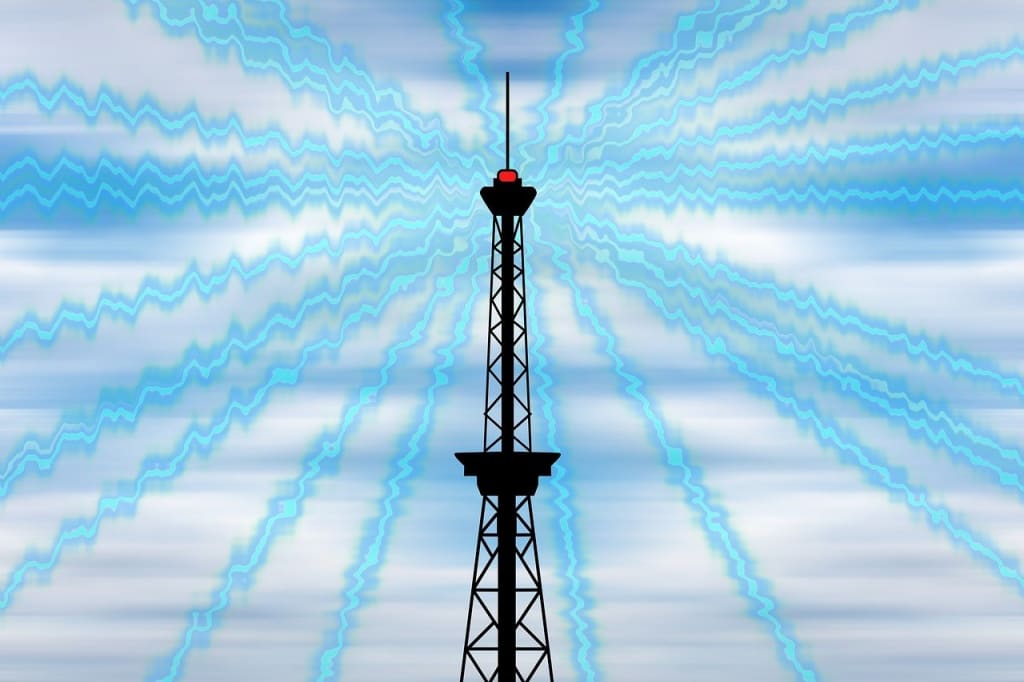
Have you ever wondered how your phone connects without cables? Or how radios, GPS, satellites, and other communication devices work without physical connections? If so, all these questions can be answered by understanding the concept of data transmission. Data transmission refers to the process of sending data using the electromagnetic wave spectrum, particularly radio waves. Simply put, these waves act as an alternative to cables in wireless data transmission. In this process, radio waves can carry various types of data, including images, sound, information, and more. Data Transmission Congestion Did you know that in today's digital era, vast amounts of data are transmitted every second? These waves fill the air in dense and overlapping patterns. However, because they are invisible, we are often unaware of their presence, even though they surround us. When you look up at the sky, there is no visible sign indicating the existence of these waves. Among the various types of electromagnetic waves, radio waves are the most widely used. As technology advances, their applications continue to expand across different fields, including the following: 1. Radio and Television Broadcasting The first radio broadcast was made by KDKA Pittsburgh (USA) in 1920, followed by the first electronic television broadcast by the BBC in 1936. 2. Radar and Navigation Radar technology was first developed during World War II (1939–1945) to detect ships and enemy aircraft. 3. Satellites and GPS Telstar 1 was the first successful satellite to transmit television signals in 1962. In 1973, the United States Department of Defense began developing GPS technology, which was later made available for civilian use in 1983. 4. Cellular Networks The 1G cellular network began operating in the late 1970s to early 1980s. 5. Wi-Fi and Bluetooth Wi-Fi technology started being developed in the 1990s and became widely popular in the early 2000s. Similarly, Bluetooth was introduced in the 1990s by the Swedish company Ericsson. The Main Paths of Electromagnetic Wave Propagation In general, radio waves propagate in three main ways in wireless data transmission: 1. Omnidirectional (Spreads in all directions) – The wave propagates equally in all 360° directions. 2. Directional (Travels in a specific direction) – The wave moves primarily in one direction, focusing energy in a targeted area. 3. Highly Directional (Narrow and focused transmission) – The wave is concentrated in one direction with a strong focus, minimizing interference. Imagine radio waves traveling through the air. They move along various paths and directions, sometimes crossing or overlapping. In practical applications, wave transmission is carefully controlled and optimized to ensure efficient data transfer. Experiencing the Presence of Radio Waves You may have experienced difficulties in sending a text message or receiving a radio signal. This often happens due to signal limitations in your area. Although invisible, these disruptions prove that radio waves are present and can be tracked. In such situations, the best solution is to avoid enclosed spaces and move to higher ground. Being inside a concrete building or in an area with challenging topography can block signals, reducing transmission efficiency. The Invisible Infrastructure of Modern Civilization The radio waves that enable communication are just one example of the many invisible technologies shaping modern life. Just as signals can be blocked by buildings or landscapes, the digital civilization we rely on today depends on hidden infrastructures that we often take for granted. From electromagnetic networks to deep-sea fiber optic cables, these technologies operate beyond human sight yet play a crucial role in connecting the world. We live in an advanced civilization, where much of what defines modern life is not visible to the naked eye. This civilization is embedded in microchips, delicate electromagnetic vibrations, and fiber-optic cables lying deep beneath the ocean. Without us realizing it, these invisible systems serve as the backbone of modern civilization. What we see is merely a small fraction of the vast digital infrastructure working behind the scenes to power the world around us.
About the Creator
Enjoyed the story? Support the Creator.
Subscribe for free to receive all their stories in your feed.
Comments
There are no comments for this story
Be the first to respond and start the conversation.