
How Do You Apply For A High Risk Work Licence?
Step-by-Step Guide to Applying for a High-Risk Work Licence in Australia


Imagine you're eager to step onto a building site, drive an excavator, or acquire that EWP license to take on high-rise projects. But then you're faced with the realisation that you need a high-risk work license, and suddenly, it's like trudging through a treacle. The paperwork, training, and tests make anyone scream in frustration. You're not the only one. Many tradies and potential operators get bogged down by the process, particularly when they need immediate assistance for high-risk tickets to access the job site quickly. In a place like NSW, where building is on the rise and autumn's bite is only beginning, knowing this process can mean the difference between a good gig and nothing. Let's get straight to the point and sort you out, mate.
What's required for a high-risk ticket?
To begin with, you can't just show up and have a licence handed to you. It doesn't work quite like that. You must demonstrate the skills and know-how to work with potentially hazardous equipment and scenarios. That entails:
- Formal training: You must take a course with a registered training organisation (RTO). Imagine these blokes as the official instructors of the high-risk universe. They are experts. If you're new to the construction industry, you may also need to get your white card before applying for high-risk licences.
- Age requirements: You need to be 18 years or older. No exceptions, mate.
- Identification: You must produce some grave ID—driver's licence, passport, the lot.
- Assessment: Study for theory and practical tests. They're meant to check your comprehension and competence in using equipment safely.
- Application to the regulator: Once you've passed the tests, apply to SafeWork NSW (or the appropriate state authority).
Where to get a high-risk ticket?
This is where you need to be intelligent. Not all training schools are equal. You must discover a reasonable RTO with an excellent record. Word of mouth is gold in this case. Ask people, read online feedback, and ensure they are suitably accredited. Seek out trainers who provide comprehensive training rather than a tick-box exercise over a few days. With the autumn building push in NSW before winter, courses can fill rapidly, so book early.
How long is a high-risk ticket valid?
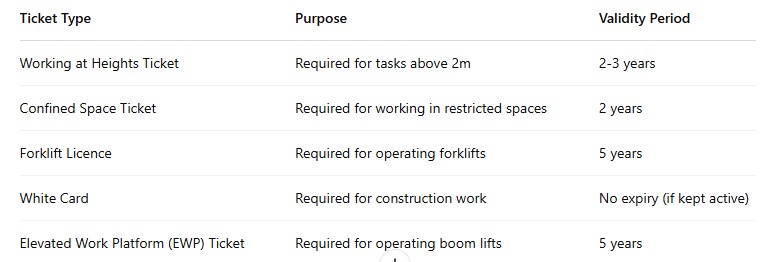
In NSW, as in most other states of Australia, a high-risk work licence is usually valid for five years. After that, you'll need to renew it. It's important to note the expiry date, as driving without a current licence can result in heavy fines and serious hassle.
What types of high-risk tickets exist?
The category of high-risk work licences is broad and extends to various equipment and tasks. Some of the most popular ones include:
- Forklift licence: Necessary for work within warehouses and construction sites.
- Elevated work platform (EWP) licence: Necessary for using scissor lifts and boom lifts.
- Excavator licence: Necessary for the use of earthmoving equipment.
- Dogging and rigging licences: For personnel handling lifts and movements of loads.
- Crane licences: These are for working with different types of cranes.
No matter which licence you’re applying for, having a solid understanding of best practices for risk assessment ensures you can identify hazards and work safely in high-risk environments.
How much does a high-risk ticket cost?
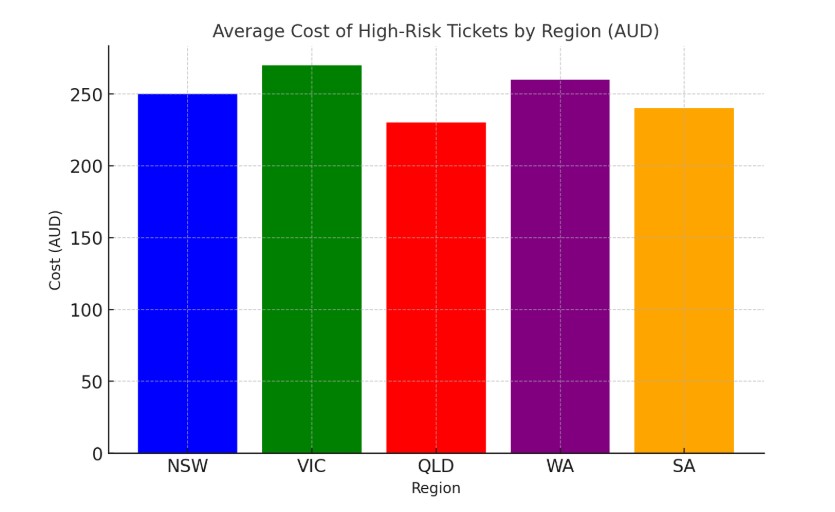
The price of a high-risk work licence will differ based on the licence type and training provider you attend. It can cost anywhere from a few hundred dollars for beginner certificates, including a white card, to over a thousand dollars for advanced licences, including an EWP (elevated work platform) ticket above 11 metres for working at elevated areas or a forklift licence. Extra fees can be charged for refresher courses, testing fees, or package training. Although the cost is high, consider it an investment in your future—these licences can result in improved job prospects, increased pay, and safer workplaces. Some employers also mandate that workers have these certifications, which are necessary for career advancement in construction, warehousing, and mining.
Can I renew my high-risk ticket online?
Good news! Generally, you can renew your high-risk work licence online. This makes it much more convenient. All you need to do is go to the SafeWork NSW website and follow the instructions. Double-check requirements, though, as practical assessments are sometimes necessary.
Case study
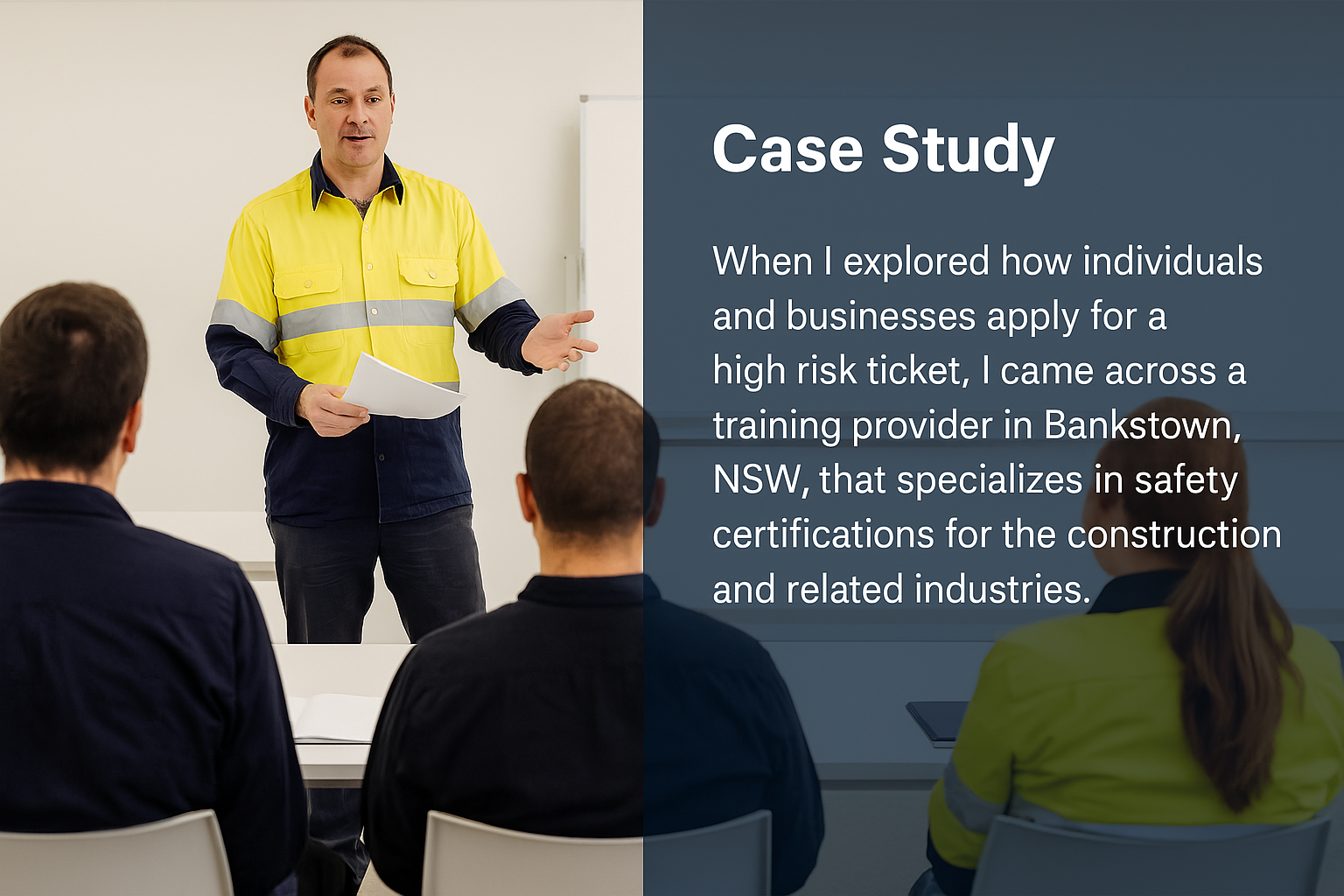
Upon investigating how businesses and individuals get a high-risk ticket, I found a training provider in Bankstown, NSW, offering safety certifications for the construction and allied industries. Their efficient method of training and certification enables workers to become compliant in a short space of time. It begins with choosing the correct course, like an EWP ticket or white card, before having hands-on training and assessment. Most students, mainly those new to high-risk work, find the structured process through regulatory compliance helpful. Preparation was one takeaway that stood out—the knowledge of course prerequisites and having the proper identification documents proved helpful in keeping students from delays. Companies also gain by signing up multiple employees simultaneously, keeping them compliant. This case study illustrates how selecting the correct training provider makes it easy to get a high-risk ticket, enabling employees to become certified effectively and safely.
Success tips
- Study hard: Read through the course materials and get practice operating the machinery.
- Ask questions: It's okay to ask your instructor for clarification.
- Stay concentrated: Listen carefully during the tests and show off your skills safely.
Conclusion
Obtaining a high-risk work licence may be a monumental task, but with the proper strategy, it's possible.
By learning what's involved, selecting a reasonable RTO, and preparing adequately, you'll be more than halfway to a promising career in a high-growth field. And as we all know, being qualified can be the difference between success and failure in the bustling construction industry. So, get your licence in order and begin constructing your future.
About the Creator
Savannah Turner
Stay Safe, Stay Ahead: Learn essential safety skills to protect yourself and advance your career.
Enjoyed the story? Support the Creator.
Subscribe for free to receive all their stories in your feed.
Comments
There are no comments for this story
Be the first to respond and start the conversation.