
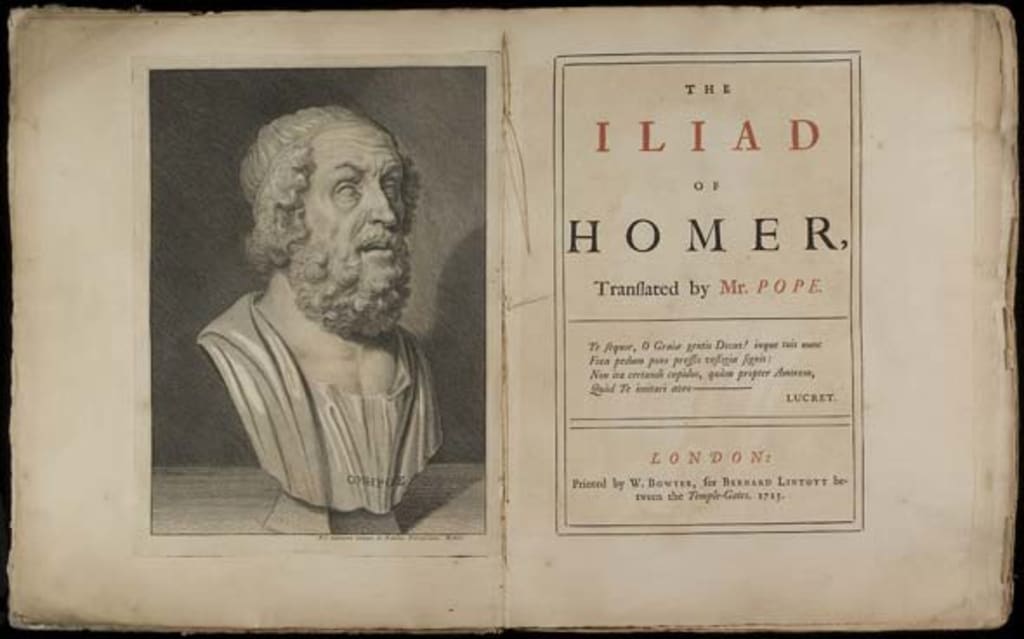
"The Iliad" by Homer is an ancient Greek epic poem that stands as one of the most significant works of Western literature. Believed to have been composed around the 8th century BCE, it serves as a cornerstone of Greek culture and provides valuable insights into the human experience.
The epic unfolds during the Trojan War, a legendary conflict between the Greeks and the Trojans. The story spans a period of several weeks, showcasing the devastating consequences of war and exploring themes of heroism, honor, fate, and the intricate interplay between humans and gods.
The narrative commences with the anger and withdrawal of Achilles, the mightiest of the Greek warriors. Achilles' wrath is ignited by a dispute with Agamemnon, the Greek commander-in-chief, over a prized female captive named Briseis. Consumed by his pride and anger, Achilles decides to abstain from battle, leaving the Greeks in a vulnerable position.
The withdrawal of Achilles proves disastrous for the Greek forces, as the Trojans, led by their skilled prince Hector, gain the upper hand in battle. Hector embodies the ideals of honor and bravery, serving as the primary defender of Troy. He is depicted as a loving son, husband, and father, adding depth to his character and amplifying the tragedy of his fate.
Throughout the poem, the gods play a significant role, frequently intervening in the affairs of mortals. Zeus, the king of gods, oversees the fate of both Greeks and Trojans, while other deities align themselves with either side. Athena, Hera, and Poseidon support the Greeks, while Apollo, Aphrodite, and Ares aid the Trojans. These divine interventions shape the narrative and often determine the outcomes of battles and individual encounters.
Among the Greeks, other notable heroes emerge, each showcasing their own unique qualities. Odysseus, known for his cunning intellect, proves instrumental in various strategic endeavors. Ajax the Great displays unrivaled strength and bravery, while Diomedes exhibits exceptional martial prowess and fearlessness in battle. These heroes, alongside many others, contribute to the ebb and flow of the conflict, demonstrating the multifaceted nature of heroism.
However, it is the climactic clash between Achilles and Hector that serves as the focal point of the epic. Driven by grief and a thirst for vengeance, Achilles re-enters the battle to avenge the death of his dear friend Patroclus, who was slain by Hector. In their duel, Hector fights valiantly but ultimately falls to Achilles' superior skill and strength. The death of Hector is a tragic turning point in the story, leading to further heartache and grief for both the Trojans and the Greeks.
Despite the enmity between Achilles and Hector, the poem delves into moments of shared humanity amidst the horrors of war. Achilles, recognizing the immense grief of Hector's father, King Priam, allows the Trojan king to visit the Greek camp and retrieve his son's body for a proper funeral. This poignant scene showcases the depths of compassion and empathy that can transcend enmity and offers a glimpse of the shared sorrows experienced by both sides.
"The Iliad" is not only a tale of epic warfare but also a reflection on the complexities of the human condition. It explores the pursuit of glory, the destructive consequences of hubris, and the fragile nature of mortality. The poem also delves into the intricate web of relationships forged in times of crisis, emphasizing the bonds of comradeship and familial love.
The enduring appeal of "The Iliad" lies in its universal themes and timeless portrayal of the human spirit. Homer's poetic mastery captures the grandeur of heroism and the tragedy of war, reminding readers of the lasting impact of conflict and the importance of compassion and understanding in the face of adversity. The poem serves as a cautionary tale, highlighting the destructive nature of unchecked anger, the futility of excessive pride, and the inevitable consequences of war.
Homer's vivid descriptions transport the reader to the battlefields of ancient Troy, immersing them in the chaos, violence, and glory of war. Through the meticulous detailing of armor, weapons, and battlefield tactics, he paints a visceral picture of the brutal realities faced by soldiers on both sides. Yet, amid the carnage, he also emphasizes the humanity and vulnerability of these warriors, portraying their fears, doubts, and anguish.
Furthermore, "The Iliad" delves into profound philosophical questions surrounding the nature of destiny and free will. The concept of fate, or moira, looms over the characters, shaping their actions and determining their outcomes. Achilles, for instance, is aware of his prophesied short life, which fuels his desire for immortal glory. The poem raises questions about the extent to which individuals can alter their destiny and the balance between human agency and divine intervention.
"The Iliad" has had a lasting impact on literature, inspiring countless adaptations, retellings, and interpretations. Its influence can be seen in various works of art, from ancient Greek pottery and sculpture to modern novels, films, and plays. The poem's exploration of complex themes, intricate characterizations, and the grandeur of its storytelling have solidified its place as a literary masterpiece.
Ultimately, "The Iliad" is more than a tale of heroes and battles; it is a profound exploration of the human condition, with all its triumphs, flaws, and sorrows. It serves as a timeless reminder of the consequences of unchecked rage and the potential for compassion and empathy to bridge the divides created by war. Through Homer's masterful storytelling, readers are transported to a world of gods and mortals, where the cost of honor and the pursuit of glory are laid bare, leaving an indelible mark on the reader's consciousness.
"The Iliad" stands as a testament to the power of storytelling and its ability to illuminate the human experience across the vast expanse of time. Homer's epic poem continues to resonate with audiences, reminding us of our shared humanity, the complexities of war, and the enduring themes that define our collective journey.
About the Creator
Enjoyed the story? Support the Creator.
Subscribe for free to receive all their stories in your feed.
Comments
There are no comments for this story
Be the first to respond and start the conversation.