
God or Science?
going into depth of how God created science
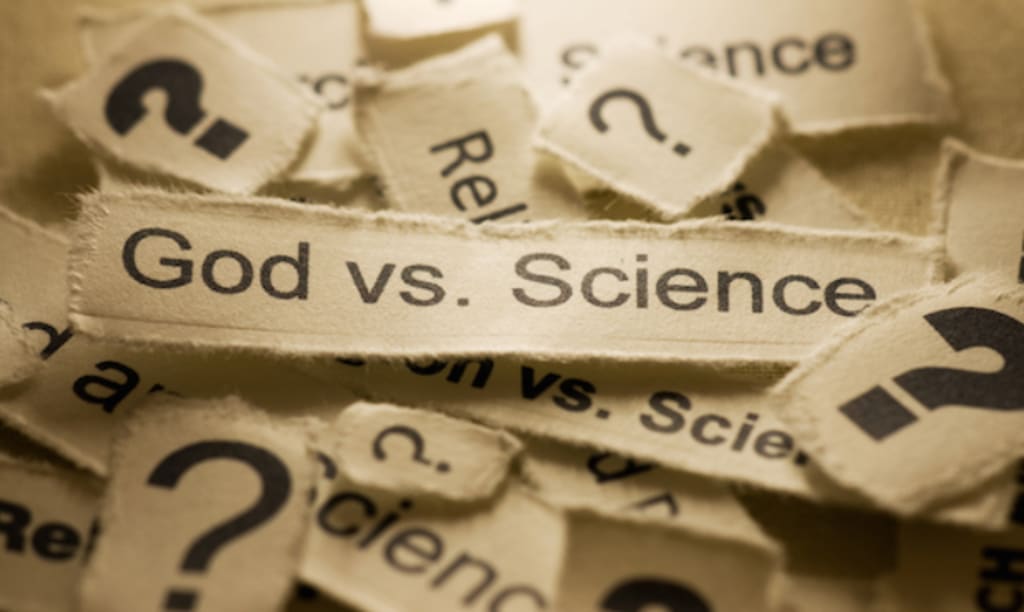
Science and God have been competing against each other for centuries. But I think the real problem is that we think it has to be one or the other. Even if you were a super intelligent nonphysical being, you would need the stuff to create a physical universe first, and then you would have to figure out how all that material was going to come together in just the right way.
If you were researching a topic like science, you would come up with specific principles and methods in order to make sense of it. You would want your mind to be organized and make sense of the data. In addition, you would also need to determine if there was any evidence of intent or rationality. After that, it would be up to you to decide whether or not science could provide an answer.
There are a few disclaimers that I am going to make before posting some information from real scientists. First, I am Catholic, so this is not an opinion piece that represents the views of any other religious groups. Second, I am not a scientist and I'm only mentioning a few things here - so if you want to learn more about these topics, you can check out some sources. And finally, as with anything related to science, there are always exceptions - so please don't take any of this as gospel.
I understand that some of you may have certain thoughts or concerns, so to address them upfront, let me clarify a few key points. We adhere to the belief that the Earth is spherical, orbiting the Sun, and that it is billions of years old, having not been created in a literal seven-day span as depicted in the Bible. It's essential to emphasize that the Bible is not intended to serve as a scientific textbook. Furthermore, I want to underscore that we are open to the concepts of evolution and the Big Bang theory, which I will delve into further later on. It's important to note that my intention is not to attempt to prove the existence of God, neither to you nor to myself. This is not a matter of scientific inquiry, but rather to demonstrate that science should not be seen as an obstacle to acknowledging God, just as it should not hinder our quest for truth.
The existence of our entire universe, along with everything within it, can be attributed to approximately 30 specific numerical values that physicists refer to as the physical constants. These numbers represent unchanging values related to fundamental aspects of our universe, ranging from forces like gravity to properties at the subatomic level, such as the mass of a proton and electromagnetic force. What's truly remarkable is that each of these numbers is incredibly precise and finely balanced with one another. Even the slightest deviation, whether it's a minuscule increase or decrease, in some cases, as tiny as a fraction of a fraction, would result in the absence of life and a universe vastly different from what we know. For instance, if the gravitational constant were even slightly altered, stars in the early universe would either be excessively hot or too cool to facilitate the formation of life-sustaining elements. Similarly, a minor adjustment in the electromagnetic force would prevent atoms from bonding into molecules, leading to a universe composed mainly of subatomic particles. Furthermore, if the mass of a proton were just a bit larger, it would eliminate the existence of hydrogen, and consequently, hydrogen stars. This absence of hydrogen stars would, in turn, prevent the production of carbon and oxygen within these stars, ultimately negating the possibility of water and the emergence of biology as we know it. It seems that, from the perspective of most physicists, right from the inception, the entire universe has exhibited an extraordinary level of precision for a particular purpose. Today, physicists openly acknowledge their lack of understanding regarding how these numerical constants acquired their remarkable precision. They concur that it would be unreasonable to attribute this to mere chance. As a result, they propose two plausible explanations. Firstly, these constants might have been meticulously set by an immensely intelligent force. Alternatively, they may have naturally arisen within one universe out of an unimaginable multitude of universes, most of which are beyond our knowledge. Worth noting, neither of these explanations is substantiated by concrete scientific evidence, necessitating substantial further investigation. For context, consider the monumental complexity of the processes involved. Running Google, for instance, requires the cooperation of over 25,000 engineers who've written approximately two billion lines of distinctive code. This operation is supported by an extensive network of computers and data centers dispersed across the globe. Now, contrasting this with the intricate human biological system, which relies on over three billion letters of unique genetic code, meticulously organized within a cell weighing less than a fraction of a gram, it becomes evident that the human system surpasses Google in complexity. To analogize, it would be akin to looking at the intricacies of Google's code and then asserting that it all spontaneously evolved, a statement that invites deep scrutiny and contemplation.
As Catholics, we find no conflict with the concept of evolution, provided that it pertains to the development of our physical bodies. It seems entirely logical that the God of the universe would choose to shape our physical forms from the very environment in which we are intended to exist, thrive, and flourish. This notion aligns with certain biblical passages. However, it's important to note that when it comes to the origins of life and the pivotal transition that made us, humans, distinct from other species on Earth – capable of thinking, speaking, writing, creating art, imagining, loving, reflecting, and being self-aware – evolution falls short.
In essence, we are left with a profound question: What is the more plausible explanation? Is it that life, intelligence, and the capacity for thought and love emerge from a source possessing these qualities, or that they emerge from a different, less developed source?
It's worth mentioning that the Big Bang theory itself was formulated by a Catholic priest, underscoring our acceptance of this scientific concept. Furthermore, a consensus among many physicists points to the necessity of a definite beginning for the universe, even if one entertains the notion of a multiverse. This raises the pivotal question: How did we transition from a state of nothingness to the existence of something as vast and intricate as our universe?
About the Creator
Enjoyed the story? Support the Creator.
Subscribe for free to receive all their stories in your feed.
Comments
There are no comments for this story
Be the first to respond and start the conversation.