
German Idioms & Fun Expressions
Adding Color to Your German Vocabulary
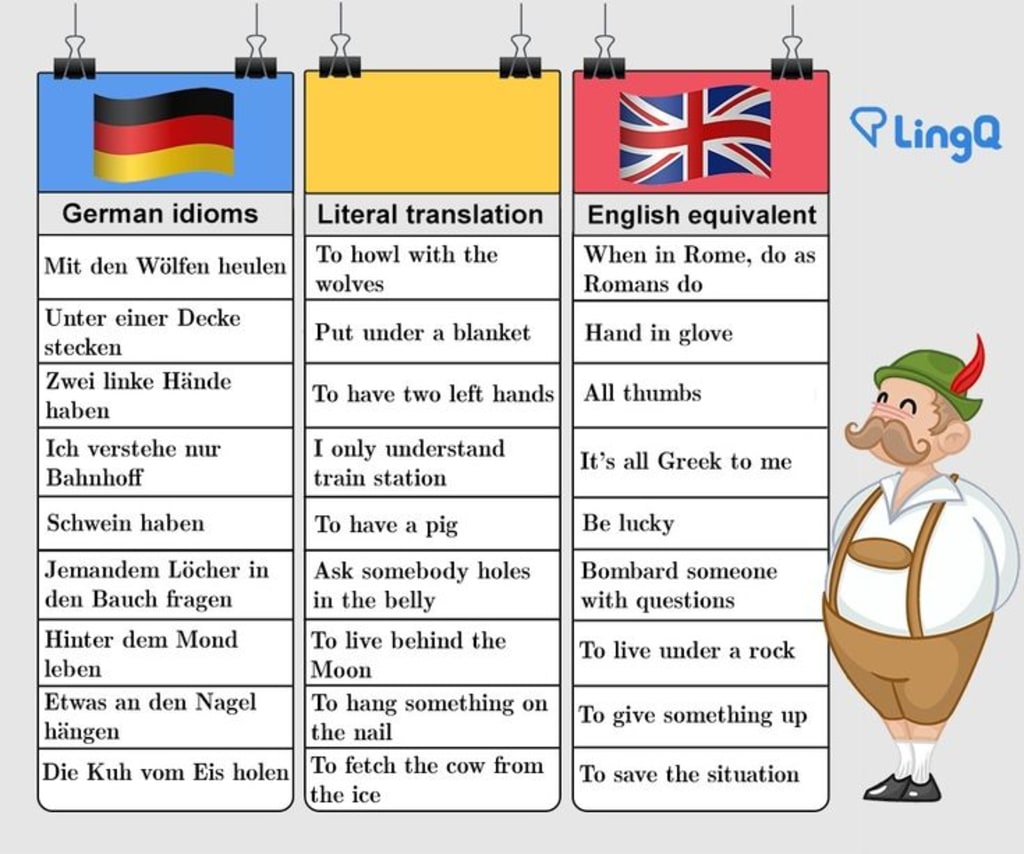
Learning German is not just about memorizing vocabulary and grammar—it’s also about discovering the quirky, playful, and often unexpected ways Germans express themselves. German idioms (or Redewendungen) are a fantastic way to add some flair to your language skills and get a peek into German culture. Some of these expressions might seem puzzling at first, but that’s what makes them so entertaining!
Here’s a collection of popular German idioms and fun expressions to add to your vocabulary
1. “Ich verstehe nur Bahnhof”
Literal Translation: “I understand only train station.”
Meaning: “I don’t understand anything.”
Explanation: Similar to saying “It’s all Greek to me” in English, this phrase is used when someone feels lost or completely confused by a situation. It’s thought to originate from soldiers in WWI who only wanted to hear about when they could go to the train station to return home.
2. “Tomaten auf den Augen haben”
Literal Translation: “To have tomatoes on one’s eyes.”
Meaning: “To be oblivious to what’s going on.”
Explanation: If someone “has tomatoes on their eyes,” it means they’re not seeing something that’s right in front of them, much like having “blind spots.” You might use this if someone overlooks an obvious solution or detail.
Here’s a fun and engaging blog post on German idioms and expressions. This content can introduce readers to the quirks of the German language while making learning enjoyable!
German Idioms & Fun Expressions: Adding Color to Your German Vocabulary
Learning German is not just about memorizing vocabulary and grammar—it’s also about discovering the quirky, playful, and often unexpected ways Germans express themselves. German idioms (or Redewendungen) are a fantastic way to add some flair to your language skills and get a peek into German culture. Some of these expressions might seem puzzling at first, but that’s what makes them so entertaining!
Here’s a collection of popular German idioms and fun expressions to add to your vocabulary.
1. “Ich verstehe nur Bahnhof”
Literal Translation: “I understand only train station.”
Meaning: “I don’t understand anything.”
Explanation: Similar to saying “It’s all Greek to me” in English, this phrase is used when someone feels lost or completely confused by a situation. It’s thought to originate from soldiers in WWI who only wanted to hear about when they could go to the train station to return home.
2. “Tomaten auf den Augen haben”
Literal Translation: “To have tomatoes on one’s eyes.”
Meaning: “To be oblivious to what’s going on.”
Explanation: If someone “has tomatoes on their eyes,” it means they’re not seeing something that’s right in front of them, much like having “blind spots.” You might use this if someone overlooks an obvious solution or detail.
3. “Die Kuh vom Eis holen”
Literal Translation: “To get the cow off the ice.”
Meaning: “To get out of a tricky situation.”
Explanation: This idiom is used when someone successfully resolves a difficult problem. Just imagine the challenging scenario of a cow stranded on a frozen lake, and you’ll understand why this phrase represents the act of overcoming obstacles.
4. “Da steppt der Bär!”
Literal Translation: “The bear dances there!”
Meaning: “It’s going to be a great party!”
Explanation: If you’re looking forward to a lively event, you might say, “Da steppt der Bär!” This fun phrase conveys excitement and high energy, hinting that the place will be buzzing with activity—just like a dancing bear!
5. “Den Nagel auf den Kopf treffen”
Literal Translation: “To hit the nail on the head.”
Meaning: “To get it exactly right.”
Explanation: This expression is used to compliment someone for saying something that’s exactly right or accurately describes a situation. Similar to English, this idiom is about precision and clarity.
6. “Um den heißen Brei herumreden”
Literal Translation: “To talk around the hot porridge.”
Meaning: “To beat around the bush.”
Explanation: When someone avoids getting to the point, they’re “talking around the hot porridge.” Much like in English, it’s a humorous way of saying they’re not addressing the main issue directly.
7. “Schwein haben”
Literal Translation: “To have a pig.”
Meaning: “To be lucky.”
Explanation: If you “have a pig,” it means you’re experiencing good luck. This idiom dates back to medieval times, when owning a pig was a sign of wealth and fortune. So, if something lucky happens to you, you can say, “Ich habe Schwein gehabt!”
8. “Jemandem die Daumen drücken”
Literal Translation: “To press your thumbs for someone.”
Meaning: “To keep your fingers crossed.”
Explanation: In Germany, pressing your thumbs is like crossing your fingers for luck. When someone’s hoping for a good outcome, they might say, “Ich drücke dir die Daumen” (I’ll keep my thumbs pressed for you).
9. “Ins Gras beißen”
Literal Translation: “To bite the grass.”
Meaning: “To kick the bucket.”
Explanation: This phrase is a colourful way of saying someone has passed away. Similar to the English phrase “to kick the bucket,” it adds a lighthearted twist to a serious topic.
10. “Das ist mir Wurst”
Literal Translation: “That’s sausage to me.”
Meaning: “I don’t care.”
Explanation: When something is “Wurst” to you, it means you don’t mind or don’t care about it. Germans love their sausages, but they also use them to express indifference!
11. “Die Kirche im Dorf lassen”
Literal Translation: “To leave the church in the village.”
Meaning: “To not exaggerate.”
Explanation: This expression is used to encourage someone not to blow things out of proportion. It’s like saying, “Let’s keep things in perspective.”
Why Learn Idioms?
Idioms bring personality and authenticity to your language skills, showing you’re more than just a beginner. German idioms especially offer fascinating glimpses into German humor, history, and cultural references. Plus, they’re a fun way to challenge yourself, impress native speakers, and add variety to your conversations.
Why Learn Idioms?
Idioms bring personality and authenticity to your language skills, showing you’re more than just a beginner. German idioms especially offer fascinating glimpses into German humour, history, and cultural references. Plus, they’re a fun way to challenge yourself, impress native speakers, and add variety to your conversations.
Here’s a fun and engaging blog post on German idioms and expressions. This content can introduce readers to the quirks of the German language while making learning enjoyable!
German Idioms & Fun Expressions: Adding Color to Your German Vocabulary
Learning German is not just about memorizing vocabulary and grammar—it’s also about discovering the quirky, playful, and often unexpected ways Germans express themselves. German idioms (or Redewendungen) are a fantastic way to add some flair to your language skills and get a peek into German culture. Some of these expressions might seem puzzling at first, but that’s what makes them so entertaining!
Here’s a collection of popular German idioms and fun expressions to add to your vocabulary.
1. “Ich verstehe nur Bahnhof”
Literal Translation: “I understand only train station.”
Meaning: “I don’t understand anything.”
Explanation: Similar to saying “It’s all Greek to me” in English, this phrase is used when someone feels lost or completely confused by a situation. It’s thought to originate from soldiers in WWI who only wanted to hear about when they could go to the train station to return home.
2. “Tomaten auf den Augen haben”
Literal Translation: “To have tomatoes on one’s eyes.”
Meaning: “To be oblivious to what’s going on.”
Explanation: If someone “has tomatoes on their eyes,” it means they’re not seeing something that’s right in front of them, much like having “blind spots.” You might use this if someone overlooks an obvious solution or detail.
3. “Die Kuh vom Eis holen”
Literal Translation: “To get the cow off the ice.”
Meaning: “To get out of a tricky situation.”
Explanation: This idiom is used when someone successfully resolves a difficult problem. Just imagine the challenging scenario of a cow stranded on a frozen lake, and you’ll understand why this phrase represents the act of overcoming obstacles.
4. “Da steppt der Bär!”
Literal Translation: “The bear dances there!”
Meaning: “It’s going to be a great party!”
Explanation: If you’re looking forward to a lively event, you might say, “Da steppt der Bär!” This fun phrase conveys excitement and high energy, hinting that the place will be buzzing with activity—just like a dancing bear!
5. “Den Nagel auf den Kopf treffen”
Literal Translation: “To hit the nail on the head.”
Meaning: “To get it exactly right.”
Explanation: This expression is used to compliment someone for saying something that’s exactly right or accurately describes a situation. Similar to English, this idiom is about precision and clarity.
6. “Um den heißen Brei herumreden”
Literal Translation: “To talk around the hot porridge.”
Meaning: “To beat around the bush.”
Explanation: When someone avoids getting to the point, they’re “talking around the hot porridge.” Much like in English, it’s a humorous way of saying they’re not addressing the main issue directly.
7. “Schwein haben”
Literal Translation: “To have a pig.”
Meaning: “To be lucky.”
Explanation: If you “have a pig,” it means you’re experiencing good luck. This idiom dates back to medieval times, when owning a pig was a sign of wealth and fortune. So, if something lucky happens to you, you can say, “Ich habe Schwein gehabt!”
8. “Jemandem die Daumen drücken”
Literal Translation: “To press your thumbs for someone.”
Meaning: “To keep your fingers crossed.”
Explanation: In Germany, pressing your thumbs is like crossing your fingers for luck. When someone’s hoping for a good outcome, they might say, “Ich drücke dir die Daumen” (I’ll keep my thumbs pressed for you).
9. “Ins Gras beißen”
Literal Translation: “To bite the grass.”
Meaning: “To kick the bucket.”
Explanation: This phrase is a colorful way of saying someone has passed away. Similar to the English phrase “to kick the bucket,” it adds a lighthearted twist to a serious topic.
10. “Das ist mir Wurst”
Literal Translation: “That’s sausage to me.”
Meaning: “I don’t care.”
Explanation: When something is “Wurst” to you, it means you don’t mind or don’t care about it. Germans love their sausages, but they also use them to express indifference!
11. “Die Kirche im Dorf lassen”
Literal Translation: “To leave the church in the village.”
Meaning: “To not exaggerate.”
Explanation: This expression is used to encourage someone not to blow things out of proportion. It’s like saying, “Let’s keep things in perspective.”
Why Learn Idioms?
Idioms bring personality and authenticity to your language skills, showing you’re more than just a beginner. German idioms especially offer fascinating glimpses into German humor, history, and cultural references. Plus, they’re a fun way to challenge yourself, impress native speakers, and add variety to your conversations.
How to Use Idioms in Practice
Start Small: Begin with one or two idioms, and practice incorporating them into conversations.
Use Them in Context: Try using idioms in relevant contexts to make them more memorable. For example, say “Ich verstehe nur Bahnhof” if you’re lost in a conversation.
Share with Friends: Teach these idioms to friends or language partners—it’ll help reinforce your memory and bring some laughs!
Keep Learning: There are endless idioms in German, so keep exploring to discover more expressions that add color to your speech.
Idioms might take some time to get used to, but they’re incredibly rewarding. They can be your secret weapon for connecting with native speakers and showing off your knowledge of German culture. So next time you’re practicing German, remember to add an idiom or two—Da steppt der Bär!
About the Creator
Enjoyed the story? Support the Creator.
Subscribe for free to receive all their stories in your feed.
Comments
There are no comments for this story
Be the first to respond and start the conversation.