
Generative Adversarial Networks (GANs) and Variational Autoencoders (VAEs) in Artificial Intelligence
Generative Adversarial Networks (GANs) and Variational Autoencoders (VAEs): Transforming AI Innovation in India and Pune
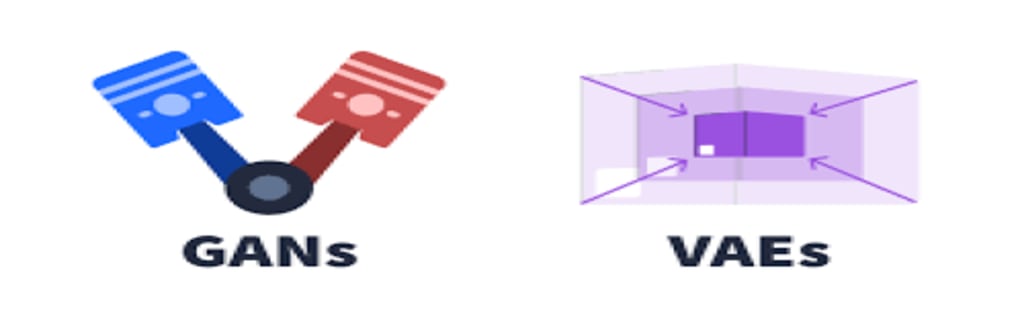
Artificial Intelligence is revolutionizing the world and has set India on fire, more so with cities like Pune emerging as hotbeds of research and development in AI. Increasingly, more AI startups, research institutions, and educational centers are mushrooming across Pune, catapulting this city to an important participant in the AI revolution. If you are planning to specialize in AI, a number of certificate courses on AI offered in Pune have advanced material, such as GANs and VAEs.
Getting Proficient at GANs and VAEs
Generative models represent the new breakthroughs in various applications like images and text generation and even drugs discovery. From all these generative models, however, the most powerful of all are perhaps the Generative Adversarial Networks (GANs) and Variational Autoencoders (VAEs).
What is Generative Adversarial Network?
Ian Goodfellow first introduced GANs in 2014. Since then, GANs have gained significant popularity in AI research. A GAN consists of two neural networks:
Generator: Generates fake data similar to real data.
Discriminator: Determines the authenticity of the generated data and attempts to distinguish between real and fake data.
These two networks play a game-like setting against each other and work their way toward perfecting the outputted data generation. This actually works like an artist, often known as the generator, who attempts to create a masterpiece; a critic, known as the discriminator, then evaluates it and gives his opinions.
Applications of GANs:
Image Generation & Enhancement – GANs generate a realistic human face, upscale low-resolution images, and even create painting work.
Deepfake Technology – GANs are used to create deepfake videos and images by swapping faces in videos.
Drug Discovery – Pharmaceutical companies use GANs to generate new molecules for drug design.
Fashion Industry – GANs help in designing new clothing patterns and textures.
Gaming & Virtual Reality – They assist in generating realistic game environments and characters.
Automobile Industry – GANs are used for designing and testing new car models through AI-powered simulations.
What is a Variational Autoencoder (VAE)?
VAEs are another form of generative models, where latent representations of data are learned. In contrast to GANs, VAEs are designed using an encoder-decoder architecture:
Encoder: The input data is compressed into a lower-dimensional latent space.
Decoder: This decoder reconstructs the data from the latent space and produces variations close to the input data.
VAEs learn the probability distribution rather than competing to generate data and are, therefore, much more stable during training compared to GANs.
Applications of VAEs:
Image Reconstruction – VAEs are applied in denoising images and restoring old photographs.
Anomaly Detection – VAEs are applied in the industrial sector for the detection of fraudulent transactions and cybersecurity threats.
Healthcare – VAEs help in the synthesis of medical images and predict diseases.
Music Generation – They create new pieces of music based on learned styles.
Text Generation – VAEs can be used to generate creative writing pieces and chatbots.
Personalized Recommendations – It is used in e-commerce platforms to enhance product recommendations.
GANs and VAEs in the Indian Context
In India, AI applications are growing at a rapid pace in sectors like healthcare, finance, and entertainment. Cities like Pune, Bangalore, and Hyderabad are leading the AI revolution, with startups and research institutions actively exploring generative models.
AI in Pune
Pune has emerged as an AI innovation hub due to its strong educational infrastructure and tech-driven ecosystem. Many AI-driven startups in Pune are leveraging GANs and VAEs for applications such as:
Healthcare – AI-powered diagnostics and medical imaging improvements.
Automotive Industry – AI-based simulations for vehicle design and crash testing.
Finance & Banking – Fraud detection and automated customer service solutions using generative models.
EdTech – AI-generated learning materials and personalized tutoring systems.
E-commerce – GANs and VAEs used for creating realistic product images and enhanced user experiences.
Learning GANs and VAEs: AI Education in Pune
As AI grows, learning GANs and VAEs can open new career opportunities. AI certificate programs in Pune provide specialized courses covering deep learning, generative models, and their real-world applications. These programs help students and professionals gain hands-on experience with AI tools like TensorFlow and PyTorch.
Where to Study AI in Pune?
Pune University and Research Institutes: The university and the research institutes have courses on AI and machine learning.
Private AI Training Institutes: There are numerous institutes offering industry-centric AI training programs.
Online Learning Platforms: There are various organizations in Pune offering hybrid AI certificate programs.
Corporate Training Centers: AI training programs for working professionals.
Conclusion
GANs and VAEs are the future of AI. They're going to transform entertainment, healthcare, and many more industries in ways we have never imagined before. If you stay in Pune, mastering these new-age technologies is the next good step. Through mastery over generative models, you will contribute to the ever-growing AI ecosystem in India and across the globe.
About the Creator
Enjoyed the story? Support the Creator.
Subscribe for free to receive all their stories in your feed.
Comments
There are no comments for this story
Be the first to respond and start the conversation.