

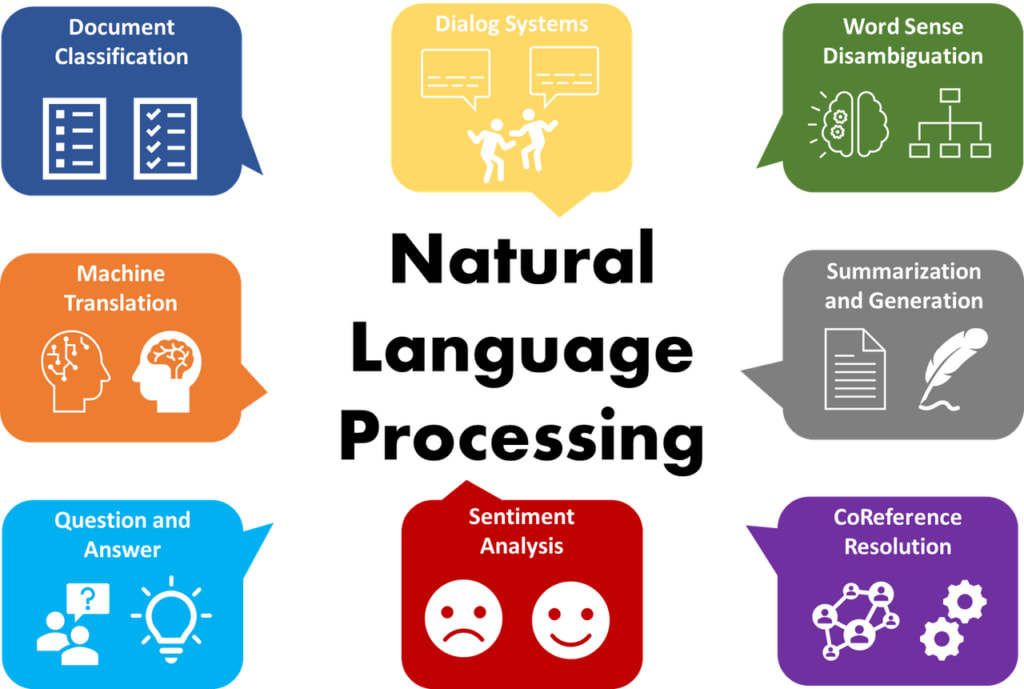
One subset of artificial neural networks, known as Generative Adversarial Networks (GANs), has made significant strides in recent years, particularly in the area of picture generation. Natural language processing (NLP) is one area where GANs have recently seen significant application, with promising results. An essential aspect of this adaptation is the process of training a text discriminator and a text generator to produce cohesive and meaningful information within a particular environment. Within the context of Natural Language Processing (NLP), this response provides a thorough analysis of Generative Adversarial Networks (GANs). Everything from GAN architecture to training dynamics to major obstacles to notable applications including text generation, style alteration, and data augmentation are part of it.
To create text data in a novel way, Generative Adversarial Networks (GANs) have been integrated into Natural Language Processing (NLP). The growth of natural language processing has made this feasible. Two components make up GANs: a text generator and a discriminator. The former is trained to produce text, while the latter is trained to distinguish between real and created text. The responsibility of producing textual content lies with the generator. Iterative adversarial training is a technique that improves the generator's ability to generate information that is both linguistically correct and contextually relevant.
Training GANs requires NLP, which in turn necessitates a dynamic interaction between the discriminator and generator. The purpose of the discriminator is to improve their ability to discern between generated and actual text, whereas the goal of the generator is to create text that cannot be distinguished from human-written language. The purpose of the generator is to create writing that cannot be mistaken for human-written content. In the end, the text generator converges to producing high-quality outputs because the competition pushes it to produce more credible outputs.
The intrinsic difficulty in quantitatively evaluating the quality of the generated text is one of the challenges that arises with applying GANs to natural language processing (NLP). This challenge is among the obstacles. Another challenge that needs fixing is mode collapse, which happens when the generator doesn't make much text diversity. The freshly generated text also needs to be coherent and make sense, which requires particular techniques because text data is discontinuous. In order to write a clear and logical essay, several methods must be employed.
The field of applications has seen generative adversarial networks (GANs) excel in many different NLP tasks. Since GANs allow the production of coherent and distinct paragraphs of text, text generation is one of their most prevalent applications. This contributes to GANs' widespread appeal. One way to change the look of a text while preserving its meaning is by using what is known as "style transfer." Paraphrasing and editing preexisting content are two areas that could use style transfer. Data augmentation is another use case for GANs; it boosts the reliability of natural language processing models by making use of a larger dataset during training. Just by adding more data for training, this can be achieved.
To learn more about GANs in natural language processing, you might want to investigate the following areas:
Adversarial Learning for Neural Dialogue Generation:- In the production of neural conversations, adversarial learning plays an intriguing role. It is fascinating, so allow me to explore it further. The main goal of open-domain dialogue generation is to produce responses that are indistinguishable from human dialogues. In order to accomplish this, researchers have suggested a method known as adversarial training, which is based on the Turing test.
Generative Model: We begin by teaching a generative model how to generate answer strings. It is the goal of this model to produce dialogue lines that sound very much like human-made ones.
Discriminator :- We also present a discriminator, which is similar to the human judge in the Turing test, all at once. The discriminator's duty is to differentiate between conversations that are made by humans and those that are generated by machines.
Adversarial Training:- Training in an adversarial context involves a game-like interaction between the discriminator and the generative model. The discriminator's outputs are fed into the generative model. As the system gains experience, it can modify its responses to trick the discriminator into thinking they are having a conversation with a human.
Evaluation Metric: An adversarial evaluation metric is utilized to assess the caliber of the produced responses. Convincing the enemy to fall for your tricks becomes an important measure. Potential problems in dialogue evaluation can be circumvented with the use of this metric.
"Improved Techniques for Training GANs" by Salimans et al.
"Style Transfer from Non-Parallel Texts" by Shen et al.
"Text Generation with Generative Adversarial Nets" by Zhang et al.
"Unsupervised and Semi-Supervised Learning with Categorical Generative Adversarial Networks" by Springenberg.
In Conclusion, the application of Generative Adversarial Networks in Natural Language Processing presents a novel paradigm for the generation of text, the manipulation of styles, and the enhancement of data. The current improvements in GAN-based natural language processing (NLP) have tremendous potential for revolutionizing various NLP tasks and contributing to the growth of text-based applications, despite the fact that hurdles still exist.
About the Creator
Sangramsing Kayte
I am an experienced person in the research area of ML and AI, exploring different adventure places is also my hobby. And I strongly believe in sharing and this motivated me to share my knowledge and also Traveling tips with you.
Enjoyed the story? Support the Creator.
Subscribe for free to receive all their stories in your feed.
Comments
There are no comments for this story
Be the first to respond and start the conversation.