
Game On: How AI Is Redefining Virtual Storytelling and Design
Exploring how generative AI is reshaping narrative creation, character development, and immersive gameplay in modern game design
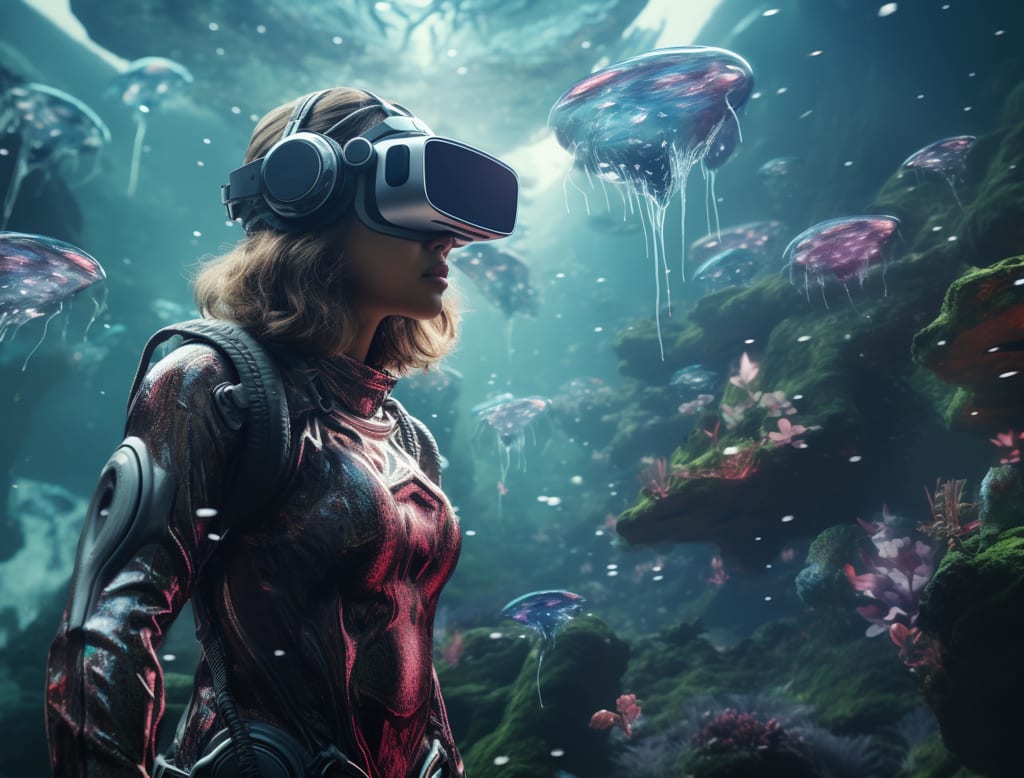
Generative AI is making a big impact on major aspects of the gaming industry. It doesn't only include things like procedural world-building, fully intelligent NPCs, personalized experiences in real-time, it really promotes a transformation of the gaming experience. The advances in AI are reshaping what's possible in digital experiences it's almost surreal. Developers are not just making games anymore; AI is becoming an indispensable partner in the game-making process.
Let's delve into how generative AI is redefining all aspects of game design and every type of virtual experience we engage with.
Game assets are built in seconds not months
Historically, building game environments, characters, and assets was time engaging and resource heavy work. Game designers had to build every aspect of the environment, characters - everything in the video game ( even rock textures and things like lighting the scene with enviable atmosphere). But now, incredible generative AI platforms can automate much of the leg work.
AI models that digest 10s of thousands of GBs of data can generate 3D objects, terrain, and even realistic textures in a matter of minutes. All the developer needs to provide the model is a basic set of parameters or a text input and the AI model will accomplish the work for them. This process not only reduces production times, it enables creativity, as it will allow developers to experiment with more variations and ideas without dedicating the time they previously required.
In rapidly growing digital economies, the demand for those types of skills is monumental. For example, lots of people are signing up for programs like an online generative AI course in UAE, where the demand for AI expertise in creative industries is accelerating.
Intelligent NPCs: Evolving Conversations
One of the most intriguing uses for generative AI is the creation of non-player characters, NPCs. NPCs were previously limited to fixed scripts, which meant that interactions were often stale repetitive dialogue or predetermined behavior on the NPC’s part. Now, with AI, NPCs could potentially be aware of aspects of players’ behaviours and communicate and respond on their terms.
Most of the current AI models are powerful enough that they can be used to generate NPCs, that have memory from previous interactions, generating responses that are original and evolve the relationships with players. This will create fundamentally new possibilities in games full stop. Even games with a uniquely licensed character from popular culture (e.g., Dungeons and Dragons) will benefit from this as NPCs could remember how they have been treated in the past and respond accordingly. There is no limit to the new depth and realism that this will bring to game experiences, particularly role-playing or sandbox experiences.
Imagine your gaming experience where an NPC remembers your betrayal, from ten hours earlier, and then later confronts you about it. These hyper-personalized experiences are no longer the realm of fantasy they are being built and tested in developer environments right now.
Storytelling that is Dynamic and Personalized
Generative AI provides a completely new dimension for storytelling in games. Instead of the story following a rigid plotline, the AI can create a story based on players’ actions or choices as they play. Generative AI systems will keep track of all of the players actions and automatically change the dialogue, events, and even the story quests.
Because of this adaptability no two players will share the exact same experience as they play the game. Instead of having narratives that are static, we will have more flexible narratives that offers the opportunity for a certain level of interactive storytelling - the players are part of their personal story as co-authors.
More subjective experience with games, games become more emotionally engaging for players while continuing to offer plot twists, based on the features of the player’s personality or ethical choices made earlier in the game.
Immediate World Building and Prototyping
Artificial intelligence not only enhances how games look, it can change how they are created. Today's advanced technology allows the creation of interactive 3D environments (e.g. games) from natural language commands. Using natural language to describe "a mystical forest with floating islands and glowing wildlife" would allow the developer to see the scene rendered in real time.
This level of rapid prototyping enables smaller teams and solo developers to create vast game worlds which arguably would not have been previously cost feasible. This provides a greater democratization of game development and gives rise to more diverse voices and creative visions in the industry.
Some experimental games allow players to generate their own levels in real time, during game play, merely as text or spoken commandeer entered in the game engine.
Flexible Gameplay Based on User Habits
Generative AI empowers games to constantly adapt to how a single player plays the game world. The game can adapt not just the difficulty but the mechanics based on what keeps a specific player engaged and playing.
If a player typically explores and is not engaged by combat, then the game may do longer puzzles or hidden lore instead of combat based on a single player learning curve. If a player skips dialogue quickly, then the AI may shorten the exposition or remove an unneeded character.
The end result is a game that feels alive and created just for you, not only increasing the engagement factor but also extending the play of a game. Personalized generative AI in game design offers content that is customized wirelessly with technology, which means whether you are a casual player or a hardcore competitor, the game evolves just like you.
Procedural Audio/Visual
Generative AI could provide transformation to the audio/visual experiences. AI can now compose music that adjust in real-time in accordance with the gameplay; AI can generate ambient sound/audio that shifts based on the player's mood and/or weather; AI can generate realistic facial animations dependent on the voicing input.
Beyond improving immersion, creating the audiovisual content has less of a time and financial cost than conventional means.
In horror games for example, based on a user's heartbeat measured via sensors or wearables, their soundtrack might build in intensity as their heartbeat rises, making for a unique, perplexing experience for each player, while also keeping them in a state of agitation from their immersion.
Ethical Issues and Human-AI Collaboration
Disruptive technology brings disruptive issues, such as job loss in creative industries, copyright issues involved with owning AI-produced art, and questions of authenticity with AI-generated art. Further, critics worry that using AI too extensively might weaken human creativity in game development itself.
As with other tools, numerous developers view generative AI in a partnership, rather than replacement, framework. For them, it accelerates workflows, expands creative opportunities, and enables large-scale testing of ideas. No matter how much Generative AI handles the workload, the human creator still leads, curates, and refines the work that AI generates.
To use AI ethically in this space, an expectation of establishing ethical standards, creative oversight, and transparency is imperative.
Preparing for the Next Phase
As game studios innovate using AI, demand for education and training is also growing. Upskilling programs to ensure designers, developers, and storytellers are capable implements of these new tools are emerging.
In rapidly changing regions, this need will only grow. One of the areas in which progress is being made is the emergence of training programs such as the online Agentic AI Course in UAE, that introduce new types of autonomous AI agents that embed real-time responses and in-game actions in a context-aware way in games and simulations.
Final Thoughts
Generative AI is not just a fad—it will be the basis of a new age in gaming. By allowing users to create dynamic content and simulate intelligent behavior, it is changing every facet of game development and worldbuilding.
As the technology improves and fully integrates globally, those that embrace its potential will be at the forefront of interactivity. The gap between player and creator continues to shrink and with that, AI could be seen as a co-creative collaborator and not just a tool.
About the Creator
Enjoyed the story? Support the Creator.
Subscribe for free to receive all their stories in your feed.
Comments
There are no comments for this story
Be the first to respond and start the conversation.