
Future Woman vs Today's Woman
How Women's Roles and Expectations are Changing
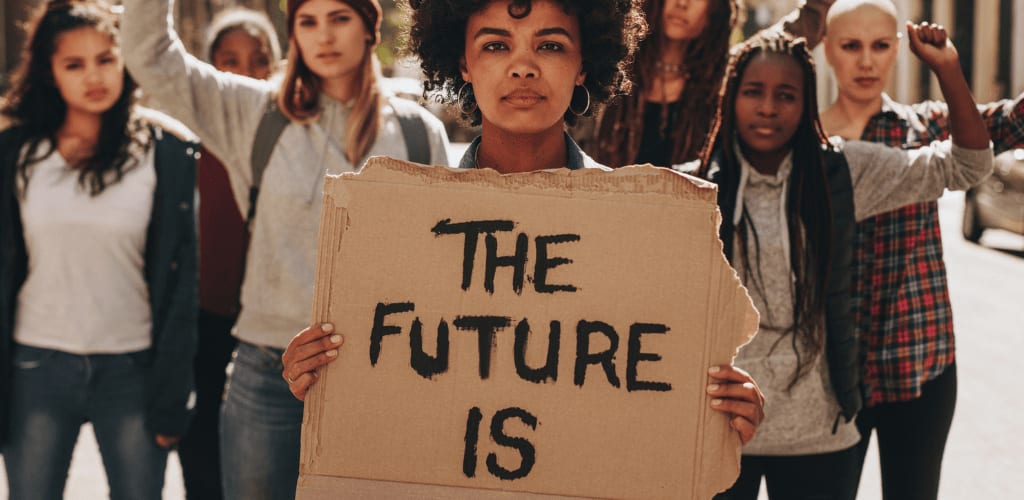
Women have come a long way in terms of their rights, opportunities, and achievements over the past century. From securing the right to vote and work to breaking glass ceilings and leading in various fields, women have challenged and reshaped societal norms and expectations. However, the journey towards gender equality is far from over, as women continue to face various forms of discrimination, bias, and violence, as well as persisting gender gaps and stereotypes. As we look towards the future, what can we expect from the evolution of women's roles and identities? How will the future woman differ from today's woman?
One possible vision of the future woman is that she will have greater agency, diversity, and fluidity in defining her identity and path in life. While today's woman still faces many external and internal pressures to conform to certain standards of femininity, beauty, behavior, and success, the future woman may have more choices and acceptance in expressing and pursuing her own values, interests, and priorities. She may be more empowered to challenge and redefine traditional gender roles and expectations, such as being a caregiver, homemaker, or submissive partner. She may also be more open to exploring her sexuality, spirituality, and creativity beyond the binaries of male and female, and more tolerant of different lifestyles, cultures, and beliefs.
Another possible aspect of the future woman is that she will have more access to education, technology, and resources that enable her to fulfill her potential and contribute to society. While today's woman still lags behind men in many areas of education, science, technology, engineering, and mathematics (STEM), the future woman may have more equal opportunities and recognition in these fields. She may also benefit from the growing trends of remote work, flexible schedules, and self-employment that allow her to balance her career with her personal life and preferences. Additionally, she may have more awareness and action towards environmental, social, and political issues that affect women and other marginalized groups, and more involvement in advocacy and leadership roles.
Of course, the future woman is not a monolithic or predetermined entity, but rather a complex and dynamic product of social, cultural, economic, and technological forces. Her evolution will depend on how society values and invests in women's rights and opportunities, as well as how women themselves navigate and negotiate their identities and aspirations. Moreover, the future woman will still face many challenges and obstacles that hinder her progress and potential, such as discrimination, harassment, violence, poverty, and health disparities.
Therefore, it is important for today's women to continue to strive for gender equality and empowerment, both for their own sake and for the sake of future generations. This means advocating for policies and practices that promote women's rights, representation, and inclusion, such as equal pay, parental leave, affordable childcare, reproductive rights, and political participation. It also means challenging and breaking down stereotypes and biases that limit women's choices and opportunities, and supporting each other in achieving their goals and dreams.
In conclusion, the future woman may be a more diverse, empowered, and fulfilled version of today's woman, but this vision is not guaranteed nor complete. Women's progress towards gender equality and empowerment requires collective and continuous efforts from all sectors of society, and a recognition of women's inherent worth, dignity, and agency. By working towards a more just and inclusive world, we can create a better future for all women and for humanity as a whole.
About the Creator
Enjoyed the story? Support the Creator.
Subscribe for free to receive all their stories in your feed.
Comments
There are no comments for this story
Be the first to respond and start the conversation.