
Fruit Flashcards for Kids: A Simple and Engaging Way to Support Early Learning
How Colorful Educational Flashcards Help Children Build Literacy, Vocabulary, and Confidence
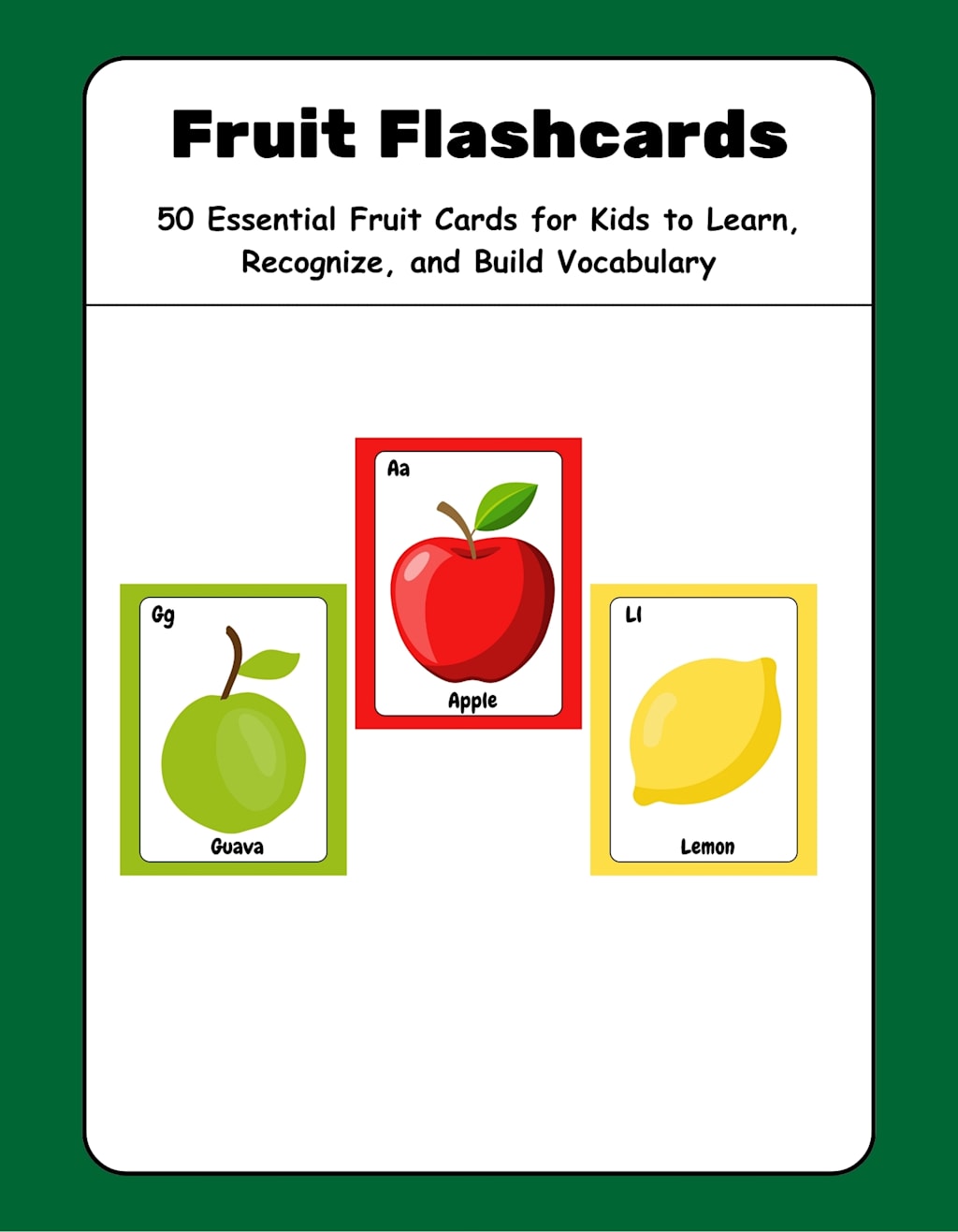
The early years of childhood are filled with discovery. During this stage, children develop essential skills that form the foundation for future learning. One of the most important milestones is learning the alphabet and building a basic vocabulary. While there are many educational tools available today, flashcards remain one of the simplest and most effective resources for helping young learners develop these skills.
Among the many types of educational flashcards, fruit-themed alphabet flashcards offer a unique combination of literacy development and visual learning. By pairing letters with colorful fruit illustrations, children are introduced to both the alphabet and new vocabulary in an engaging and memorable way.
Why Visual Learning Is Important
Children naturally respond to visual information. Bright colors, recognizable shapes, and appealing illustrations capture their attention and encourage curiosity. Educational materials that combine words and images often help children process and remember information more effectively than text alone.
Flashcards take advantage of this learning style by presenting information in small, manageable pieces. Rather than overwhelming young learners with large amounts of content, flashcards allow children to focus on one concept at a time. This can make learning feel more enjoyable and less intimidating.
Learning Letters Through Familiar Objects
One effective teaching strategy is associating letters with objects children can easily recognize. Fruits are an excellent example because many children encounter them in their daily lives. When a child sees a letter alongside an illustration of a fruit, they begin to create meaningful connections between symbols, sounds, and words.
For example, a child may recognize the image of an apple and connect it with the letter "A." Over time, these repeated associations strengthen memory and improve letter recognition skills. This process helps prepare children for reading and language development.
Building Vocabulary Naturally
Vocabulary growth is another important aspect of early childhood education. Children who are exposed to a variety of words during their early years often develop stronger communication and reading skills later in life.
Fruit-themed flashcards introduce children to common fruit names while reinforcing alphabet learning. This dual-purpose approach allows young learners to expand their vocabulary in a natural and engaging way. Instead of memorizing isolated letters, children learn words and concepts that have meaning in the real world.
Supporting Early Reading Skills
Reading begins long before a child can read full sentences. Before children become readers, they learn to recognize letters, understand sounds, and identify patterns in language. These foundational skills are essential for literacy development.
Flashcards can support this process by helping children:
Recognize uppercase and lowercase letters
Associate letters with sounds
Improve word recognition
Strengthen memory and recall
Develop confidence in learning activities
Because flashcards are easy to use, they can be incorporated into daily routines without requiring extensive preparation.
Learning Through Play
Research consistently shows that children learn best when education feels enjoyable. Play-based learning encourages exploration, creativity, and active participation. Educational flashcards can easily be transformed into games and interactive activities that keep children engaged.
Parents and educators might use flashcards for matching games, memory challenges, sorting activities, or simple vocabulary exercises. These playful experiences encourage children to practice important skills while maintaining enthusiasm for learning.
Suitable for Different Learning Environments
One of the greatest advantages of educational flashcards is their flexibility. They can be used in a variety of settings, including homes, classrooms, learning centers, and homeschooling programs.
Teachers often use flashcards as part of literacy lessons, while parents may incorporate them into daily learning activities. Because flashcards are portable and easy to understand, they provide a convenient educational resource for children at different learning levels.
Encouraging Positive Learning Experiences
The goal of early education is not only to teach skills but also to foster a lifelong love of learning. Positive experiences during childhood can shape a child's attitude toward education for years to come.
Colorful and engaging learning tools help create an environment where children feel successful and motivated. When children enjoy the learning process, they are more likely to remain curious, ask questions, and continue exploring new concepts.
Conclusion
Educational flashcards continue to be a valuable resource for early childhood learning. By combining letters, vocabulary, and vibrant illustrations, fruit-themed flashcards provide a simple yet effective way to support literacy development. They encourage letter recognition, vocabulary growth, memory retention, and confidence while making learning enjoyable.
Whether used at home or in the classroom, fruit flashcards offer young learners an opportunity to explore language through colorful visuals and meaningful connections. As children build foundational skills through engaging educational activities, they take important steps toward future academic success.
About the Creator
Meshal Sprout
Author of fun & educational kids books | Inspiring creativity & imagination
Enjoyed the story? Support the Creator.
Subscribe for free to receive all their stories in your feed.
Comments
There are no comments for this story
Be the first to respond and start the conversation.