
From Isaac Newton to Einstein: The Evolution of Gravity Theories
A Journey Through the Minds that Reshaped Our Understanding of the Universe
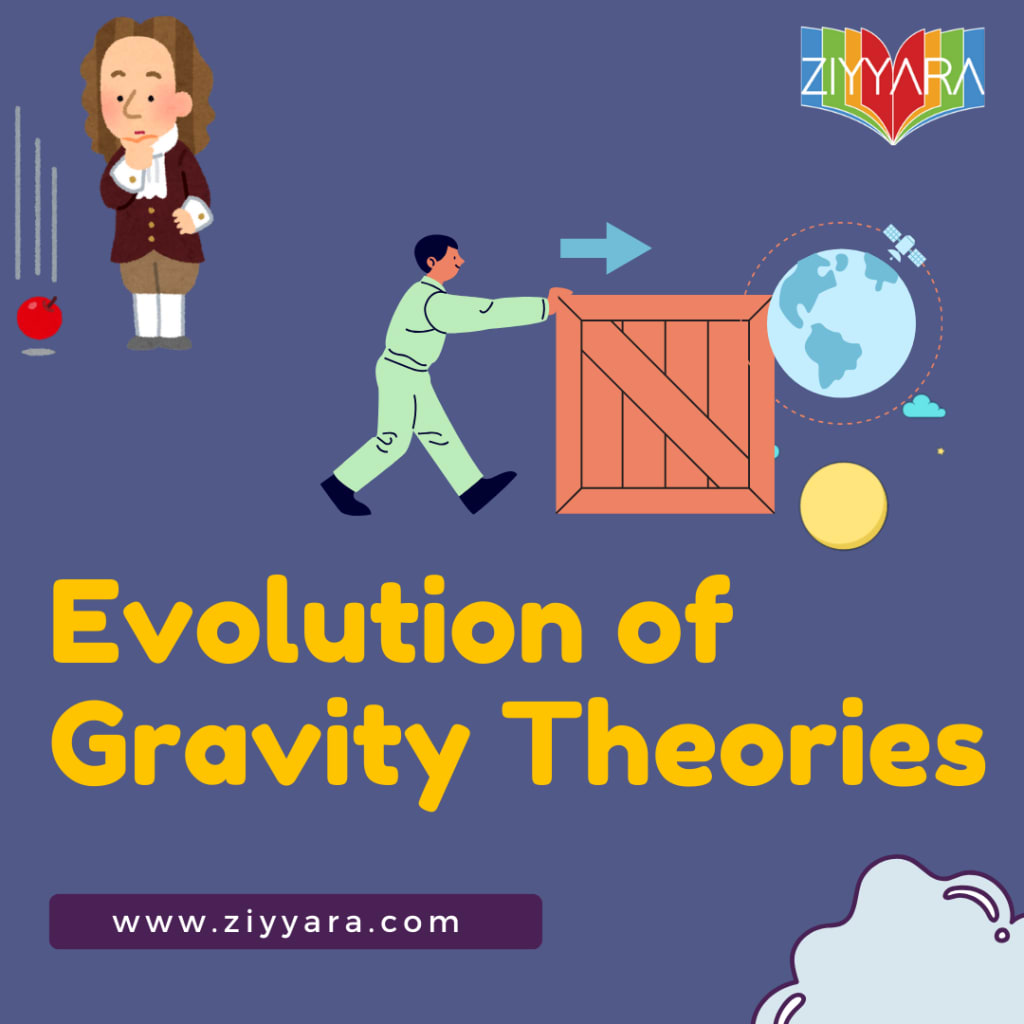
Gravity is one of the most fundamental forces in the universe, shaping everything from the motion of the planets to the paths of falling apples. But the way we understand gravity has come a long way since Isaac Newton’s time. If you’re interested in exploring the history of gravity theories, online physics tuition can offer you detailed insights. Let’s take a friendly journey through the history of gravity theories, from Newton’s groundbreaking work to Einstein’s revolutionary ideas!
The Apple and the Genius: Newton’s Discovery
The Famous Apple Incident
You’ve probably heard the story: Isaac Newton was sitting under an apple tree when an apple fell on his head, and he suddenly wondered why objects always fall straight down. While the apple might not have literally hit him on the head, it did inspire Newton to think about why objects fall and how gravity works. For those curious about the principles behind such phenomena, online tuition for Physics can provide a deeper understanding.
Newton’s Laws of Motion
In the late 17th century, Isaac Newton formulated his famous Laws of Motion, which describe how objects move and interact. His Law of Universal Gravitation was a major breakthrough, stating that every particle of matter attracts every other particle with a force that is proportional to the product of their masses and inversely proportional to the square of the distance between them.
Formula:
F=Gm1m2r2F = G \frac{m_1 m_2}{r^2}F=Gr2m1m2
Here, FFF is the force of gravity, GGG is the gravitational constant, m1m_1m1 and m2m_2m2 are the masses of two objects, and rrr is the distance between their centers. Newton’s theory explained why objects fall and how celestial bodies move. If you want to delve into these concepts, physics online tuition in India is a great option.
For those who are eager to explore more, our physics tuition provides excellent opportunities to study the fascinating world of gravitational physics and beyond.
The Quest for a Better Understanding: 19th Century Advancements
The Work of Laplace and the Expanding Universe
In the 18th and 19th centuries, mathematicians like Pierre-Simon Laplace expanded on Newton’s ideas. Laplace worked on celestial mechanics, using Newtonian gravity to explain the orbits of planets and moons. His work laid the groundwork for future astronomers and physicists to understand the structure of the universe. If you’re interested in diving into the fascinating world of celestial mechanics, physics online tuition can offer you a deep dive into these historical concepts.
The Rise of Field Theory
In the 19th century, scientists began to think about gravity in terms of fields rather than just forces. Michael Faraday and James Clerk Maxwell developed the concept of fields for electromagnetism, which set the stage for later theories of gravity as a field. For a better grasp of these advanced topics, consider exploring physics online classes for Class 11, where you can learn about the foundational theories that paved the way for these discoveries.
Einstein’s Big Idea: The Theory of Relativity
Special Relativity and Space-Time
In the early 20th century, Albert Einstein introduced the Theory of Relativity, which transformed our understanding of space, time, and gravity. His Special Theory of Relativity showed that space and time are intertwined in a four-dimensional space-time continuum. To explore how these revolutionary ideas developed, physics tuition online can provide a comprehensive overview.
General Relativity: Gravity as Curvature
Einstein’s General Theory of Relativity, published in 1915, took gravity to a whole new level. Instead of thinking of gravity as a force between two masses, Einstein described it as the curvature of space-time caused by mass and energy. To grasp the profound implications of this theory and explore its detailed concepts, physics tuition can provide you with comprehensive lessons and insights.
Key Concept:
Mass bends space-time, and objects move along the curved paths created by this bending. Think of space-time as a stretched rubber sheet with a heavy ball in the center creating a dip—planets and stars follow curved paths because of this dip. To understand these complex ideas, physics online tuition Class 12 offers specialized courses that delve into the intricacies of relativity and modern physics.
For those eager to expand their knowledge, physics online tuition is a great resource for exploring both classical and modern theories of gravity.
The Confirmation of Einstein’s Theory
General Relativity was confirmed in 1919 when Arthur Eddington observed the bending of starlight during a solar eclipse, providing the first major evidence for Einstein’s theory. Since then, numerous experiments and observations have supported General Relativity, including the recent detection of gravitational waves. To dive deeper into the implications of such discoveries, physics tutoring can offer in-depth explanations and insights.
Modern Gravity Theories and the Future
Quantum Gravity and Beyond
Today, scientists are exploring theories that combine General Relativity with quantum mechanics, such as string theory and loop quantum gravity. These theories aim to describe gravity at the smallest scales and provide a unified framework for all fundamental forces. If you’re interested in exploring these advanced topics, physics online classes for Class 11 offer a great introduction to the foundational concepts of modern physics.
The Search for a Theory of Everything
Physicists are still searching for a “Theory of Everything” that unifies all the fundamental forces of nature, including gravity. This quest continues to inspire new research and discoveries. For those wanting to stay current with this exciting field, working with an online physics tutor can help you keep up with the latest developments and theories.
The Legacy of Gravity Theories
A Journey Through Time
From Newton’s apple to Einstein’s cosmic fabric, the theories of gravity have evolved from simple observations to complex scientific models. Each theory has built upon the last, expanding our understanding of the universe. To explore this historical journey in more detail, physics tuition provides a structured way to learn about these significant advancements.
Inspiring Future Discoveries
The evolution of gravity theories shows us that science is always advancing. What we know today might be just the beginning, and future scientists will continue to explore and expand our understanding of the universe. If you’re inspired to explore these ideas further, physics online classes for Class 11 are available to help you start on your own path of discovery.
Conclusion
Gravity’s story is one of curiosity, innovation, and discovery. From Newton’s Laws to Einstein’s Theory of Relativity, our understanding of gravity has grown immensely. As we look to the future, who knows what new theories and discoveries await? One thing is certain: the quest to understand the force that shapes our universe will continue to inspire and challenge us for generations to come. For those eager to explore more about the evolution of these theories, physics tuition offers a structured approach to delve into the intricacies of gravitational physics and beyond.
Thanks for joining me on this journey through the history of gravity theories with Ziyyara! If you enjoyed learning about the past, just imagine what exciting discoveries the future holds.
About the Creator
Enjoyed the story? Support the Creator.
Subscribe for free to receive all their stories in your feed.
Comments
There are no comments for this story
Be the first to respond and start the conversation.