
Fluid Bed Dryer Working Principle
A Comprehensive Guide that how Fluid Bed Dryer Working
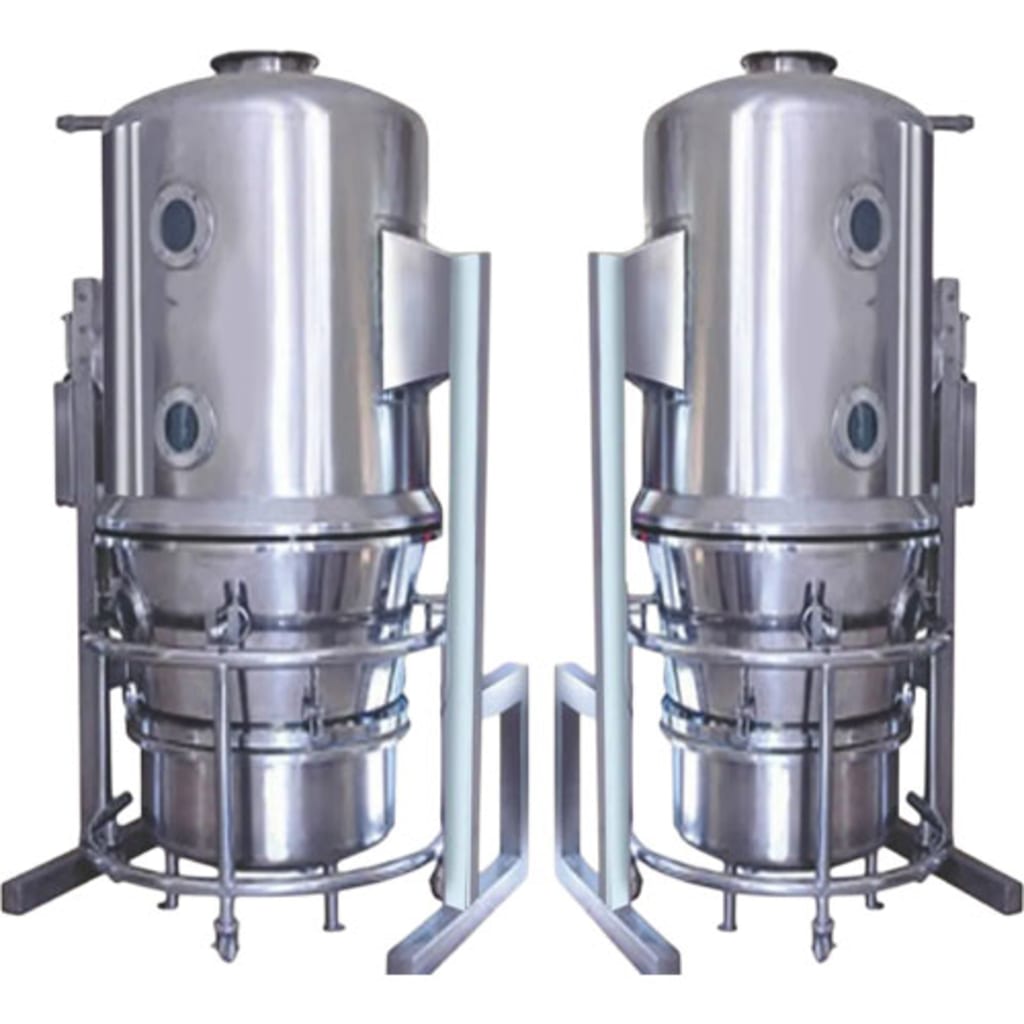
A Fluid Bed Dryer (FBD) is a widely used equipment in the pharmaceutical, chemical, and food industries for drying granular, powdery, and crystalline materials. It operates on the principle of fluidization, a process in which solid particles are suspended in an upward-flowing stream of air, creating a fluid-like state. This ensures uniform drying with high efficiency while preserving the quality of the material being processed.
Working Principle of a Fluid Bed Dryer
The working principle of a Fluid Bed Dryer revolves around fluidization, a process where solid particles behave like a fluid when subjected to an upward air stream. The major steps involved in the operation of a Fluid Bed Dryer include:
Airflow and Fluidization:
- The drying process begins with the introduction of hot air into the system through a perforated distributor plate at the base of the drying chamber.
- The air is supplied at a controlled velocity and temperature, which lifts and suspends the solid particles in the chamber, creating a "fluidized bed" state.
- The interaction between the solid particles and the heated air promotes rapid heat and mass transfer, leading to efficient drying.
Heat Transfer and Moisture Evaporation
- As the hot air comes into contact with the wet material, it transfers heat to the surface of the particles, causing the moisture content to evaporate.
- The moisture-laden air is then carried away by an exhaust system, preventing condensation and maintaining an optimal drying environment.
- The constant movement of particles in the fluidized state ensures that heat is distributed evenly, preventing hotspots or overheating.
Exhaust System and Moisture Removal
- The exhaust system, often equipped with filters or cyclone separators, removes moisture and fine particles from the drying chamber.
- The filtered air may be recirculated or expelled, depending on energy efficiency and environmental considerations.
Components of a Fluid Bed Dryer
A typical Fluid Bed Dryer consists of the following essential components:
- Blower/Fan: Generates the airflow required for fluidization.
- Heating System: Can be steam, gas, or electric-based to heat the incoming air.
- Air Distributor Plate: Ensures uniform air distribution for efficient fluidization.
- Drying Chamber: The main processing area where fluidization and drying occur.
- Exhaust System: Equipped with filters or cyclones to remove fine particles and moisture.
- Control Panel: Regulates temperature, airflow, and drying time.
- Product Container: Holds the material being dried and can be removed for easy handling.
Advantages of Fluid Bed Drying
- Uniform Drying: The continuous movement of particles ensures even heat distribution and prevents material degradation.
- Faster Drying Time: Compared to conventional drying methods, fluid bed drying is significantly faster due to enhanced heat and mass transfer.
- Energy Efficiency: The controlled airflow and recirculation of hot air help conserve energy.
- Scalability: Fluid Bed Dryers are available in various sizes, from laboratory models to large industrial units.
- Precise Control: Temperature, airflow, and drying time can be accurately controlled for optimal results.
- Reduced Product Degradation: The gentle fluidization process prevents material clumping, overheating, or structural damage.
Applications of Fluid Bed Dryers
Fluid Bed Dryers are widely used in several industries, including:
- Pharmaceutical Industry: Drying of granules and powders used in tablet formulation.
- Food Industry: Drying of food ingredients, milk powders, coffee, tea, and spices.
- Chemical Industry: Drying of resins, pigments, and chemical powders.
- Agriculture: Drying of fertilizers, animal feed, and grains.
Limitations of Fluid Bed Dryers
Despite their advantages, Fluid Bed Dryers have some limitations:
- Not Suitable for Highly Cohesive or Sticky Materials: Some materials tend to stick together, making fluidization difficult.
- Initial Cost: Higher investment compared to traditional drying methods.
- High Energy Consumption: The continuous operation of blowers and heating systems can lead to increased energy costs.
- Particle Attrition: Continuous movement can cause fragile materials to break down into finer particles.
Fluid Bed Dryers play a crucial role in industrial drying processes due to their efficiency, speed, and uniformity. The principle of fluidization allows for effective moisture removal while maintaining product integrity. While the technology has certain limitations, its advantages make it a preferred choice across multiple industries. With advancements in automation and energy-efficient designs, Fluid Bed Dryers continue to be an essential part of modern manufacturing processes.
About the Creator
JSK Engitech
At JSK Engitech Industries, we are driven by a commitment to excellence and a passion for engineering solutions that empower businesses to achieve optimal efficiency and productivity.
Enjoyed the story? Support the Creator.
Subscribe for free to receive all their stories in your feed.
Comments
There are no comments for this story
Be the first to respond and start the conversation.