
Exploring the World of AI Chips: Types and Applications
AI Chips Types and Applications
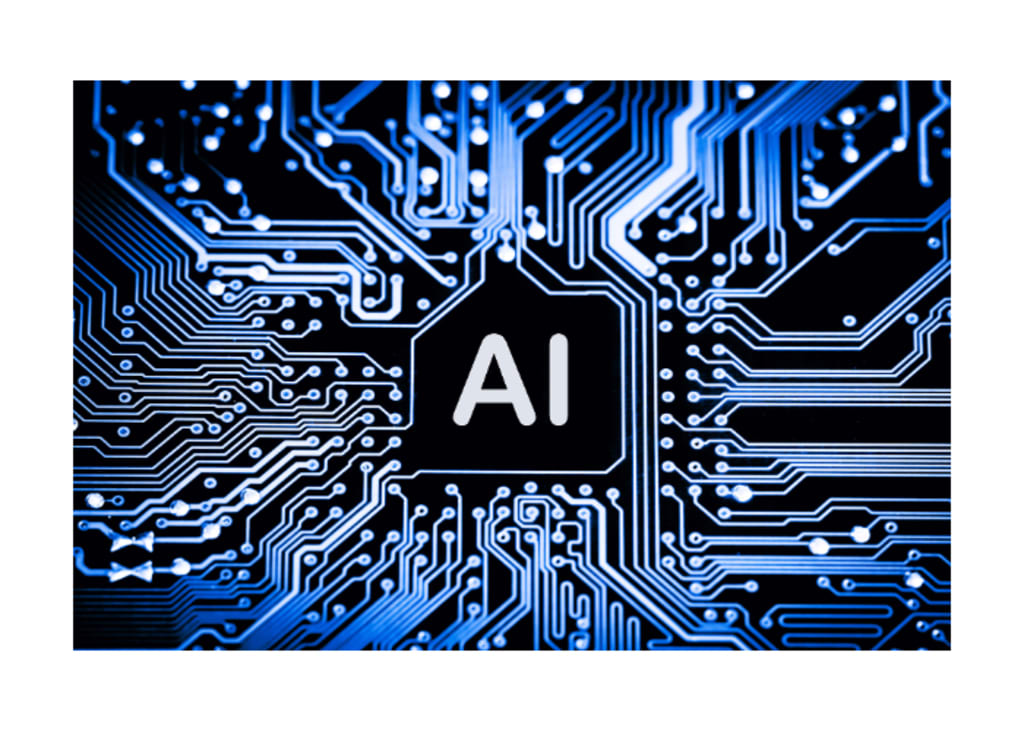
In the rapidly evolving landscape of artificial intelligence (AI), the development of specialized hardware has become crucial to meet the computational demands of AI algorithms. AI chips, also known as AI accelerators, are designed to efficiently perform the complex mathematical computations required for tasks such as machine learning, computer vision, natural language processing, and more. Let's delve deeper into the types of AI chips that are shaping the future of technology.
1. Graphics Processing Units (GPUs)
Initially developed for rendering graphics in video games, GPUs have found extensive use in AI due to their parallel processing capabilities. Modern GPUs feature thousands of cores that can handle multiple tasks simultaneously, making them ideal for parallelizable tasks like deep learning training. GPUs excel at processing large matrices and performing matrix multiplications, which are fundamental to training neural networks. Companies like NVIDIA with their Tesla and Quadro series GPUs have become synonymous with AI acceleration, offering specialized hardware optimized for deep learning frameworks like TensorFlow and PyTorch.
2. Central Processing Units (CPUs)
CPUs, the traditional workhorses of computing, continue to play a critical role in AI applications. While not as specialized for AI as GPUs or TPUs, modern CPUs have evolved significantly to incorporate AI-specific features. These include SIMD (Single Instruction, Multiple Data) instructions and vector processing capabilities that enhance their ability to handle AI workloads efficiently. CPUs are particularly useful in scenarios where flexibility and general-purpose computing power are required, such as in data centers where a wide variety of tasks beyond AI are performed.
3. Tensor Processing Units (TPUs)
Developed by Google, TPUs are custom-built ASICs (Application-Specific Integrated Circuits) designed specifically for accelerating machine learning tasks. TPUs excel at matrix multiplication operations, which are crucial for training and executing neural networks. They are heavily optimized for Google's TensorFlow framework and are deployed extensively within Google's data centers to power their AI-driven services. TPUs offer significant speedups over traditional CPUs and GPUs for certain AI workloads, particularly in large-scale distributed training scenarios.
4. Field-Programmable Gate Arrays (FPGAs)
FPGAs are programmable chips that offer a balance between flexibility and performance. Unlike CPUs and GPUs, which are fixed in their architecture, FPGAs can be reconfigured after manufacturing to suit specific tasks. This makes them highly versatile for prototyping and optimizing AI algorithms. FPGAs consume less power and offer lower latency compared to traditional processors for certain applications, making them suitable for edge computing and real-time AI inference tasks. Companies like Xilinx and Intel (through their acquisition of Altera) provide FPGA solutions tailored for AI acceleration.
5. Neuromorphic Chips
Neuromorphic chips are inspired by the structure and function of biological neural networks. These chips aim to mimic the brain's architecture, offering highly efficient and parallel processing capabilities. Neuromorphic computing holds promise for AI applications requiring low-power consumption and high-speed processing, such as edge computing and sensor data analysis. IBM's TrueNorth and Intel's Loihi are examples of neuromorphic chips that demonstrate potential in pattern recognition, sensor data processing, and autonomous systems.
6. Application-Specific Integrated Circuits (ASICs)
ASICs are custom-designed chips optimized for specific applications, including AI tasks. Unlike general-purpose CPUs and GPUs, ASICs are tailored from the ground up to perform particular algorithms with maximum efficiency and minimal power consumption. ASICs for AI often focus on accelerating specific types of neural network operations, such as convolutional or recurrent neural networks. Companies like Graphcore have developed AI-specific processing units (IPUs) that deliver significant performance improvements for both training and inference tasks compared to traditional architectures.
Applications and Future Trends
AI chips are revolutionizing industries across the board, enabling advancements in healthcare diagnostics, autonomous vehicles, natural language processing, and more. The integration of AI hardware into everyday devices (Internet of Things) is expanding, driven by demands for real-time data processing and decision-making capabilities. Future trends in AI chip development may include advancements in quantum computing for AI applications, improvements in energy efficiency, and scalability of AI hardware, and greater integration of AI into edge devices for enhanced privacy and responsiveness.
Read more blogs of AI Chips
About the Creator
Enjoyed the story? Support the Creator.
Subscribe for free to receive all their stories in your feed.
Comments
There are no comments for this story
Be the first to respond and start the conversation.