
Explore New and Growing Markets for Airlines: Routes to Developing Countries and the Surge in Pilot Demand
Explore New and Growing Markets for Airlines
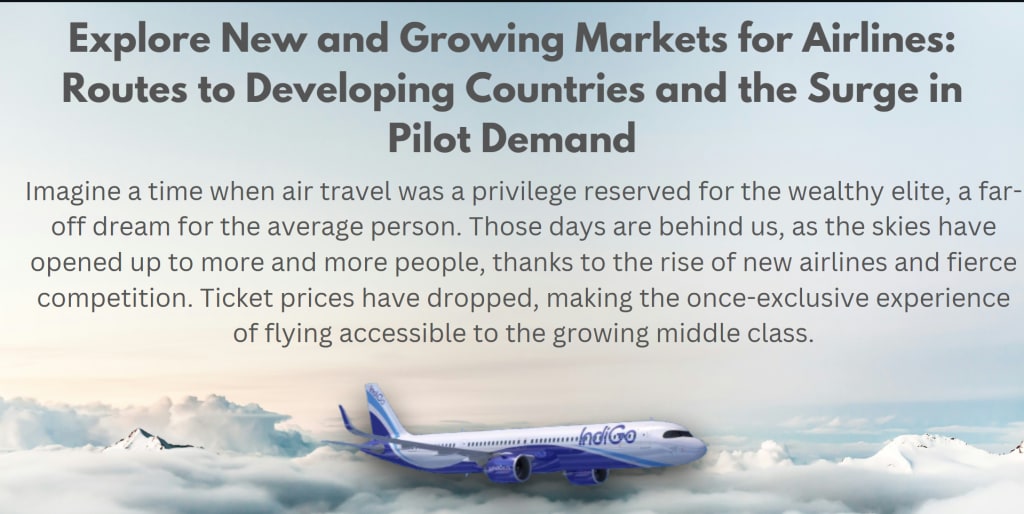
Imagine a time when air travel was a privilege reserved for the wealthy elite, a far-off dream for the average person. Those days are behind us, as the skies have opened up to more and more people, thanks to the rise of new airlines and fierce competition. Ticket prices have dropped, making the once-exclusive experience of flying accessible to the growing middle class.
The world is changing, with developing nations experiencing economic booms that are elevating millions into a new economic bracket. Suddenly, air travel is no longer a luxury but a viable option for business trips, vacations, and visiting loved ones. As these economies grow, airlines are seizing the opportunity to expand their networks, opening up routes to regions previously underserved or entirely overlooked.
This rapid expansion isn’t just about new destinations; it’s fueling an unprecedented demand for pilots. Airlines are racing to train and hire skilled aviators to keep pace with the growing number of flights. The skies are buzzing with opportunity, as the once-rare thrill of flying becomes a routine part of life for millions more people around the globe.
The Rise of Developing Markets
Rapid economic expansion in developing nations, especially in Asia, Africa, and Latin America, has led to a middle class that is expanding and becoming more and more interested in air travel. Over half of the growth in air travel worldwide is anticipated to come from Asia-Pacific, according to the International Air Transport Association (IATA), during the next twenty years. Similarly, Africa and Latin America are projected to see strong growth, driven by rising incomes and urbanisation.
Airlines are capitalising on this trend by launching new routes to secondary cities in these regions. For example, the rise of low-cost carriers in Asia and Africa has made air travel more accessible to a broader population, stimulating demand in previously underserved markets. In Latin America, countries like Brazil and Mexico are becoming key hubs for regional and international travel, attracting major airlines to establish new connections.
The Impact on Pilot Demand
The expansion into new and developing markets has a direct impact on the demand for pilots. As airlines increase their fleets to service these routes, the need for skilled pilots grows in together. The Boeing Pilot and Technician Outlook for 2023 predicts that the global aviation industry will require more than 600,000 new pilots over the next 20 years, with the Asia-Pacific region alone accounting for nearly 40% of this demand.
This surge in pilot demand presents both opportunities and challenges for the aviation industry. On one hand, it creates job opportunities for aspiring pilots and supports the growth of flight schools and pilot training programs. On the other hand, it increases the existing pilot shortage, particularly in regions where training infrastructure is still developing.
The pilot training fees in India are considered to be the best according to the standards of training from the experts. For example, Insight Aviation is the best pilot training institute in India known for its high success rate of pilots being employed in IndiGo.
Strategic Growth: Benefiting Both Economies and Airlines
For airlines, expanding into developing markets is about capturing new customer bases and also about strategic growth. By establishing a presence in these regions early on, airlines can build brand loyalty and secure a competitive advantage as these markets continue to grow. Furthermore, because there is less competition and operating expense on these routes, they can offer larger profit margins.
From an economic perspective, the growth of air travel in developing countries has a ripple effect, stimulating tourism, business travel, and trade. It also leads to the development of aviation infrastructure, including airports and maintenance facilities, which further drives job creation and economic growth.
Challenges and Considerations
While the potential for growth in developing markets is substantial, airlines must navigate several challenges. Infrastructure limitations, regulatory hurdles, and political instability in some regions can pose significant risks. Additionally, the cost of pilot training and certification remains high, creating barriers for aspiring pilots in developing countries.
To address these challenges, airlines and governments need to invest in aviation infrastructure, establish partnerships with local training institutions, and implement policies that support the growth of the aviation sector. Furthermore, airlines can explore innovative solutions, such as offering scholarships and apprenticeships, to attract and retain talent.
The expansion into new and growing markets in developing countries is a key driver of the aviation industry's future growth. As airlines launch new routes and increase their presence in these regions, the demand for pilots is set to soar. By strategically navigating the opportunities and challenges associated with these markets, airlines can not only enhance their profitability but also contribute to the economic development of emerging economies. For aspiring pilots, this trend offers a pathway to exciting and rewarding careers in a dynamic and globalised industry. Join Insight Aviation’s IndiGo Cadet Pilot Programme, the best pilot training institute in India for commercial pilot training and start your aviation career today!
About the Creator
Enjoyed the story? Support the Creator.
Subscribe for free to receive all their stories in your feed.
Comments
There are no comments for this story
Be the first to respond and start the conversation.