
Evidence of Evolution Present in Your Own Body
Evidence Hidden in Your Body
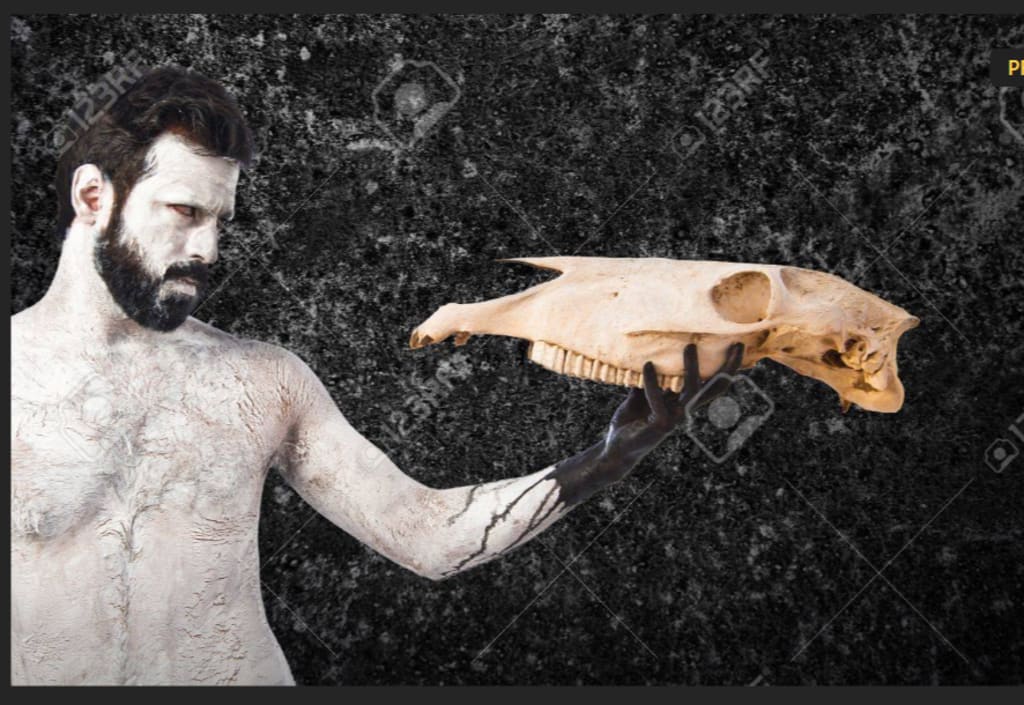
The human body can be likened to a sacred place and also a repository of natural history. Upon careful examination, one can observe certain body parts that exist not out of necessity for our present selves, but rather as remnants from our animal ancestors. While these vestiges no longer serve their original purpose, they have not completely vanished as they do not impose significant costs. These remnants from our ancient past can only be understood within the context of evolutionary processes driven by natural selection.
When your arm is resting on a flat surface, exert pressure with your thumb against your pinky while tilting your hand slightly upwards. If there is a raised band in the center of your wrist, it indicates the presence of a vestigial muscle in your forearm. This visible tendon is connected to the palmaris longus, a muscle that is absent in approximately 10-15% of individuals, either in one or both arms. However, this absence does not affect their strength, particularly their grip strength. In fact, surgeons often remove this tendon as it is one of the first choices for reconstructive and cosmetic surgeries.
The palmaris longus muscle can be observed in various mammal species, but it is most prominent in those that rely on their forelimbs for locomotion. In primates, this muscle exhibits greater length in lemurs and monkeys, while it is shorter in chimpanzees, gorillas, and other apes that do not heavily rely on tree traversal. It is important to note that the palmaris longus is not the sole residual muscle present in our bodies.
The three muscles connected to our outer ear have limited mobility, particularly when compared to our mammalian counterparts, who utilize them to pinpoint the origins of sounds. This would have been advantageous for early nocturnal mammals. In humans, the residual effects of this adaptation can still be observed using electrodes. In a study, scientists recorded a surge of activity in the muscle cells of the ear in response to a sudden sound. While insufficient to physically move the ear, this activity is detectable.
The sound's origin can be inferred from the results - it emanated from a speaker positioned to the left of the study participants. Consequently, their left ear subconsciously attempted (unsuccessfully) to turn towards the sound. Another futile demonstration of our vestigial body parts can be observed when goosebumps appear. When exposed to cold temperatures, minuscule muscles connected to our body hairs contract, causing the hairs to stand upright and forming a bump on the surrounding skin. This reaction is more advantageous for our furry mammalian relatives as the raised hair creates additional insulation, aiding in warmth retention. Birds also possess this capability; you may have witnessed a puffed-up pigeon on a chilly day.
Adrenaline is a hormone that plays a role in the body's reaction to cold temperatures, as well as in the fight or flight response. This hormone aids certain animals in appearing larger when they feel threatened. Additionally, it may explain why unexpected and emotionally charged moments in music can elicit goosebumps in some individuals. Another intriguing aspect of our anatomy is our tail. Located at the end of our spine, it consists of a group of fused vertebrae. While the number of vertebrae can vary between individuals, typically ranging from three to five, we commonly refer to this structure as the tailbone. In its current form, it functions as an anchor for certain pelvic muscles, but it also represents the remnants of our ancestors' tails.
At one point, each of us possessed a tail. During the early stages of gestation, around 4 weeks in, human embryos bear a striking resemblance to embryos of other vertebrates. This resemblance includes the presence of a tail, consisting of 10-12 developing vertebrae. While in many other animals this tail continues to develop into a fully-formed appendage, in humans and other apes, the cells in the tail are programmed to undergo cell death a few weeks after their appearance. However, in very rare cases, a mutation occurs that allows the ancestral blueprint to persist, resulting in the birth of a human baby with a true vestigial tail. One notable vestigial behavior is the palmar grasp reflex, which is particularly endearing. Infants, up until approximately 6 months old, exhibit an incredible ability to grasp onto objects placed in their hands. A similar reflex exists for their feet. I came across a fascinating footage from the 1930s that demonstrates this behavior. These one-month-old babies exhibit an impressive strength, as their inner primate enables them to support their entire weight.
About the Creator
Enjoyed the story? Support the Creator.
Subscribe for free to receive all their stories in your feed.
Comments
There are no comments for this story
Be the first to respond and start the conversation.