
Ensuring Security And Compliance With Splunk Observability Cloud
How Splunk Observability Cloud Strengthens Security and Simplifies Compliance for Modern Enterprises
Imagine maintaining oversight over hundreds of sheep stretched across the vast Australian outback. You’d need a good pair of eyes, a solid communication mechanism, and a well-planned strategy to corral them all safely. It's like giving shepherd’s advice for managing modern IT infrastructure at scale. Only now have the sheep been replaced with servers, applications, and data, and the dog has become a mighty observability platform. Maintaining security, compliance, and visibility can sometimes feel like a Sisyphean effort. Organisations are turning to data-driven insights with Splunk observability cloud to navigate these complex challenges precisely. This article explores how leveraging Splunk Observability Cloud can help you worry less about security and compliance.
How secure is Splunk observability cloud?
Security is non-negotiable. It’s the bedrock of any sound system. Splunk Observability Cloud knows better and adds additional security layers to your precious data and the correctness of your systems.
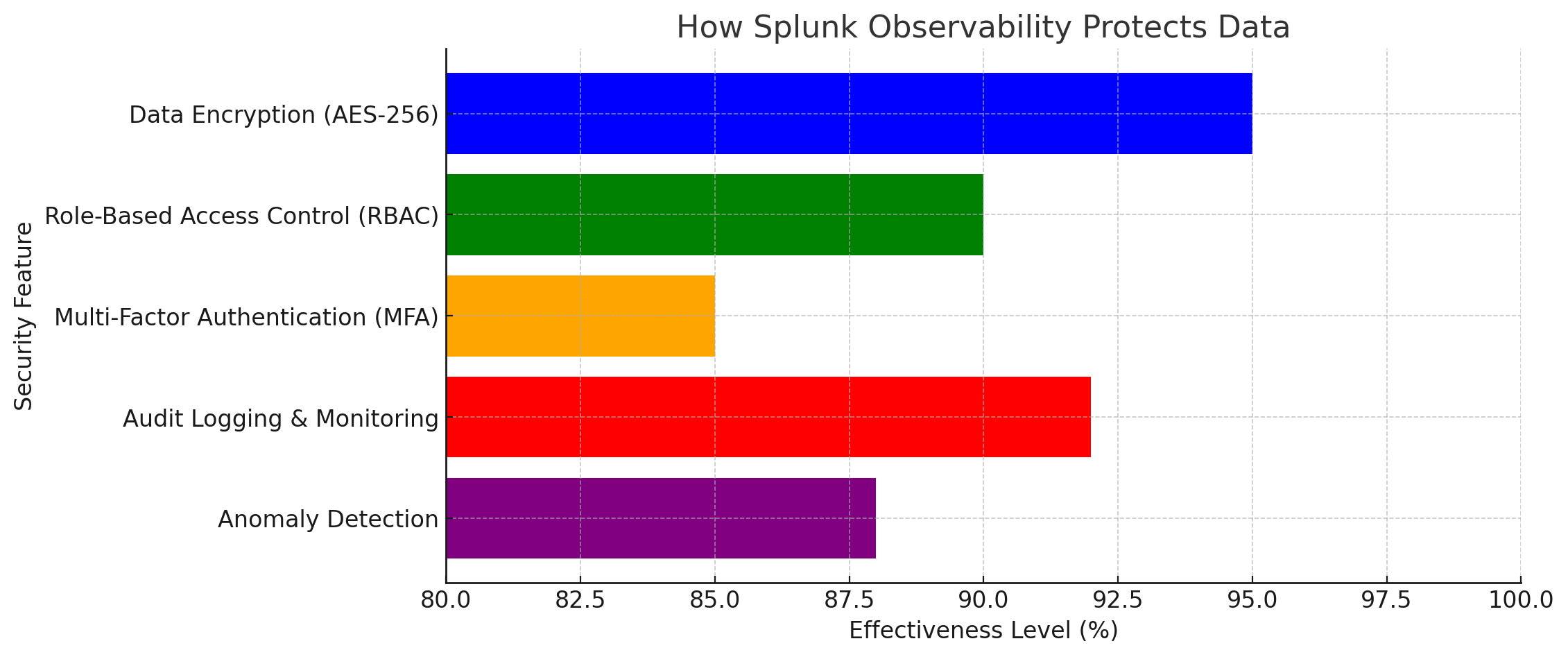
- Encryption: All data flowing in motion or at rest is encrypted with industry-standard protocols. It is like a digital vault: it encrypts your information so it’s out of reach of unauthorised access.
- Access control: Fine-grained role-based access control (RBAC) allows for great flexibility regarding what data can be viewed or what actions the user can perform. This prevents unauthorised entry and guarantees that only the correct individuals have the keys to the kingdom.
- Secure infrastructure: The Splunk Observability Cloud lives within a security-first environment with the highest levels of physical and logical security controls. Some examples are firewalls, intrusion detection systems, and regular security audits. They are the guard dogs of a digital world, continually on patrol.
- Vulnerability management: Splunk regularly hunts down and patches vulnerabilities. Patches and regular security updates keep the fortress-like platform secure.
What compliance standards does Splunk observability meet?
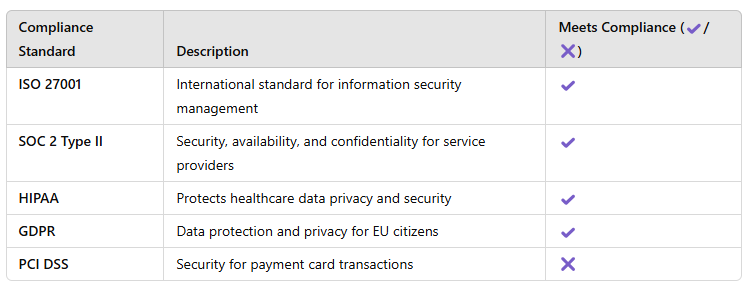
Compliance is more than a good idea; it’s the law of the land. Splunk understands this and has architected its Observability Cloud to meet the requirements of different industry standards and regulations.
- SOC 2 type II: An independent audit demonstrating Splunk’s security, availability, processing integrity, confidentiality and privacy controls. It’s like being awarded a gold star by an independent evaluator.
- ISO 27001: This standard from the Organisation for International Standardisation contains the requirements for an information security management system (ISMS) and demonstrates Splunk’s commitment to driving information security risk management.
- HIPAA: Splunk Observability Cloud can be used in a HIPAA-compliant manner for healthcare organisations.
- GDPR: Splunk Observability Cloud assists organisations with fulfilling their obligations under the General Data Protection Regulation (GDPR).
How does Splunk Observability protect data?
Data protection isn’t just about keeping the baddies out. It's about keeping data intact and accessible. The Splunk Observability Cloud contains numerous features to help ensure your data is healthy and whole.
- Data integrity: Splunk applies checksums and other clever tricks to ensure your data has not been fiddled with. This is crucial for sustaining confidence in your information.
- Data availability: Thanks to redundancy and failover mechanisms, your data is always available, even in a minor system glitch.
- Data retention: You can define retention policies that best fit your requirements. This keeps you in compliance with data retention regulations.
Can Splunk Observability detect security threats?
You bet it can. Splunk Observability Cloud offers real-time monitoring and analytics, which the software uses to detect security threats.
- Anomaly detection: Splunk can detect anomalies that might indicate a potential threat. It’s like / having / a / digital bloodhound / hot on the heels of trouble.
- Threat intelligence: Splunk can detect known threats and malicious actors using threat intelligence feeds.
- Security incident investigation: You can use Splunk to investigate security incidents and determine what happened.
How do we ensure compliance with Splunk Observability?
Splunk gives you the tools to do this, but it's your responsibility to use them effectively to ensure compliance.
- Understand what you need: First, you need to understand your compliance needs. What are the rules you must abide by? What type of data should you secure?
- Set access controls: Tie the granular access controls to keep sensitive data under lock and key.
- Create alerts and notifications: Set up alerts to notify you of security incidents or compliance violations.
- Be sure to review and audit: Regularly check your Splunk setup and audit logs to confirm everything is functioning as expected.
Does Splunk observability offer audit logging?
Yes, audit logging is an essential component of Splunk Observability Cloud. This creates a clear audit trail of everything, including details about who accessed what data, when, and what was modified. Knowing this is crucial for:
- Compliance audits: Audit logs can help establish compliance with numerous regulations.
- Security forensics: Audit logs can assist in analysing security incidents and identify root causes.
- User activity monitoring: Audit logs can monitor user activity and help identify security breaches.
Case Study
A major Australian financial institution had a considerable challenge — scaling its cyber security and compliance function while the volumes of transaction data were exploding. They faced slow threat detection, inefficient log analysis, and challenges to meet APRA CPS 234 compliance with millions of daily transactions. As they engaged with Splunk, they quickly discovered that they did not have the skill set to take full advantage of it. A tailored data mastery training solution changed it all, allowing their SOC team to use real-time correlation searches, anomaly detection and machine learning-powered threat analysis. Incident response times were cut in half in six months, and compliance audits became a breeze. “Our team detects threats in minutes now, not hours,” said their CISO. We’ve reduced false positives by 40%, dramatically improving our security posture.” This case highlights the need for specialised know-how to glean real value from security tools. For many, advanced Splunk concepts drive tangible reliance improvements in cybersecurity, including adaptive thresholding and data model acceleration.
Conclusion
Today's IT world is a constant upward fight regarding security and compliance management. But it doesn’t have to be with the right tools and strategies. Splunk Observability Cloud is an excellent tool for monitoring systems, detecting security vulnerabilities and compliance with the rules. Get a better view of your infrastructure, keep your data safe, and show you care with Splunk Observability Cloud! It is the right gear and the knowledge to face those challenges and succeed. And like any good adventure, steps are taken to get to the prize!
About the Creator
Kelly Thomas
Kelly Thomas is a cybersecurity and data analytics writer specializing in enterprise resilience and compliance. He provides insights on security, IT operations, and observability.
Enjoyed the story? Support the Creator.
Subscribe for free to receive all their stories in your feed.
Comments
There are no comments for this story
Be the first to respond and start the conversation.