
“Ensuring Safety and Responsibility in Field Hockey: A Comprehensive Analysis of FIH Regulations”
Field of Hockey
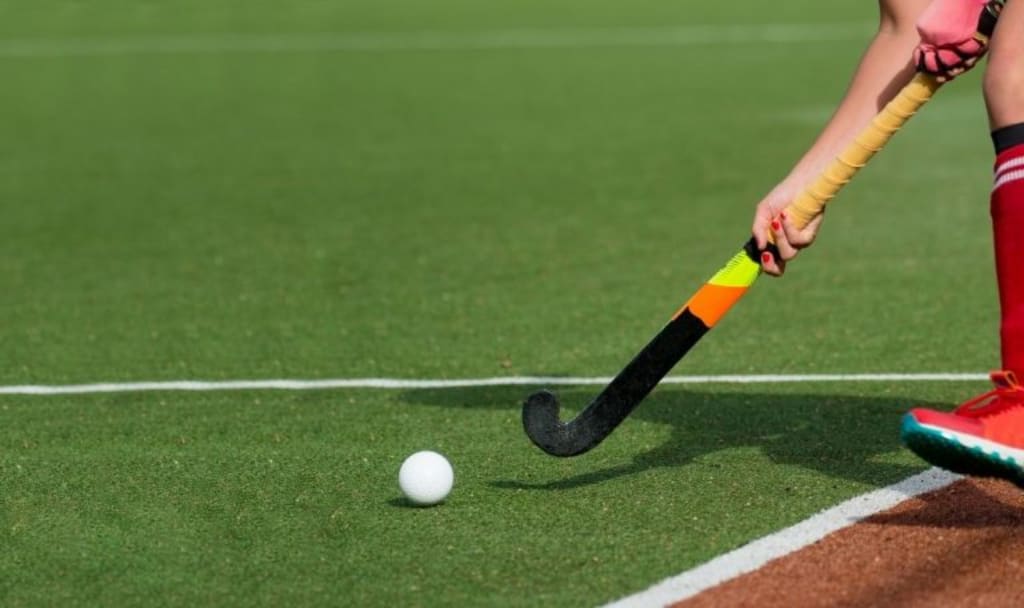
Field hockey is a physically demanding and fast-paced activity, so rigorous regulations are required to safeguard players and maintain the integrity of the game. Field hockey's international governing organization, the International Hockey Federation (FIH), created the "Rules of Hockey," emphasizing "safety and responsibility." These rules are intended to maintain fairness and competition on the field in addition to protecting participants from any harm. This essay explores the FIH's emphasis on accountability and safety, with particular focus given to how these rules affect the current game and player actions, equipment standards, and umpiring duties.
The Importance of Safety in Field Hockey
Field hockey, a fast-paced and physically demanding sport, necessitates rigorous regulations to ensure player safety and uphold the integrity of the game. The International Hockey Federation (FIH), the global governing body for field hockey, has established the "Rules of Hockey," which emphasize "safety and responsibility." These rules are designed not only to protect players from potential injuries but also to ensure fairness and competitiveness on the field. This essay delves into the FIH’s emphasis on safety and responsibility, focusing on equipment standards, player conduct, umpiring duties, and how these regulations shape the modern game.
Field hockey's physical nature necessitates the establishment of precise safety regulations that address every facet of the game, including umpire duties, equipment, and behavior. In keeping with the sport's competitive essence, the FIH's methodology guarantees that people can participate in it with little risk.
Equipment Safety: The First Line of Defense
The equipment regulations are one of the most important parts of field hockey safety. According to the FIH, a player's equipment "does not constitute a danger to themselves or others by virtue of its quality, materials, or design." In order to prevent injuries, it is important to follow the requirements for clothing, protective gear, and sticks.
The dimensions and materials of field hockey sticks must be strictly followed. The stick should have a smooth surface and no sharp edges that could cut players unintentionally. To maintain safety and fairness, the stick's weight, length, and curve are all regulated. Both the player and their opponents are at risk when utilizing sticks that have been improperly altered or damaged.
Protective gear serves a significant role in preserving players from the inherent risks of field hockey. “Mouthguards, shin guards, and protective gloves” are recommended by the FIH, especially for players on the defensive. Goalkeepers need to wear full safety gear, such as helmets, leg guards, and padded gloves, since they encounter fast-moving shots. To avoid giving someone an undue edge, the size of this equipment is rigorously limited.
Players who defend penalty corners are now permitted to don extra safety equipment, like padded gloves and face masks. To make sure that the safety precautions don't impede the competitive nature of the game, this equipment must be taken down as soon as the threat has passed. The foundation of the FIH's regulatory framework is this harmony between player safety and fairness.
Player Responsibility: Caution and Awareness
The initial line of defense is provided by equipment, but players also play a vital part in maintaining player safety. Player conduct is very important to the FIH, especially the necessity to refrain from acting recklessly or dangerously. It is expected of players to handle their sticks so as not to cause risk to others. In order to securely intercept the ball, for example, it is usually forbidden to raise the stick over shoulder height during play. By preventing unintentional hits to the head or upper body, this regulation seeks to lower the possibility of catastrophic harm.
Additionally, players need to exercise responsible ball control by refraining from risky actions like raising the ball into packed spaces. A ball is considered dangerous when it is played in a way that compels an opponent to evade the ball, and the offending player may face consequences. Another essential part of hockey is tackling, which needs to be done carefully. FIH regulations prohibit reckless tackles that include physical contact since they can cause injuries.
The FIH also stresses the significance of **sportsmanship and respect**. It is required of players to show consideration for their opponents' safety by abstaining from aggressive actions that might result in hazardous circumstances. In addition to verbal behavior, general demeanor is closely observed, and unsportsmanlike behavior might result in consequences.
Umpires and Safety Enforcement
Although players are accountable for their actions on the field, umpires are crucial in upholding safety rules. When dangerous conditions develop, umpires have the power to halt play and penalize players who disobey safety regulations. Umpires are granted discretionary sanctions by the FIH, which can vary from free hits to suspensions for more serious offenses.
Umpires verify that players are wearing safe and authorized equipment prior to the commencement of every match. The umpire may remove a player from the game until the problem is fixed if any equipment is determined to be dangerous. By doing this, it is made sure that the game is safe and fair right away.
Apart from following the regulations, umpires are supposed to use “good judgment and common sense”. Although not every unintentional touch calls for punishment, intentional or risky acts need to be handled carefully. Sustaining safety and the game's flow depend on striking a balance between stringent rule enforcement and situational judgment.
The FIH’s Role in Promoting Safe Play
The FIH is dedicated to safety in ways that go beyond following the law. Through education and frequent revisions to its rules, the organization actively supports safe play. The **Rules Committee** of FIH consistently assesses how current regulations affect player safety and modifies them as needed. Feedback from coaches, players, and medical experts is frequently used to inform these revisions.
Player safety has been improved, for instance, by recent rule modifications pertaining to aerial balls and penalty corner defenders. Injury risks have decreased since players can now safely intercept aerial balls and use protective gear during penalty corners. However, the FIH is still keeping an eye on these developments to make sure that these regulations aren't being abused.
The “national hockey associations” and the FIH also work together to guarantee that safety regulations are upheld at all hockey levels. Because of this cooperation, safety measures depending on the needs and growth of each nation can be gradually implemented.
The FIH advocates for field hockey safety by means of "educational resources," such as instructional movies and online courses. Through the provision of risk identification and mitigation skills to officials, coaches, and players, the FIH cultivates a culture of accountability and safety within the playing field.
Conclusion
The FIH's field hockey regulations are based on the fundamental principles of safety and accountability. The FIH strives to reduce the risks associated with the sport while maintaining its competitive and dynamic aspect through strict rules on equipment, player behavior, and umpiring. Field hockey is guaranteed to remain a safe, equitable, and fun game for players of all skill levels thanks to these rules, as well as regular rule revisions and educational programs. The FIH's dedication to player safety will always be a guiding concept as the sport develops.
About the Creator
Enjoyed the story? Support the Creator.
Subscribe for free to receive all their stories in your feed.
Comments
There are no comments for this story
Be the first to respond and start the conversation.