
Early Childhood Education: A Comprehensive Overview
Early Childhood Education
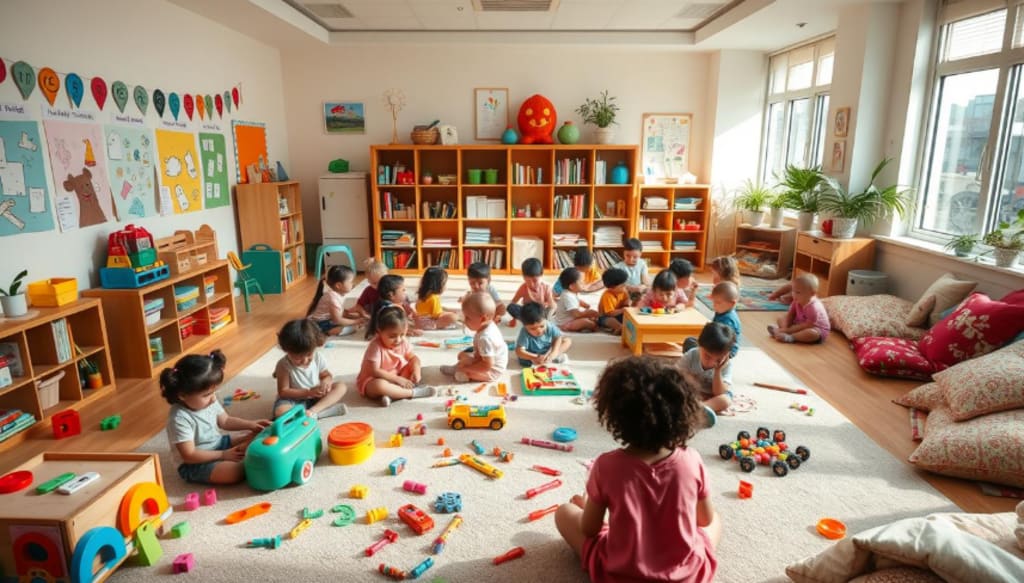
Early Childhood Education: A Comprehensive Overview
Every child has a universe of potential waiting to be unlocked. As a parent and educator, I've seen how early childhood education changes young minds. The first five years are key for brain growth and learning, setting the stage for future success.
Early childhood education is more than just school. It's a way to help children grow in many areas. It's about learning how young children develop and how we can support them. This helps kids become curious, creative, and think critically.
We'll explore the important strategies and ideas behind early childhood education. We'll look at the science of learning and new educational models. We'll also share tips for families and educators to help kids reach their full potential.
Key Takeaways
Early childhood education is fundamental to lifelong learning
Brain development is most rapid during the first five years
Holistic approaches support cognitive and emotional growth
Quality early education impacts long-term academic success
Parents play a critical role in early learning experiences
Understanding the Foundations of Early Childhood Education
Early childhood education is key for kids' growth in mind and social skills. It has changed a lot, showing how we now see young learners.
Historical Development of Early Education
Early education started with pioneers who saw kids' special learning abilities. People like Friedrich Froebel and Maria Montessori changed how we teach. They focused on learning that's centered on the child.
1837: Froebel establishes the first kindergarten in Germany
1907: Montessori method introduces individualized learning environments
1920s: Progressive education movement gains momentum
Core Educational Philosophies
Many educational ideas have shaped early childhood education today. The Montessori method is a big change. It values kids' curiosity and follows their growth stages.
Philosophy Key Principles Learning Approach
Montessori Self-directed learning Hands-on exploration
Reggio Emilia Child as collaborator Project-based learning
Waldorf Holistic development Creative expression
Modern Approaches to Learning
Today, early childhood education uses new tech and research. It sees learning as a lively, interactive thing. It's not just about sitting in a classroom.
"Education is not the filling of a pail, but the lighting of a fire." - William Butler Yeats
The Montessori method still shapes how we teach today. It focuses on learning that's made for each child. It helps kids want to learn and explore on their own.
Key Developmental Stages in Early Learning
Child development is a complex and fascinating journey that unfolds through distinctive stages of growth. Understanding these stages helps parents and educators support children's learning and prepare them for kindergarten readiness.
https://youtube.com/watch?v=s2hSOmg2ZvA
Early childhood is a critical period of rapid transformation. Children experience significant changes in physical, cognitive, social, and emotional capabilities during these formative years.
Physical development involves motor skill progression
Cognitive growth includes language and problem-solving abilities
Social skills emerge through interaction
Emotional intelligence develops gradually
"Every child follows a unique developmental path, yet shares common milestones that guide their learning journey." - Child Development Research Institute
Kindergarten readiness is more than just academic skills. Children need well-rounded capabilities that include:
Basic self-care skills
Emotional self-regulation
Communication abilities
Basic problem-solving
Tracking developmental milestones provides crucial insights into a child's progress and potential support needs.
Age Range Key Developmental Characteristics
0-2 years Rapid physical growth, language acquisition, attachment formation
2-3 years Enhanced motor skills, emerging independence, vocabulary expansion
3-5 years Complex social interactions, imaginative play, pre-literacy skills
Recognizing and nurturing individual developmental stages supports children's holistic growth and prepares them for future educational challenges.
About Early Childhood Education: Essential Components
Early childhood education is key for lifelong learning. Preschool programs shape young minds with educational strategies. They support child development in many ways.
Good early childhood education has many parts. These parts work together to make learning fun and effective for young kids.
Curriculum Development
Creating a strong curriculum for early education needs careful planning. It must understand child development stages. Effective preschools focus on:
Learning goals that fit the child's age
Developing all kinds of skills
Using flexible teaching methods
Combining different learning experiences
Assessment Methods
Keeping track of children's progress uses many advanced methods. These include:
Watching how they learn
Keeping records of their work
Tracking their growth milestones
Assessing their interactive skills
Learning Environment Design
The physical and emotional setting greatly affects early education. Preschools design spaces that:
Spark curiosity
Invite exploration
Support teamwork
Keep children emotionally safe
"The environment speaks to children and tells them what is valued." - Loris Malaguzzi
Designing learning spaces on purpose makes education more fun and meaningful for young students.
Play-Based Learning and Its Impact on Child Development
Play-based learning is more than just fun. It's a powerful way to help kids grow and develop. It uses kids' natural curiosity to help them learn in many ways.
Through play, kids learn important skills. They get to explore and discover the world in a meaningful way. This helps them grow in many areas.
"Play is the highest form of research." - Albert Einstein
Key Benefits of Play-Based Learning
Enhances cognitive skills and problem-solving abilities
Develops social interaction and communication skills
Supports emotional regulation and self-understanding
Promotes physical coordination and motor skill development
Studies show that play-based learning is key for kids' growth. It makes learning fun and interactive. Kids learn to think critically, be creative, and understand their feelings.
Play Type Developmental Benefits
Constructive Play Spatial reasoning, fine motor skills
Dramatic Play Social skills, emotional understanding
Physical Play Gross motor development, coordination
Parents and teachers can help by making learning fun. They can use open-ended materials and play with kids. This makes learning more engaging.
The power of play-based learning is in making education active and fun for kids.
Social-Emotional Development in Early Years
Child development is more than just learning to read and write. Social-emotional skills are key to a child's success and happiness. Early years are vital for growing these skills that help with feelings and getting along with others.
Knowing about social-emotional development helps parents and teachers create a supportive space. This space helps young children grow and be strong.
Building Emotional Intelligence
Emotional intelligence starts with knowing and handling our own feelings. Children learn to:
Identify different emotions
Express feelings in the right way
Understand others' feelings
Feel empathy and kindness
"Emotional intelligence is the foundation of healthy relationships and personal growth." - Dr. Daniel Goleman
Peer Interaction Skills
Learning with friends helps kids improve their social skills. They learn how to communicate and work together. Important skills include:
Sharing and taking turns
Fixing problems without fighting
Listening well
Respecting each other's space
Self-Regulation Techniques
Teaching kids to control their feelings and actions is crucial. It helps them deal with tough social situations.
Deep breathing exercises
Mindfulness practices
Activities that help understand emotions
Good ways to handle stress
By focusing on social-emotional skills, we help kids make better friends, face challenges, and connect deeply with others.
Different Types of Early Education Programs
Parents looking into early childhood education have many options. Each program offers unique ways to help kids grow. They support kids' minds, social skills, and feelings.
The world of daycare and education has grown a lot. Now, families can find many quality places for early learning.
Traditional Preschool Programs
Montessori Method
Waldorf Education
Reggio Emilia Approach
The Montessori method is special. It focuses on kids learning on their own. Dr. Maria Montessori created it. It helps kids learn by doing and exploring.
Program Type Key Characteristics Learning Focus
Traditional Preschool Structured classroom setting Group learning and socialization
Montessori Method Child-directed learning Individual exploration and independence
Waldorf Education Creative and holistic approach Artistic and imaginative development
"The goal of early childhood education should be to activate the child's own natural desire to learn." - Maria Montessori
Choosing a daycare or preschool is important. Parents should think about what's best for their child. Each program has its own strengths that help kids grow and learn.
The Role of Technology in Modern Early Education
Technology has changed early childhood education a lot. It offers new ways to help with early literacy and child care. Young kids now use digital tools that make learning fun and interactive.
Digital tools give kids chances to learn in ways old generations couldn't dream of. The goal is to use technology in a way that helps kids learn without risks.
Digital Learning Tools
Today's digital tools can really help with early literacy. Some great tools include:
Educational mobile apps that teach letter recognition
Interactive reading programs
Adaptive learning software
Touchscreen devices with educational content for kids
Screen Time Guidelines
Experts say we need to watch how much screen time kids get. Here are some tips:
Keep screen time under 1 hour a day for kids under 5
Pick educational content that's good for kids
Play with kids when they're using digital tools
Make sure they still get to play outside and with friends
Interactive Educational Resources
Resource Type Age Group Learning Focus
PBS Kids Games 3-6 years Literacy and Math Skills
ABC Mouse 2-8 years Comprehensive Early Learning
Starfall 4-7 years Reading and Phonics
"Technology should be a tool that enhances, not replaces, traditional learning experiences." - Early Childhood Education Expert
Using technology wisely can give young kids amazing learning experiences. It also helps meet their developmental needs.
Parent and Family Involvement Strategies
Strong family involvement is key to early childhood education's success. Child care options help create supportive learning spaces. These spaces help kids get ready for kindergarten.
"Parents are a child's first and most important teachers" - National Association for the Education of Young Children
Families can help early learning in many ways:
Create consistent home learning routines
Communicate regularly with educators
Participate in classroom activities
Read together daily
Practice age-appropriate educational activities
Understanding child care options is important for effective family involvement. Parents can help with kindergarten readiness by:
Selecting the right educational programs
Knowing developmental milestones
Supporting social-emotional skills
Family Involvement Strategy Impact on Child Development
Regular Communication Improved Academic Performance
Home Learning Activities Enhanced Cognitive Skills
Classroom Participation Stronger Parent-Teacher Relationships
Working together, families and educators build powerful learning spaces. These spaces support children's growth in all areas.
Conclusion
Early childhood education is key for lifelong learning and growth. Studies show that quality education in the first years greatly impacts a child's development. It shapes their thinking, social skills, and emotions.
Understanding early learning helps parents, teachers, and communities support young minds. There are many ways to help children reach their milestones. From play to technology, new methods meet each child's needs.
Parents and teachers are crucial in helping children grow. They use methods that spark curiosity and teach important life skills. Working together, we can give children the best start in life.
Quality early education is a big deal for our society. It prepares the next generation of leaders and thinkers. By focusing on all-around development, we help children build a strong base for their future.
FAQ
What is early childhood education?
Early childhood education is for kids aged 0-8. It helps them grow in many ways. It gives them skills needed for school and life.
Why is play-based learning important in early childhood education?
Play helps kids learn by doing. It boosts their thinking, creativity, and social skills. It makes learning fun and right for their age.
What are the key developmental stages in early learning?
Kids grow in many ways. They start with basic skills and learn to solve problems and interact with others. This growth is key for getting ready for school.
How do different educational approaches like Montessori differ from traditional preschool?
Montessori focuses on kids learning on their own. They choose what to do and learn at their own pace. Traditional schools are more structured and follow a set plan.
What role do parents play in early childhood education?
Parents are very important. They help by making a learning-friendly home and doing activities together. This builds confidence and a love for learning in kids.
How much screen time is appropriate for young children?
The American Academy of Pediatrics says kids under 18 months should not watch screens much. For 18-24 months, choose educational content with parents. Kids 2-5 should watch no more than 1 hour of educational shows per day.
What are the benefits of early childhood education programs?
These programs help kids in many ways. They improve social skills, get kids ready for school, and help with reading and emotions. They also prepare kids for school challenges ahead.
How can I support my child's social-emotional development?
Encourage kids to express feelings and teach empathy. Model good behavior and provide routines. Read books and talk about emotions to help them solve problems and control their feelings.
What should I look for when choosing an early childhood education program?
Look for qualified teachers and small class sizes. The place should be safe and fun. It should also offer a mix of learning and play. Visit and talk to teachers to see if it's right for your child.
How does early childhood education contribute to long-term success?
It sets the stage for a lifetime of learning. It teaches important skills like thinking, communication, and emotional control. Kids who get quality early education do better in school and life.
About the Creator
Selim Miah
Freelance writer, artist and traveller
Enjoyed the story? Support the Creator.
Subscribe for free to receive all their stories in your feed.
Comments
There are no comments for this story
Be the first to respond and start the conversation.