
Dr. Oksana Mankovska: Ukrainian Scientist on War, Brain Drain, and the Future of Research
How has the war in Ukraine impacted scientists, research funding, and international collaboration?

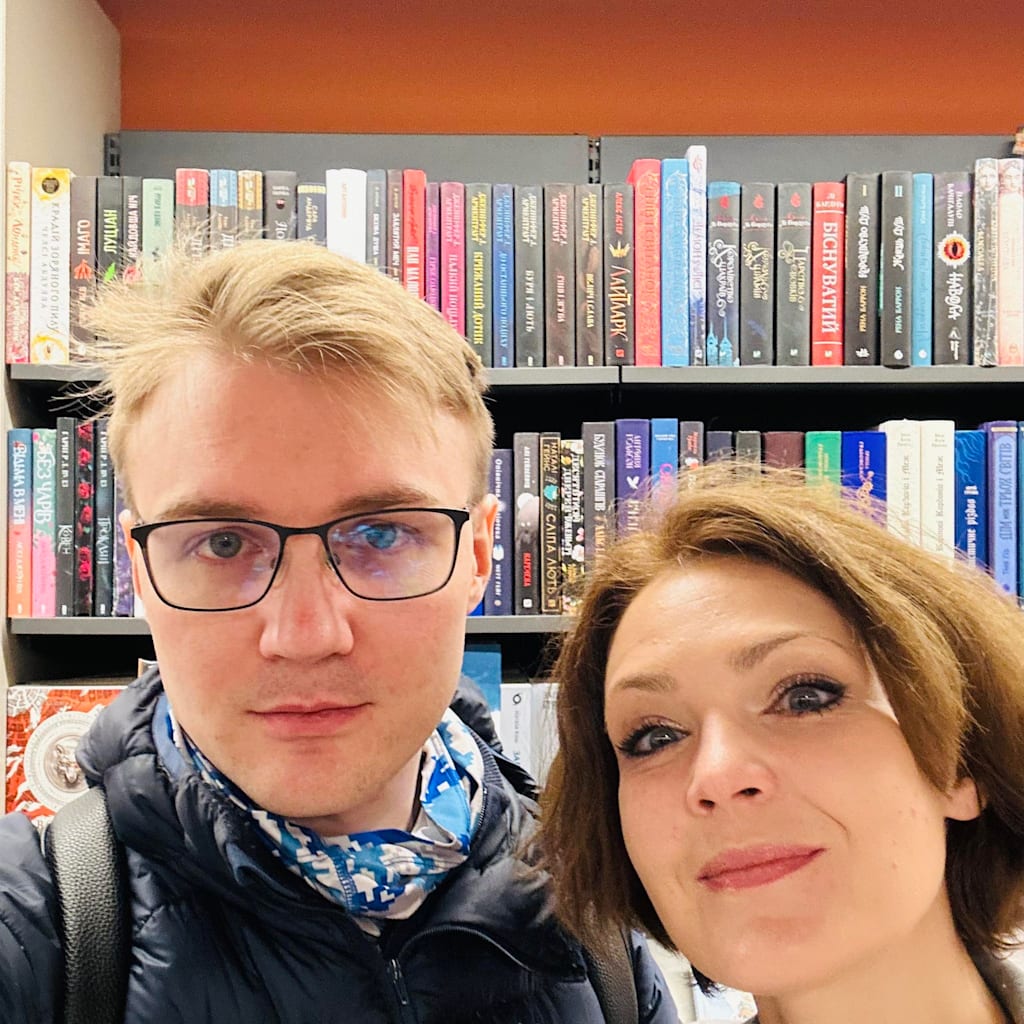
Dr. Oksana Mankovska is a Ukrainian molecular biologist specializing in cancer research and biomarker discovery. She serves as a research scientist at the Institute of Molecular Biology and Genetics of the National Academy of Sciences of Ukraine and as an ambassador for the European Association for Cancer Research. Holding a PhD in Molecular Biology from Taras Shevchenko National University of Kyiv, her work focuses on liquid biopsies, cell biology, and translational oncology within both academic and biotech environments.
In this interview, Scott Douglas Jacobsen speaks with Dr. Oksana Mankovska about the immediate disruption to Ukrainian science caused by Russia’s invasion, including lost grants, halted collaborations, and the forced migration of researchers. Mankovska reflects on systemic issues predating the war—poor infrastructure and low funding—while noting increased international support and collaboration. Despite setbacks, she expresses cautious optimism about rebuilding Ukrainian science through global partnerships and a more open, mobile research culture.
Scott Douglas Jacobsen: What was your first experience of the war?
Dr. Oksana Mankovska: Yes, I overslept, so I did not hear anything. I woke up and…
Jacobsen: How did you start the war? I slept in.
Mankovska: Yes, yes. But that day, my NGO and I got the Horizon Europe grant.
Jacobsen: Horizon Europe? Is that a federal program?
Mankovska: No, it is a European Union research and innovation funding program. Yes, yes. So we successfully received this grant. We needed to finalize the paperwork. We had to do this project with Kharkiv. On that day, they needed to send some documents to Horizon Europe, to the European Commission office, as I remember.
The first message from Kharkiv, from our collaborators, was that they were leaving, and they said, “Leave, if you can also leave.” So everything was destroyed. A lot of work was destroyed. Not physically, but the work on the ground was fantastic.
The main sad thing is that the European Commission declined our participation in this program because of the war. We had already done this work.
Jacobsen: Now, the denial of the grant, of participation, because of the war, what were they afraid of? It was an investment, so what were they afraid of? Was it the loss of investment over time?
Mankovska: Yes, but I think at the beginning of the war it was a problem. Now, probably not, because we have already saved the infrastructure in some cities, and I think Europe and other countries can invest. They understand that we can deal with this problem. We understand the risks, and they understand the risks, and we have had some success in dealing with them. There is more trust in us than there was at the beginning, because everyone thought that we would fall in three days, I think. But Horizon Europe never came back to us.
Jacobsen: Are they back now?
Mankovska: No, no. I hoped that they would pause the process, but they did not.
Jacobsen: If I may interject as a third party, the risk of losing a substantial investment by the European Union or the European Commission is a rational concern. The disappointment in Ukraine over the loss of funding, especially while seeking EU accession, is also a rational emotion. I do not think either side is unreasonable. It is simply an unfortunate context of the war.
Mankovska: And then another thing that happened in the first days… not the day, but the first days, probably. I needed to finalize my scholarship application, but it was a collaborative application, and everyone who participated had to be approved by their institution.
Because everything was collaborative, the institutional scientific council could not hold a meeting, and they did not sign all the documents for my co-applicants. So they could not apply for this scholarship either. It was a Ukrainian scholarship.
Then, many scientists, including my colleagues and students, started looking for positions abroad. Many of them were successful.
I went to Munich because of my family. They live in Munich, they are all scientists, and they have lived there for a long time. I joined them because they were very concerned about me and the situation. But I did not want to move. I wanted to come back from the beginning, so it was not my plan. And I did, finally.
But many people in similar situations have moved abroad and now have good jobs there. They prefer to stay abroad because here, of course, we have saved many things; we have saved large facilities and other infrastructure, but we still cannot compare our salaries with those abroad.
And also the working conditions. But this is not only because of the war; it is a long-standing problem in Ukrainian science. There are not many well-equipped laboratories.
Jacobsen: So, the stable issues are the lack of infrastructure?
Mankovska: Yes.
Jacobsen: And the instability from the war?
Mankovska: Yes, yes.
Jacobsen: Stable instability.
Mankovska: When people understand and experience how work is done abroad, how something that takes me two months can be done there in two days, because of logistics, for example, it becomes difficult to come back.
For scientists, this is very important. People in non-scientific fields often have trouble finding jobs abroad, very often because they do not know the language. For example, in Germany, if you want to work, you often need German. But if you are a scientist, you usually need only English. That makes a big difference.
So scientists have fewer barriers. It is much easier for them to find a job abroad than for other people, in my opinion.
Jacobsen: The unemployment rate for astrophysicists is probably close to zero. They are employable. Are the primary concerns for scientists in Ukraine professional development, income stability, and the professional environment?
Mankovska: It is one of the main issues, not only because of the war. I came into science more than ten years ago, and I cannot say that the war changed everything. These problems existed before, always. Maybe there are also some positive moments for science in Ukraine now, in my opinion.
Jacobsen: What do you mean by that?
Mankovska: First, we found ourselves in a situation where we could not do certain things here, and it became essential for us to find collaborations. That was at the beginning. Second, the international scientific community strongly supported the Ukrainian scientific community.
So there are many new contacts, a lot of support, and many collaborations as a result of this situation. Of course, it is very sad that this had to happen to improve our infrastructure, collaborative environment and culture, because it is also a way of thinking.
It is not about individuals. It is because we come from the Soviet Union, and many of our scientific leaders are still shaped by that system.
Jacobsen: It is a Soviet inheritance.
Mankovska: Yes, yes. For example, if you work in science abroad, you are unlikely to have a stable position. You might work for four years, then move, and then move again. So laboratories are very fluid.
But in that system, you have more opportunities to learn, to gain experience, to communicate with other people, and to develop projects with people you have worked with before. You can also invite, for example, a German scientist, and you often have colleagues from abroad in your lab.
We do not have that. It is very rare for someone from another country to come to Ukraine to work in our scientific institutions. So we have been quite closed within ourselves.
Now, I think we are changing this paradigm, and that is a good thing. I hope so. My dream is to lead an international laboratory as a principal investigator. I want to have researchers from abroad in my lab, and I think we can reach that point when we solve our current problems.
Jacobsen: Yes, scientists often talk about problems and solutions, and the current major problem is a person to the east, Mr. Putin so that we will see about that. Thank you very much for the opportunity and your time, Oksana.
Scott Douglas Jacobsen is a blogger on Vocal with more than 200 publications on the platform. He is the Founder and Publisher of In-Sight Publishing (ISBN: 978–1–0692343; 978–1–0673505) and Editor-in-Chief of In-Sight: Interviews (ISSN: 2369–6885). He writes for International Policy Digest (ISSN: 2332–9416), The Humanist (Print: ISSN, 0018–7399; Online: ISSN, 2163–3576), Basic Income Earth Network (UK Registered Charity 1177066), Humanist Perspectives (ISSN: 1719–6337), A Further Inquiry (SubStack), Vocal, Medium, The Good Men Project, The New Enlightenment Project, The Washington Outsider, rabble.ca, and other media. His bibliography index can be found via the Jacobsen Bank at In-Sight Publishing, comprising more than 10,000 articles, interviews, and republications across more than 200 outlets. He has served in national and international leadership roles within humanist and media organizations, held several academic fellowships, and currently serves on several boards. He is a member in good standing in numerous media organizations, including the Canadian Association of Journalists, PEN Canada (CRA: 88916 2541 RR0001), Reporters Without Borders (SIREN: 343 684 221/SIRET: 343 684 221 00041/EIN: 20–0708028), and others.
Image Credit: Scott Douglas Jacobsen.
About the Creator
Scott Douglas Jacobsen
Scott Douglas Jacobsen is the publisher of In-Sight Publishing (ISBN: 978-1-0692343) and Editor-in-Chief of In-Sight: Interviews (ISSN: 2369-6885). He is a member in good standing of numerous media organizations.
Enjoyed the story? Support the Creator.
Subscribe for free to receive all their stories in your feed.
Comments
There are no comments for this story
Be the first to respond and start the conversation.