
Dr. Kela Henry on the Front Lines of Health Equity
Dr. Kela Henry discusses maternal health risks, access to coverage, and why community-based action is essential to closing health disparities
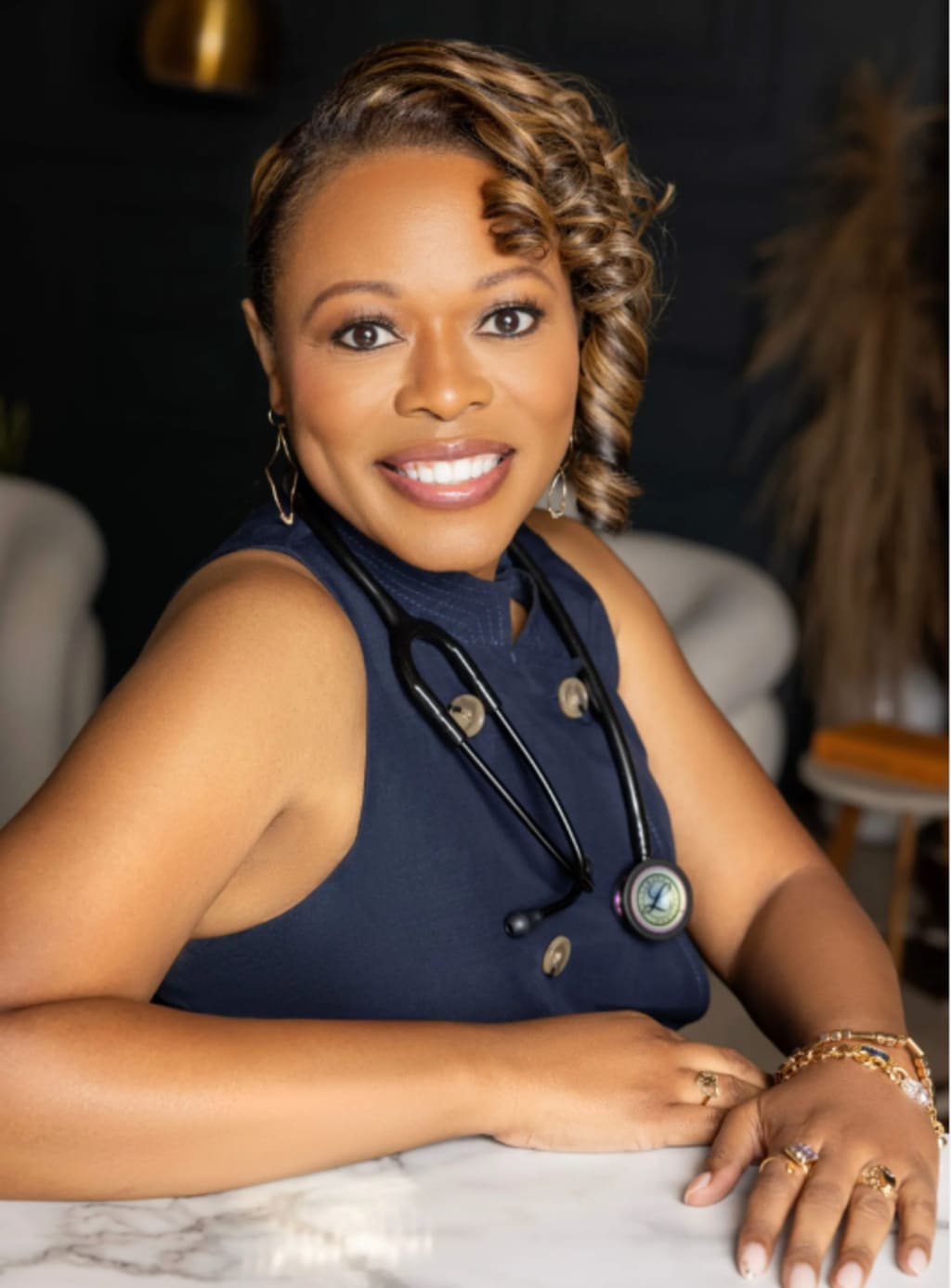
Dr. Kela Henry brings a deeply personal and wide-ranging perspective to the conversation about health equity. As a primary care physician who has cared for patients across generations, cultures, and economic backgrounds, her practice reflects the realities of modern medicine in diverse communities. From treating uninsured patients to working with families navigating language and cultural barriers, Dr. Henry has witnessed firsthand how systemic gaps in housing, income, and access to care shape health outcomes.
In this interview, Dr. Henry shares candid insights on the most pressing disparities affecting minority communities today, including maternal health risks, declining access to coverage, and the ongoing struggle to deliver equitable care within complex healthcare systems. She also highlights the power of community-based solutions—from vaccination outreach to coalition-building—that are helping close gaps and restore trust. Her perspective is both practical and hopeful, grounded in years of clinical experience and a firm belief that collaboration between communities, healthcare providers, and policymakers can drive meaningful change.
Can you describe your work and the populations you serve in addressing health disparities?
I am a primary care physician who has treated a diverse patient population over my career: children, adults, and elderly across the social, ethnic and economic spectrum. My patient base is like a mini United Nations in that I have not only Americans who are Black, White, (does this not have to be cap) Asian, and Latino but also patients from six of the seven continents (no one from Antarctica yet)! In addition, the patients’ medical coverage ranges from those who have commercial and government backed insurance to the uninsured. This mixture of ethnicity, language, culture, and class among my patients exposes me to the disparities and healthcare gaps.
What do you see as the most pressing health disparities affecting racial and ethnic minority communities today?
I think the most pressing issues are the erosion of women’s reproductive health choices, the disproportionate postpartum morbidity and mortality of Black mothers, and the increasing loss of adequate medical coverage as a result of the shifting economic landscape.
How can initiatives like vaccination access and chronic disease prevention improve health equity?
Access to vaccines and information about chronic disease prevention can improve health equity by offering these services where patients gather like places of worship, schools, workshops, and community events. Follow-up and documentation of the effectiveness (or failure) of these interventions with adjustments made to achieve continuous improvement should be the goal.
What role does health education play in closing gaps in healthcare quality and outcomes?
If I had to rank the role health education plays in the closure of these gaps on a scale of low to high, I would rate it as medium-high. Health knowledge is obviously important, but it must first be understood by all parties involved and then correctly implemented if improvement is to be achieved. On patients’ side of the equation, they must follow through on care plans once they are given the information within the context of their language and cultural framework.
How do social determinants of health, such as housing, income, and access to care, affect minority health?
These three social determinants interact in an intricate web that impacts the health of minority populations. First, minorities tend to be over-represented in segregated areas burdened by chronic disinvestment and environmental racism. Substandard housing increases exposure to lead, mold, pests, and bad air quality which then leads to observed higher rates of childhood asthma, lead poisoning, and infections. Secondly, lower income limits access to safer housing, nutritious food, and reliable transportation to doctor’s visits. In an effort to raise their income, these populations may work multiple jobs, which leads to time scarcity. They have less time for exercise and sleep, and unfortunately may delay getting care or miss appointments due to time constraints. Lastly, access to care is tied to the neighborhood disinvestment that results in fewer clinics, particularly those with specialists. This means minority patients are less likely to receive preventative screenings and early diagnosis, leading to delayed care, later stage diagnosis, more severe disease once discovered, and worse outcomes. Lower income often means lack of affordable insurance coverage, leading to ER visits that could be better handled in a primary care office. The complex interplay of inadequate housing, income, and access results in a vicious cycle of disadvantage.
Can you share examples of successful programs or interventions that have reduced disparities in your community?
Yes, the Gwinnett Coalition, an organization that unites nonprofits, schools, churches, and local agencies specifically addresses healthcare disparities among BIPOC (Black, Indigenous, and People of Color) communities. For example, Gwinnett Coalition hosts bilingual English/Spanish health workshops to improve health care literacy. Since many of these community members are uninsured, some healthcare is delivered on-site like flu and COVID vaccines, glucose and blood pressure screenings, and nutrition education. Further, partnership with Live Healthy Gwinnett has led to the development of more parks with green space, farmers markets, and mobile food programs. This has resulted in improved childhood immunization completion rates in Medicaid populations, and increased participation in the following: diabetes education, community exercise, and park utilization.
What challenges do healthcare providers face when trying to implement equitable care?
One of the biggest challenges is receiving pushback from insurance companies when ordering tests or treatments for our patients. I call it the “unwelcome threesome” because those companies insert themselves into the doctor-patient relationship and disrupt it by denying care we’ve ordered.
Another thing—perhaps this is more of an annoyance than a challenge, but being reduced to simply a “healthcare provider” is problematic, and I am not alone in feeling this way. I spent seven years total in medical school and residency, and countless hours of study and direct patient care to become a physician. I deserve better than to be treated as no more than a forgettable, replaceable cog in a healthcare system.
How can individuals and communities advocate for better health outcomes for minority populations?
Individuals can join existing organizations already doing this work or take personal initiative by engaging directly with minority communities to understand and document their needs. From there, they can build coalitions, set priorities, and develop targeted solutions. Outreach through education and marketing campaigns—especially to youth—helps broaden engagement. Finally, implementing solutions, tracking progress, and adjusting as needed ensures continued impact. This approach helps communities feel heard and supports progress toward health equity.
What innovations or strategies give you hope for reducing health disparities in the future?
The Gwinnett Coalition I mentioned before gives me some hope, as well as the fact that it appears more people are returning to the wisdom of self-reliance and community building with those who share their core values, which doesn’t automatically mean people of their immediate family, same faith, or political party. I am encouraged by more of this “out-of-the-box” thinking.
How can policymakers and healthcare systems work together to ensure more equitable healthcare access?
Policymakers and healthcare systems must be in alignment about the goal of equitable healthcare access, not just give lip service. This means representatives bring resources to their constituents and distribute to the areas in highest need, and healthcare conglomerates support the expansion of community based care by meeting people where they are. Community leaders are also an integral part of this triad of government, healthcare and underserved populations because they are positioned to act as liaisons who help build trust between their members and the healthcare system, and ensure programs reflect the community’s actual needs. One way healthcare systems can build trust is via increased representation. Hiring qualified and competent healthcare workers from inside BIPOC communities is a way of doing that; expanding bilingual and culturally competent care is another. All participants—policymakers, healthcare systems, and community leadership—must be accountable for their roles and answer to the community if they fall short. Finally, technology must be used to track and measure outcomes for transparent data sharing from the healthcare entities to the community leaders and policymakers ( I might suggest sharing to whom?) so everyone can see what is working, what needs improvement, and what needs to be scaled.
About the Creator
Enjoyed the story? Support the Creator.
Subscribe for free to receive all their stories in your feed.
Comments
There are no comments for this story
Be the first to respond and start the conversation.