
Divided by History, United in Tension: Understanding the India-Pakistan Saga
An analysis of the key wars, agreements, and flashpoints in the India-Pakistan story.
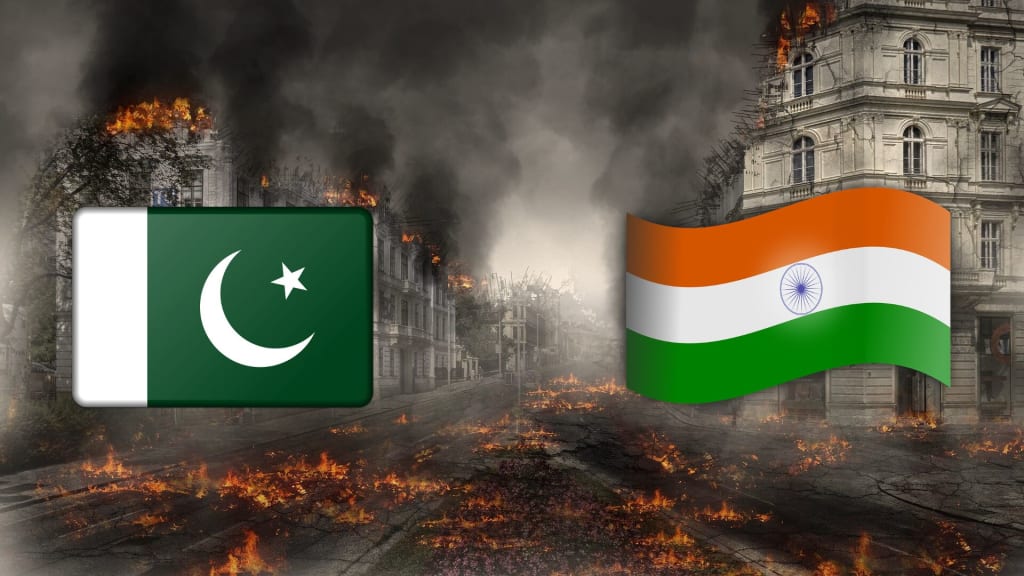
India and Pakistan have experienced a complex and often adversarial relationship since their independence in 1947. A central and enduring point of contention is the region of Jammu and Kashmir, a territory claimed by both nations. This dispute has been the root cause of multiple wars, persistent political tensions, and significant security concerns in the region. This article provides a concise overview of the historical context and the current dynamics of this ongoing conflict, drawing upon established historical accounts and reputable sources.
The Origin of the Conflict
The partition of British India in August 1947 led to the creation of independent India and Pakistan. The princely states under British paramountcy were given the option to accede to either dominion. Jammu and Kashmir, a state with a Muslim-majority population but ruled by a Hindu Maharaja, Hari Singh, initially remained independent. However, following an invasion by Pashtun tribal militias supported by Pakistan, the Maharaja appealed to India for military assistance and signed the Instrument of Accession in October 1947, formally joining India. Pakistan contested this accession, leading to the First Kashmir War (1947-1948). The conflict ended with a ceasefire brokered by the United Nations, resulting in the division of Kashmir by a ceasefire line, which eventually became known as the Line of Control (LoC). (Source: See United Nations Security Council Resolutions on Kashmir; also see Brecher, Michael. The Struggle for Kashmir. Oxford University Press, 1953.)
Major Wars and Bilateral Agreements
The Kashmir dispute has been a significant factor in subsequent wars between India and Pakistan:
Indo-Pakistani War of 1965: This war, also largely centered on Kashmir, ended in a stalemate and a ceasefire mediated by the Soviet Union. The Tashkent Declaration (1966) aimed to restore pre-war relations. (Source: See Ayub Khan, Mohammad. Friends Not Masters: A Political Autobiography. Oxford University Press, 1967; also see Gupta, Sisir. Kashmir: A Study in India-Pakistan Relations. Asia Publishing House, 1966.)
Indo-Pakistani War of 1971: This conflict primarily arose from the political crisis in East Pakistan (now Bangladesh). India's intervention led to the independence of Bangladesh. Following this war, India and Pakistan signed the Simla Agreement in 1972, committing to bilateral negotiations for a peaceful settlement of their disputes and respecting the Line of Control. (Source: See the text of the Simla Agreement, available on various government and academic websites, such as the Ministry of External Affairs, Government of India.)
Kargil War of 1999: Pakistani soldiers and militants infiltrated the Indian side of the Line of Control in the Kargil region. India launched a military operation to evict them, and after international pressure, Pakistan withdrew its forces. (Source: See Bajpai, Kanti P., et al. Kargil: The Tables Turned. India Research Press, 2000; also see Adeney, Katharine. "Kashmir: Roots of Conflict, Paths to Peace." Altai Journal of World Affairs 2, no. 1 (2014): 1-18.)

Recent Tensions
In recent times, tensions have continued, marked by cross-border terrorism, ceasefire violations along the LoC, and diplomatic strains.
Following the Pulwama attack in February 2019, in which a suicide bomber killed Indian security personnel, India accused Pakistan of harboring the Jaish-e-Mohammed, the militant group that claimed responsibility. Pakistan denied involvement. This incident led to heightened military tensions, including Indian airstrikes inside Pakistani territory. (Source: See reports from reputable international news organizations such as the BBC News , Reuters , and Al Jazeera
Following such events, diplomatic relations often suffer, and measures like the downgrading of diplomatic missions or suspension of trade can occur.
The Significance of the Indus Waters Treaty
The Indus Waters Treaty, signed in 1960, is a crucial agreement that governs the sharing of the waters of the Indus River system between India and Pakistan. Under the treaty, India has control over the waters of the eastern rivers (Ravi, Beas, and Sutlej), while Pakistan has control over the western rivers (Indus, Jhelum, and Chenab), with certain provisions for Indian use. While the treaty has generally survived periods of conflict, it remains a sensitive issue, and any unilateral action concerning its provisions could have significant repercussions for Pakistan's water security, particularly its agricultural sector. (Source: See the text of the Indus Waters Treaty, available on the World Bank website ; also see Michel, Dan, and Ashley J. Tellis. Asia's Next Challenge: Water Scarcity and U.S. Security Interests. Carnegie Endowment for International Peace, 2013.)

Conclusion
The India-Pakistan conflict, with the Kashmir issue at its core, remains a complex and potentially volatile situation. Historical grievances, differing perspectives on the status of Kashmir, and the involvement of non-state actors contribute to the ongoing tensions. While bilateral agreements and diplomatic efforts have been made over the years, a lasting peaceful resolution has yet to be achieved. Continued dialogue and a commitment to peaceful means are essential to de-escalate tensions and foster stability in the South Asian region
About the Creator
Enjoyed the story? Support the Creator.
Subscribe for free to receive all their stories in your feed.
Comments
There are no comments for this story
Be the first to respond and start the conversation.