
Digital Citizenship: How Schools in Dehradun Teach Online Responsibility
Digital Citizenship: How Schools in Dehradun Teach Online Responsibility
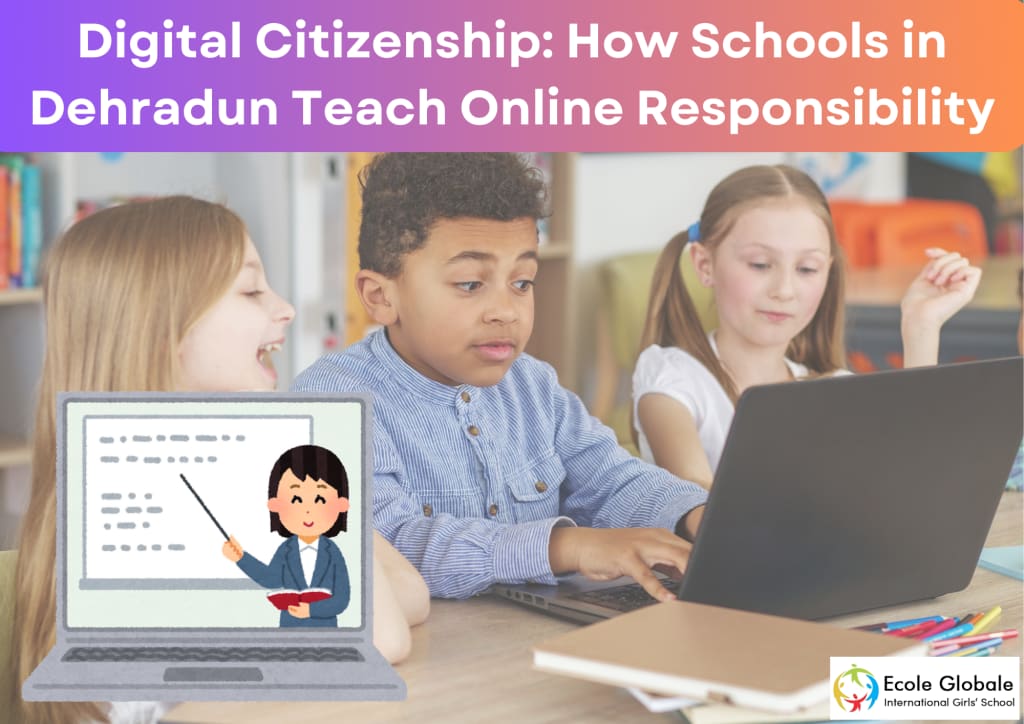
Imagine a world where every student knows how to navigate the internet safely, communicate respectfully online, and protect their personal information from cyber threats.
This vision is becoming a reality in schools in Dehradun, where the concept of digital citizenship is being actively taught. As technology becomes an inseparable part of education, these schools are preparing students to be responsible digital citizens who can thrive in a connected world.
What is Digital Citizenship?
Digital citizenship refers to the responsible use of technology to engage in society, communicate effectively, and make informed decisions online. It encompasses critical areas like digital literacy, online safety, cyber ethics, and media literacy.
Given the growing reliance on online learning, it has become essential for students to develop digital citizenship skills from an early age.
Schools in Dehradun have recognized the importance of teaching these skills, ensuring students understand both the benefits and risks of the digital world.
From primary to senior classes, students are trained to use technology ethically and safely, fostering a sense of responsibility that extends beyond the classroom.
How Schools in Dehradun Promote Digital Citizenship
Dehradun is home to some of India’s most reputed educational institutions, many of which have embraced the concept of digital citizenship wholeheartedly. Here's how they are doing it:
1. Integrating Digital Citizenship into the Curriculum
Instead of treating online safety as a one-time lesson, many schools in Dehradun have integrated it into their regular curriculum. Topics like online privacy, responsible social media use, and media literacy are woven into subjects like ICT (Information and Communication Technology) and moral science.
Students engage in interactive activities and discussions to better understand the impact of their online behavior.
2. Teaching Online Safety and Privacy
In an era where data breaches and identity theft are common, schools in Dehradun place significant emphasis on online safety.
Students are taught to recognize phishing scams, avoid sharing personal information, and create strong passwords. Teachers use real-life examples to show students how their online actions can have long-term consequences.
Many schools also conduct workshops in partnership with cybersecurity experts, where students learn about the latest online threats and how to stay safe.
3. Encouraging Respectful Online Behavior
With the rise of cyberbullying and online harassment, teaching students about respectful online communication has become essential.
Schools in Dehradun teach students to recognize inappropriate online behavior and report it. Students are encouraged to be empathetic, avoid hate speech, and respect diverse perspectives in online discussions.
Some schools use role-playing activities where students act out online scenarios, helping them understand the emotional impact of their words on others. This approach builds empathy and promotes ethical online conduct.
4. Promoting Media Literacy and Critical Thinking
Fake news and misinformation are rampant in today’s digital age. To address this, schools in Dehradun teach students how to verify online information and identify trustworthy sources.
Students learn to evaluate the credibility of news articles, social media posts, and online resources.
Media literacy is crucial as it helps students develop critical thinking skills. It empowers them to distinguish between genuine information and propaganda, enabling them to make informed decisions online.
5. Parental Involvement and Awareness Programs
Digital citizenship isn’t limited to the classroom. To ensure students practice responsible online behavior at home, schools in Dehradun involve parents in the learning process.
Schools host workshops and webinars for parents, equipping them with knowledge about online safety tools, parental controls, and the risks associated with excessive screen time.
By involving parents, schools create a supportive ecosystem where students receive consistent guidance both at home and at school.
6. Digital Detox and Balanced Screen Time
While technology offers numerous benefits, excessive screen time can harm students' mental and physical well-being. Schools in Dehradun teach students the importance of balancing online activities with offline pursuits.
Digital detox sessions are introduced to encourage students to take breaks from screens, engage in physical activities, and connect with nature.
By instilling this balance early on, students learn to set boundaries for their online usage, ensuring that technology enhances their lives rather than controlling it.
Why Digital Citizenship is Important for Students
The shift towards online learning and digital interactions has made it crucial for students to develop digital citizenship skills. Here’s why it matters:
Online Safety: Students learn how to protect themselves from cyber threats like phishing, malware, and identity theft.
Cyberbullying Prevention: Digital citizenship promotes respectful communication, reducing instances of bullying and harassment.
Digital Literacy: Students gain the skills to analyze, evaluate, and interpret online content, protecting themselves from misinformation.
Personal Branding: Students learn how their online behavior contributes to their digital footprint, which can impact their future education and career opportunities.
By teaching these skills, schools in Dehradun are preparing students for success in a world where digital competence is as important as academic excellence.
Success Stories from Schools in Dehradun
Success stories from schools in Dehradun illustrate how effective digital citizenship programs can be.
Take, for instance, a student who, after learning about online privacy, taught their family to use multi-factor authentication for their online accounts.
Another student, inspired by a lesson on media literacy, developed a fact-checking app for school projects, which was later adopted as a student-led initiative to promote responsible internet use.
These stories highlight how digital citizenship programs not only protect students from online risks but also inspire them to become proactive problem-solvers.
How Parents Can Support Digital Citizenship at Home
While schools in Dehradun play a vital role in teaching digital responsibility, parents also have a part to play. Here’s how parents can support their children:
Model Responsible Online Behavior: Children often mirror their parents' actions. Set a good example by practicing safe online habits.
Use Parental Control Tools: Monitor your child's online activity and restrict access to inappropriate content using parental control features.
Have Open Conversations: Talk to your child about the potential dangers of the internet and encourage them to report any suspicious activities.
Set Screen Time Limits: Balance online learning with offline activities to prevent screen addiction.
Join School Workshops: Attend digital citizenship workshops hosted by schools in Dehradun to stay updated on online safety trends.
By working hand-in-hand with schools, parents can ensure their children become responsible and ethical digital citizens.
Challenges in Teaching Digital Citizenship
Despite the progress made, schools face challenges in teaching digital citizenship. These challenges include:
Rapid Changes in Technology: Online threats evolve quickly, requiring continuous updates to the curriculum.
Resistance to Change: Some students may be resistant to changing their online habits, making it difficult for teachers to enforce good practices.
Parental Involvement: Not all parents are familiar with the nuances of online safety, making it harder to reinforce these lessons at home.
However, the proactive steps taken by schools in Dehradun are gradually addressing these challenges. Regular teacher training, student workshops, and parental involvement ensure that digital citizenship becomes a way of life for students.
Conclusion
The concept of digital citizenship is no longer optional—it's essential. By teaching students how to be responsible online users, schools in Dehradun are empowering the next generation to thrive in a digital world.
From online safety and privacy to critical thinking and empathy, these schools are building a solid foundation for students' personal and professional lives.
For parents, choosing a school that prioritizes digital citizenship is a step towards safeguarding their child’s future. It ensures students not only excel academically but also become ethical, informed, and responsible global citizens.
As technology continues to evolve, the role of digital citizenship will only grow in importance. Schools in Dehradun are at the forefront of this movement, creating a generation of students who are equipped to navigate the online world with confidence and integrity.
About the Creator
Enjoyed the story? Support the Creator.
Subscribe for free to receive all their stories in your feed.
Comments
There are no comments for this story
Be the first to respond and start the conversation.