
Difference Between Data Analyst and Data Scientist
Discover the key differences between data analyst and data scientist—roles, skills, tools, salary, education, and career paths, plus real-world examples and future trends.

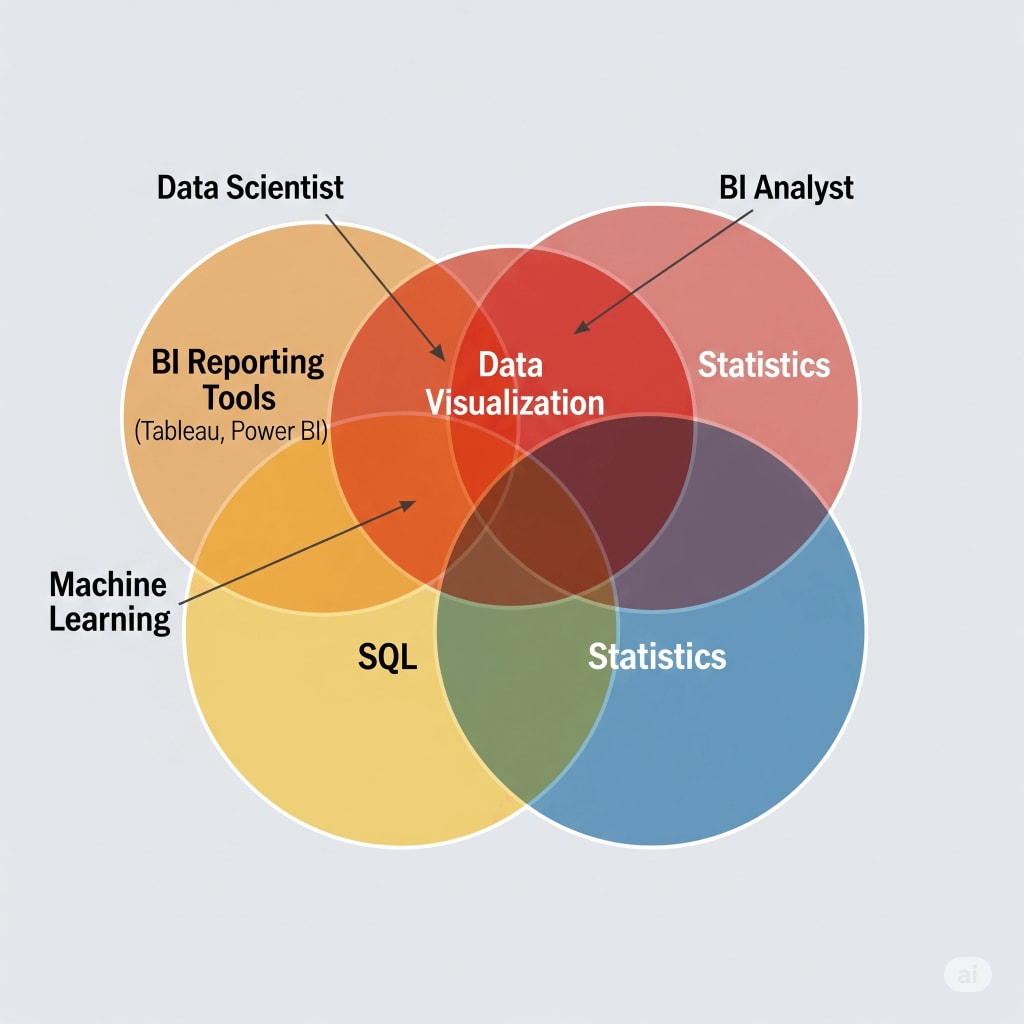
What Is the Difference Between Data Analyst and Data Scientist?
The terms data analyst and data scientist are often used interchangeably in conversations about careers in data, but they represent distinct roles with different responsibilities, skill sets, and career trajectories. In today’s data-driven economy, understanding these differences is crucial—whether you are a student choosing your career path, a professional considering a transition, or a business leader building a data team.
In simple terms, data analysts focus on interpreting existing structured data to uncover insights, create reports, and support decision-making. Data scientists, on the other hand, work with both structured and unstructured data, building predictive models, leveraging machine learning, and
By the end, you’ll have an actionable understanding of where each role fits in the data ecosystem, and how to choose the path that aligns with your goals.
Data Analyst vs Data Scientist
What a Data Analyst Does
A data analyst is responsible for examining data sets to identify trends, patterns, and actionable insights. They work primarily with structured data—information organized in rows and columns, such as sales figures, customer demographics, or survey responses.
To know in more detail about data analyst you can check our data analyst course in gurgaon.
Typical tasks include:
- Cleaning and organizing raw data for analysis
- Using SQL, Excel, and BI tools like Tableau or Power BI
- Creating dashboards and visual reports
- Identifying business performance trends
- Supporting decision-making with historical insights
Example: At an e-commerce company, a data analyst might study sales data to identify which products perform best in different seasons.
What a Data Scientist Does
A data scientist takes data analysis to a more advanced level. They use statistical modeling, machine learning, and algorithm development to forecast future trends and create automated decision-making systems. To know in very depth you can check our data science course in Gurgaon.
Core responsibilities include:
- Working with structured and unstructured data (e.g., text, images)
- Building predictive and prescriptive models
- Applying advanced statistical methods
- Using Python, R, TensorFlow, or Spark for analysis
- Creating data products (e.g., recommendation engines)
Example: In the same e-commerce company, a data scientist might create a machine learning model to predict which customers are likely to churn and develop targeted marketing campaigns.
Core Responsibilities & Focus Areas
Data Analyst Key Focus:
- Descriptive analytics: What happened?
- Diagnostic analytics: Why did it happen?
- Operational reporting for departments
- Tools: SQL, Excel, BI dashboards
- Metrics: historical KPIs, performance tracking
Data Scientist Key Focus:
- Predictive analytics: What will happen?
- Prescriptive analytics: What should be done?
- Research & experimentation
- Tools: Python, R, Hadoop, TensorFlow
- Metrics: model accuracy, prediction quality
Quick Insight: Analysts tend to provide backward-looking insights (based on historical data), while scientists often look forward, predicting future trends and suggesting data-driven actions.
Skills, Tools & Typical Data Types
Shared Skills
Strong statistical knowledge
Data cleaning and preparation
Data visualization
Communication skills to explain findings
Analyst-Specific Skills
Proficiency in Excel, SQL
Expertise in BI tools (Power BI, Tableau)
Report automation
Working mainly with structured data
Scientist-Specific Skills
Machine learning frameworks (TensorFlow, PyTorch)
Programming in Python/R
Big data handling (Hadoop, Spark)
Working with both structured and unstructured data (images, text, video)
Visual Placeholder:
Educational Background & Career Path
Data Analyst:
- Bachelor’s degree in statistics, mathematics, computer science, economics, or related fields
- Certifications: Google Data Analytics, Microsoft Certified Data Analyst, Tableau Specialist
- Career path: Junior Data Analyst → Data Analyst → Senior Analyst → Analytics Manager
Data Scientist:
- Master’s or PhD in data science, computer science, mathematics, or related fields
- Certifications: IBM Data Science, AWS Machine Learning Specialty
- Career path: Data Scientist → Senior Data Scientist → Lead Data Scientist → Chief Data Officer
Tip: Many data scientists begin as analysts, then upskill in programming, machine learning, and big data tools.
Compensation & Job Outlook
Data Analyst Salaries
- US: $65k–$85k/year (Glassdoor, 2025)
- India: ₹5–8 LPA average
Data Scientist Salaries
- US: $100k–$130k/year (Glassdoor, 2025)
- India: ₹12–18 LPA average
Job Outlook:
- Data-related jobs are expected to grow 23% by 2032 (U.S. Bureau of Labor Statistics).
- Demand for data scientists is outpacing supply, especially in AI/ML-heavy industries.
Overlap and Collaboration
Despite their differences, analysts and scientists often work together:
- Analysts supply cleaned, structured datasets
- Scientists use these datasets to train predictive models
- Analysts then interpret and present model outputs to stakeholders
Example Workflow: A telecom company’s analyst prepares churn data → the scientist builds a predictive churn model → the analyst uses it to create reports for customer retention teams.
Real-World Examples & Transition Path
Example 1: Finance
- Analyst: Prepares daily risk reports for the trading desk
- Scientist: Builds algorithmic trading models
Example 2: Healthcare
- Analyst: Tracks patient admission rates
- Scientist: Predicts hospital resource needs based on flu season trends
Transition Path from Analyst to Scientist:
- Strengthen Python/R skills
- Learn machine learning algorithms
- Work on projects involving unstructured data
- Earn advanced certifications or degrees
Future Trends & Industry Outlook
Automation & AI: BI dashboards may auto-update with predictive insights, blending analyst and scientist roles.
Ethics & Governance: Increased focus on responsible AI and bias reduction in models.
Hybrid Roles: Companies increasingly seek professionals with both BI and ML skills.
Globalization of Data Roles: Remote data jobs becoming standard.
FAQ: Common Questions
Q1: Can a data scientist work as a data analyst?
Yes, but not always efficiently—scientists have advanced skills that may be underutilized in pure analyst roles.
Q2: Which role pays more?
Data scientists generally earn more due to advanced skill requirements.
Q3: Do I need a master’s degree to become a data scientist?
Not always—some achieve it through certifications and project experience.
Q4: Which career is better for beginners?
Data analyst roles are usually more beginner-friendly, offering a strong foundation for future transition to data science.
About the Creator
anayasetu
I’m anayasetu — passionate about sharing knowledge on all things technology. With expertise in Power BI, advanced Excel, data science, and data analyst, I strive to make complex data insights accessible and easy to understand.
Enjoyed the story? Support the Creator.
Subscribe for free to receive all their stories in your feed.
Comments
There are no comments for this story
Be the first to respond and start the conversation.