
Counseling, Therapy, Coaching, Psychological First Aid, and Mental Health First Aid: A Complete Guide to Understanding the Differences
Understanding the differences between counseling, therapy, coaching, PFA, and MHFA.


Mental health awareness has grown significantly across workplaces, educational institutions, healthcare systems, and communities. As conversations around emotional wellbeing continue to increase, many people are hearing terms like counseling, therapy, coaching, Psychological First Aid (PFA), and Mental Health First Aid (MHFA) more often than ever before.
Although these approaches are connected to emotional support and mental wellbeing, they are not the same. Each method serves a different purpose, uses different techniques, and supports people in different situations. Understanding these differences is essential because choosing the right type of support can improve recovery, emotional resilience, productivity, and overall wellbeing.
Today, organizations, schools, colleges, hospitals, and communities are increasingly recognizing the importance of early intervention and mental health literacy. Whether someone is experiencing workplace stress, emotional burnout, trauma, anxiety, depression, relationship challenges, or simply wants personal growth, knowing which support system to approach matters greatly.
According to global Mental Health First Aid initiatives, MHFA focuses on identifying signs of mental health challenges, offering early support, and guiding individuals toward professional help when necessary.
Why Understanding Mental Health Support Systems Matters
Many people avoid seeking help because they are confused about where to begin. Some assume therapy is the only option, while others believe coaching or counseling can solve every mental health issue. In reality, every support system has its own role.
For example:
- Someone dealing with trauma after an accident may need Psychological First Aid.
- A person facing anxiety or depression may benefit from therapy.
- A student struggling with emotional stress may seek counseling.
- A professional wanting leadership development may choose coaching.
- A colleague noticing emotional distress in a coworker may use Mental Health First Aid skills.
Understanding these distinctions helps:
- Reduce mental health stigma
- Encourage early intervention
- Improve workplace wellbeing
- Create psychologically safe environments
- Support emotional resilience
- Promote timely professional care
- Improve mental health awareness in communities
What Is Counseling?
Counseling is a professional process that helps individuals explore emotions, behaviors, relationships, personal struggles, and life challenges. Counselors provide emotional support, coping strategies, active listening, and guidance to help individuals manage difficulties more effectively.
Counseling is usually conversational, supportive, and goal-focused. It often helps people navigate temporary or ongoing emotional situations without necessarily diagnosing mental illnesses.
>>> Learn more in this detailed guide: Counseling vs Mental Health First Aid
Main Goals of Counseling
- Emotional support
- Stress management
- Relationship guidance
- Coping skill development
- Problem-solving
- Personal awareness
- Emotional regulation
Common Situations Where Counseling Helps
- Academic pressure
- Workplace stress
- Family conflicts
- Relationship problems
- Low confidence
- Grief and loss
- Life transitions
- Mild anxiety and emotional distress
How Counseling Works
Counseling sessions are typically confidential and structured around conversation. Counselors help individuals identify patterns, understand emotions, and build healthy coping mechanisms.
Unlike therapy, counseling may not always focus on severe mental health disorders. Instead, it often supports day-to-day emotional wellbeing and life management.
Benefits of Counseling
- Improves emotional clarity
- Enhances communication skills
- Builds emotional resilience
- Reduces stress levels
- Encourages self-awareness
- Supports decision-making
What Is Therapy?
Therapy is a clinical and structured mental health treatment process conducted by licensed professionals such as psychologists, psychotherapists, or psychiatrists. Therapy focuses on diagnosing, treating, and managing mental health disorders and deeper psychological challenges.
Therapy often explores past experiences, behavioral patterns, trauma, emotional responses, and cognitive processes. It is generally more intensive and long-term than counseling.
>>> Read more here: Therapy and Mental Health First Aid Differences and Choices
Common Types of Therapy
- Cognitive Behavioral Therapy (CBT)
- Psychotherapy
- Trauma-focused therapy
- Behavioral therapy
- Family therapy
- Group therapy
- Dialectical Behavior Therapy (DBT)
Conditions Commonly Treated Through Therapy
- Depression
- PTSD and trauma
- Bipolar disorder
- Panic disorders
- Severe anxiety disorders
- Addiction recovery
- Eating disorders
- Personality disorders
How Therapy Differs From Counseling
Therapy is usually:
- More clinical
- Longer-term
- Focused on mental health treatment
- Conducted by licensed professionals
- More intensive emotionally
Counseling, on the other hand, is often shorter-term and focused on emotional guidance and coping support.
Benefits of Therapy
- Treats underlying mental health conditions
- Helps process trauma
- Improves emotional regulation
- Supports behavioral change
- Builds healthier coping strategies
- Reduces symptoms of mental illness
What Is Coaching?
Coaching focuses on helping individuals improve performance, achieve goals, build confidence, and enhance personal or professional growth. Coaching is future-oriented rather than focused on emotional healing or mental illness treatment.
Coaches work with clients to improve motivation, productivity, communication, leadership, and success strategies.
>>> Explore more in Coaching and Mental Health First Aid: What’s the Difference
Main Areas Covered in Coaching
- Career development
- Leadership growth
- Time management
- Productivity
- Goal setting
- Confidence building
- Workplace performance
- Communication skills
Coaching Is Commonly Used In
- Corporate environments
- Executive leadership programs
- Career transitions
- Entrepreneurship
- Student development
- Skill enhancement programs
According to MHFA India, coaching generally focuses on development and achievement, while MHFA helps support individuals facing emotional or mental health difficulties.
Benefits of Coaching
- Increases motivation
- Enhances leadership skills
- Improves productivity
- Builds self-confidence
- Supports career growth
- Encourages accountability
What Is Psychological First Aid (PFA)?
Psychological First Aid (PFA) is immediate emotional and practical support provided during or after traumatic events, emergencies, disasters, or crises. PFA helps reduce emotional distress and stabilize individuals during difficult situations.
PFA is not therapy or counseling. It is an early intervention approach focused on safety, comfort, listening, and practical assistance.
>>> Learn more from Psychological First Aid and Mental Health First Aid: Key Differences
Situations Where PFA Is Used
- Natural disasters
- Workplace accidents
- Community violence
- Sudden bereavement
- Emotional shock
- Traumatic incidents
- Public emergencies
- Crisis situations
Core Principles of PFA
- Ensure safety
- Listen without judgment
- Provide comfort
- Reduce panic and distress
- Connect people with support systems
- Encourage calmness and hope
Importance of PFA
PFA plays an important role immediately after traumatic experiences because emotional reactions can become overwhelming. Early emotional support can reduce distress and improve coping during emergencies.
Benefits of Psychological First Aid
- Reduces immediate emotional distress
- Promotes safety and calmness
- Encourages emotional stabilization
- Prevents further psychological harm
- Supports crisis recovery
What Is Mental Health First Aid (MHFA)?
Mental Health First Aid (MHFA) is an evidence-based training program that teaches individuals how to recognize signs of mental health challenges, provide initial support, and guide people toward professional help.
MHFA is similar to physical first aid, but for mental health. It is not designed to diagnose or treat mental illnesses. Instead, it helps individuals respond safely and confidently when someone may be experiencing emotional distress or a mental health crisis.
>>> Read the complete comparison guide here: Counseling, Therapy, Coaching, PFA and MHFA Differences
MHFA Helps People Recognize
- Anxiety symptoms
- Depression signs
- Panic attacks
- Emotional distress
- Suicidal thoughts
- Substance misuse concerns
- Trauma reactions
- Behavioral warning signs
MHFA Commonly Used In
- Workplaces
- Schools and colleges
- Hospitals
- NGOs and communities
- Educational institutions
- Corporate wellbeing programs
MHFA Skills Include
- Active listening
- Non-judgmental communication
- Crisis response
- Emotional support
- Encouraging professional help
- Providing reassurance
- Early intervention support
Benefits of Mental Health First Aid
- Reduces stigma
- Encourages early support
- Improves mental health awareness
- Creates safer workplaces and campuses
- Builds supportive communities
- Increases confidence in helping others
According to MHFA educational resources, Mental Health First Aid strengthens early support systems and improves mental health literacy among communities and organizations.
Mental Health Support in Workplaces and Educational Institutions
Modern workplaces and educational institutions increasingly recognize the importance of psychological safety and emotional wellbeing. Organizations are now investing in MHFA training, counseling services, employee wellbeing programs, and crisis response strategies.
Why Workplaces Need Mental Health Support
- Rising workplace stress
- Employee burnout
- Emotional exhaustion
- Productivity decline
- Workplace anxiety
- Mental health stigma
Benefits of MHFA in Organizations
- Better employee support
- Reduced stigma
- Early intervention
- Improved communication
- Healthier workplace culture
- Increased emotional safety
Importance in Colleges and Universities
Students often face:
- Academic stress
- Anxiety
- Peer pressure
- Isolation
- Emotional burnout
MHFA and counseling services can help create emotionally supportive campuses where students feel safe seeking help.
Choosing the Right Support System
Choosing the right mental health support depends on the individual’s situation.
Counseling May Help If:
- You need emotional guidance
- You are struggling with stress or relationships
- You want coping strategies
Therapy May Help If:
- You experience severe emotional distress
- You have trauma or depression
- You need professional treatment
Coaching May Help If:
- You want career or leadership growth
- You need motivation and goal planning
- You want productivity improvement
PFA May Help If:
- Someone recently experienced trauma or crisis
- Immediate emotional stabilization is needed
MHFA May Help If:
- You want to support others safely
- You want to identify mental health warning signs
- You want to encourage professional help-seeking
Final Thoughts
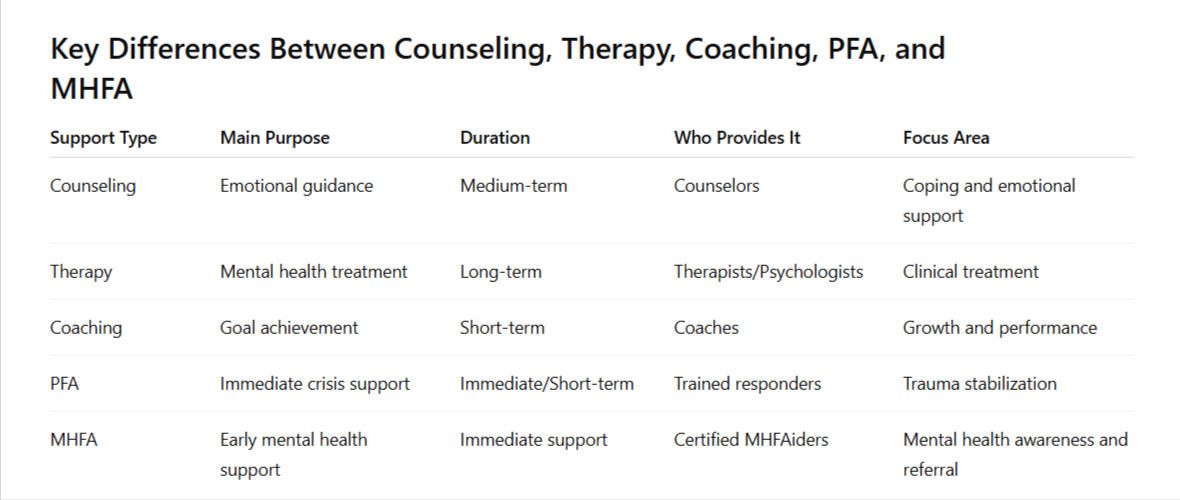
Counseling, therapy, coaching, Psychological First Aid, and Mental Health First Aid all contribute to emotional wellbeing in different ways. While counseling and therapy focus on emotional healing and mental health treatment, coaching supports personal growth, PFA helps during crises, and MHFA promotes early mental health support and awareness.
Understanding these differences allows individuals, workplaces, schools, and communities to respond more effectively to emotional and mental health challenges. Mental health support is not one-size-fits-all. The right approach depends on the individual’s needs, level of distress, and goals.
About the Creator
Preethi
Writing articles and awareness about software of Hospital, Clinic, Lab, and Pharmacy management.
Enjoyed the story? Support the Creator.
Subscribe for free to receive all their stories in your feed.
Comments
There are no comments for this story
Be the first to respond and start the conversation.