
Common Challenges in APFC Panel Implementation
Why APFC Panels Fail Without Proper Planning and How to Avoid It

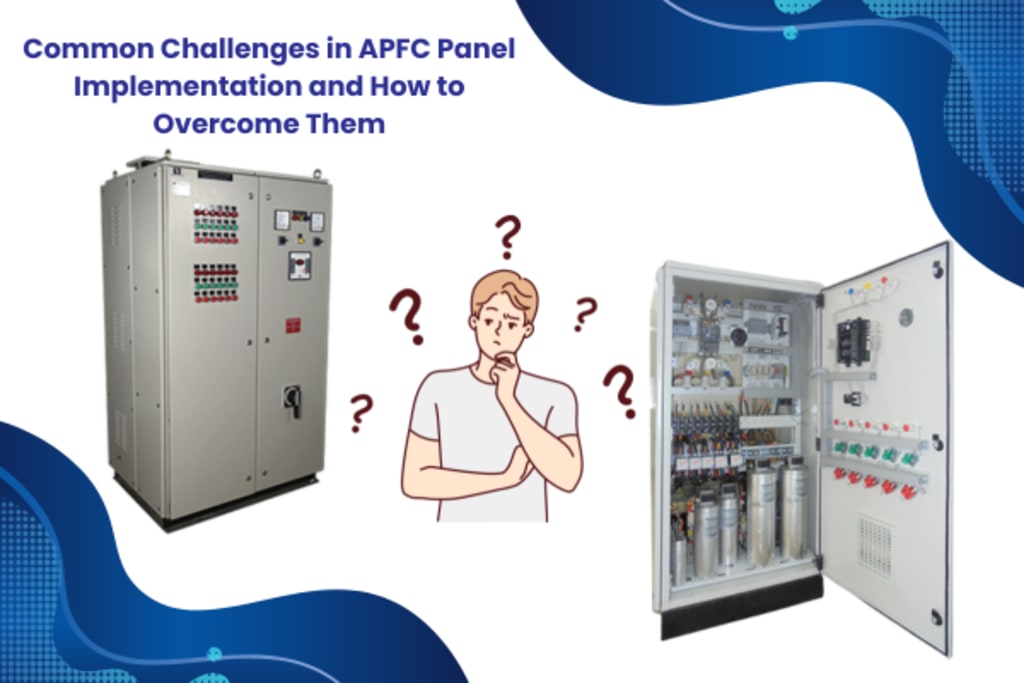
Industries and commercial setups rely on consistent power quality to maintain productivity and reduce electricity bills. This is where the APFC Panel comes into the picture. Yet, even with good equipment, many face power factor-related issues due to improper implementation.
Addressing these problems early ensures smoother operations and reduces energy loss. Before going into the challenges, let’s understand the basics.
What is an APFC Panel?
An APFC Panel, short for Automatic Power Factor Control Panel, helps correct low power factor in electrical systems by managing capacitor banks automatically. It senses the reactive load and maintains a power factor close to unity.
When installed correctly, it reduces penalties from electricity boards, decreases energy bills, and improves the efficiency of the power distribution network. Despite its importance, incorrect installation or design often limits its potential.
Key Components That Matter
Several components determine whether the panel will perform efficiently or fail over time. These include:
- Power capacitors
- APFC relays
- Contactors
- Circuit protection devices
- Controllers and sensors
A weak link in any of these can compromise the full system. That’s why industries prefer sourcing from a trusted APFC Panel manufacturer in India, ensuring every part used is designed for the intended capacity and conditions.
Technical Issues Commonly Seen
Not all APFC Panels work as expected. Here are a few practical reasons why:
1. Improper Sizing
Panels not matched to the connected load either underperform or overcompensate. This leads to an unstable power factor and, sometimes, capacitor damage.
2. Harmonic Distortion
Industries using variable frequency drives or welding machines often deal with non-linear loads. These generate harmonics, which can interfere with the APFC controller and damage capacitors if filters are not installed.
3. Delayed Capacitor Switching
If the relay doesn’t respond on time or is set incorrectly, the system lags in adjusting the capacitor bank. This causes spikes in power demand or unstable performance.
4. Faulty Relay Settings
Wrong threshold levels can trigger premature switching or unnecessary cutoffs. Over time, this affects both efficiency and equipment life.
Installation and Wiring Concerns
Poor installation is a major contributor to APFC issues. Some of the problems seen during or after setup include:
- Wrong current transformer polarity
- Loose connections
- Incorrect cable size
- Inadequate earthing
- Panels installed in areas prone to dust or heat
Even if the equipment is from a certified APFC Panel supplier in India, these installation mistakes reduce the lifespan and reliability of the system.
Environmental Factors and Poor Maintenance
Many panels fail not because of poor design, but due to the surrounding environment. Panels exposed to high temperatures, moisture, or dust without proper enclosures become prone to frequent failures.
A dirty panel with blocked airflow can overheat. Capacitors age faster if the temperature around them is too high. Without scheduled checks and capacitor health tests, issues remain unnoticed until the entire unit fails.
Maintenance, although simple, is often ignored. Timely cleaning, visual inspection, and testing capacitor banks help prevent large-scale breakdowns.
Communication and Monitoring Limitations
Older APFC systems operate with very little visibility. There’s no performance feedback, no remote access, and no alarms unless someone checks the panel physically.
- Modern industries need intelligent APFC systems with:
- Remote diagnostics
- Communication with energy meters
- Alerts in case of faults
- Real-time performance data
Companies like Dj Electro Controls provide enhanced solutions with smart monitoring features. While it might cost slightly more, the long-term benefits justify the upgrade.
Why Manufacturer Matters
Even the best electrical engineers can struggle if the equipment they receive is substandard. Choosing a tested and experienced APFC Panel manufacturer reduces the chances of getting mismatched or low-grade components.
A trusted APFC Panel supplier in India ensures:
- Correct selection for your industry type
- Capacitors rated for Indian power conditions
- Proper protection circuits for harsh environments
- After-sales guidance for installation and setup
Dj Electro Controls is one such brand that supplies factory-tested panels built to handle Indian grid fluctuations and industrial load variations.
How to Avoid These Challenges
Here are simple but effective practices that help prevent common APFC problems:
- Size the panel based on measured load data, not assumptions
- Use harmonic filters if non-linear loads are present
- Place current transformers properly with correct polarity
- Program the APFC relay as per site requirement
- Check the panel physically every month
- Clean the panel to avoid capacitor heating
- Ensure enough ventilation or install fans if needed
Conclusion
The performance of an APFC Panel depends not just on the product, but on the way it is selected, installed, and maintained. Most failures come from missed details, not equipment faults.
When the right system is installed under the right conditions, it adds long-term value by maintaining power factor, reducing penalties, and avoiding capacitor damage. Collaborating with a skilled APFC Panel manufacturer in India or a reputed APFC Panel supplier in India helps close these gaps early.
Panels provided by trusted names like Dj Electro Controls ensure better performance from the start and reduce the burden on maintenance teams. For industries that aim for cost savings and reliable operations, these details matter more than they seem.
Frequently Asked Questions
Q1. What is an APFC Panel and how does it work?
Answer: An APFC Panel manages capacitor banks automatically to maintain the desired power factor in an electrical system, reducing energy losses and saving on electricity bills.
Q2. Why does my APFC Panel switch too frequently?
Answer: This usually happens due to incorrect settings in the APFC relay or harmonics present in the system. Adjusting parameters or installing harmonic filters often resolves it.
Q3. Can poor installation affect the APFC Panel’s performance?
Answer: Yes, improper wiring, loose connections, or incorrect CT placement can cause inaccurate readings and damage to internal components.
Q4. How often should I maintain my APFC Panel?
Answer: At least once every quarter. However, in environments with heavy dust or high humidity, monthly inspections are recommended.
Q5. What role does harmonics play in capacitor failures?
Answer: Harmonics stress the capacitors and cause them to heat beyond their rated capacity, leading to early failure. A harmonic filter protects them from this.
Q6. What should I check before choosing an APFC Panel supplier in India?
Answer: Check if the supplier provides certified components, has industry experience, and offers setup support. Brands like Dj Electro Controls are preferred due to reliability and service standards.
Q7. Why does my APFC Panel show low power factor even after installation?
Answer: Either the panel is under-sized or the settings are incorrect. Sometimes it is due to harmonics or failed capacitors which need inspection and replacement.
About the Creator
Djelectro controls
DJ Electro Controls Leading APFC panel manufacturer with 10+ years of expertise. CPRI & ISO 9001:2008 certified, delivering quality and innovation on time.
Enjoyed the story? Support the Creator.
Subscribe for free to receive all their stories in your feed.
Comments
There are no comments for this story
Be the first to respond and start the conversation.