
Commercial Property Insurance: The Ultimate Guide
What is covered under commercial property insurance?
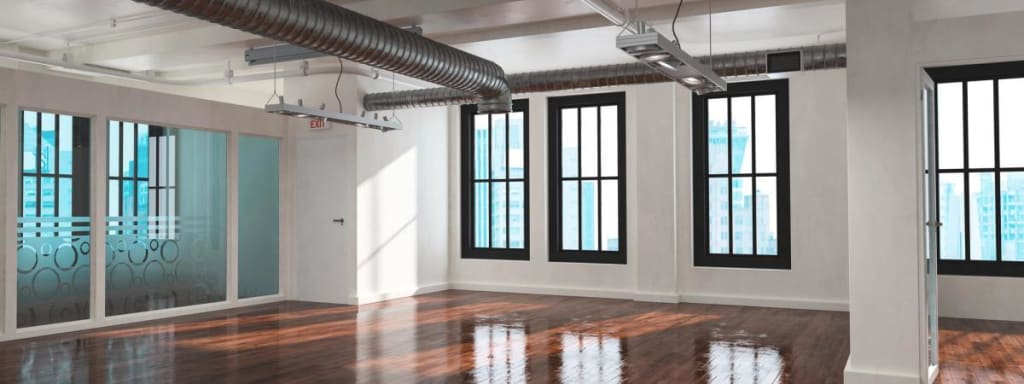
There are many types of commercial property insurance coverage: inland marine, builders risk, cargo insurance, or even cyber, to share a few examples. In this article, however, we are going to talk about the commercial property insurance policy, coverages found in this policy, and the various options you have when purchasing.
Specifically, we will review the coverages found on the most common commercial property insurance policy form used in the United States. It’s called the CP 00 10 - Building And Personal Property Coverage Form.
There are three types of property that this policy will pay claims on: your building, your business personal property, and personal property of others. Here is what each means:
What is covered under commercial property insurance?
Your Building
Without sounding too obvious, this coverage part insures the buildings list on your insurance policy.
The building can be a structure that you own or a property that you do not own but are responsible for insuring (referred to as a triple net lease).
In addition to the actual structure, building coverage insures the following parts of your building:
Completed additions
Fixtures (including outdoor fixtures)
Permanently installed machinery and equipment
Your Business Personal Property
The second coverage in a commercial business property insurance policy is the business personal property (BPP) section. This section of the policy doesn't cover the building (unless you are a tenant that has made permanently installed improvements to your rented space), but it covers the building’s contents. Here are a few examples that the policy lists:
Furniture and fixtures
Machinery and equipment
Stock
All other personal property owned by you and used in your business
Tenant’s improvements and betterments (upgrades made to a rented space)
Leased personal property for which you have a contractual responsibility to insure
It is essential to note that most commercial property insurance policies only cover personal property in or within 100 feet of the insured building.
LandesBlosch Tip: A quick way to determine what is included under the building vs. business personal property limit is to imagine picking up the building, flipping it upside-down, and shaking it. Whatever fell out qualifies as business personal property. The remaining building and permanently installed features of that building would be covered under your building limit.
Personal Property of Others
An overlooked yet important coverage part of the business property insurance policy is coverage for the property of others in your care, custody, and control. This could mean property that you are borrowing or even customer’s property.
Similar to the business personal property coverage, this coverage only applies to property within 100 feet of the insured building.
What types of damages are covered under the commercial property insurance policy?
Now that we know what property is insured, we need to talk about what perils this policy insures your buildings against.
This is tricky because not all insurance policies are created equal. One of the most common and easiest to spot differences between a great and not-so-great commercial property coverage is the causes of loss form.
This form is the core of which events are covered and which are not.
Although a little technical and unexciting, it is crucial to know what perils your building will be covered against. This will not only give you peace of mind; it also allows you the opportunity to prepare.
You can generally locate the causes of loss form your policy or quote has on your declarations of insurance page. Here is an example:
Snapshot of a commercial property declarations page, with the word 'special' circled, signifying the inclusion of a special causes of loss form in the policy.
The different options you will generally see are special, basic, and broad.
Here is what each of the three forms means for your business:
Special Cause Of Loss Form (LandesBlosch Recommended)
The special causes of loss form offers the best coverage of the three coverage forms. Now, why do we always recommend this coverage on your property insurance policy?
If you look at all the causes of loss forms, both the basic and broad forms offer a list of what events they insure against (don’t worry; we will go over those lists shortly), but what makes the special form so special, for want of a better word, is that it covers all direct physical damage to your property unless excluded.
A short summary of what we mean by this:
Special Causes of Loss Form = Everything covered unless excludedBasic & Broad Causes of Loss Form = Everything excluded unless included
This is why the special form is often referred to as an "all-risk" policy; it covers all direct physical damage unless specifically excluded. However, the insurance industry is slowly starting to drop that term because it is misleading. There are in fact exclusions!
As you can see, this gives you quite a few advantages. First, you start from a place of all direct physical damage being covered. Instead of a list of covered events, you have a list of exclusions. Having everything covered unless excluded covers a broader area of potential claims.
Finally (and arguably most importantly), the special form shifts the burden of proof to the insurance company to deny a claim. In the court of law, if everything is excluded unless covered (broad and basic forms), you have to prove why your loss was one of the listed perils that are covered.
To contrast that, under the special causes of loss form everything is covered unless excluded. The burden of proof is switched to the insurance company, which has to prove that your claim was excluded. This gives you the upper hand (and a higher probability of getting your claim paid).
Basic Cause Of Loss Form
Although we recommend purchasing the special form for all our clients, sometimes the market won't offer the special form. Some of the reasons why include property condition, vacancy, or loss history. Here are the perils the basic causes of loss form insures against:
Fire
Lightning
Explosion
Smoke
Windstorm
Hail
Riot
Civil commotion
Damage caused by an aircraft or vehicle
Vehicles
Vandalism
Sprinkler leakage
Sinkhole collapse
Volcanic action
Broad Cause of Loss Form
The broad form is in between the special and the basic form. In a nutshell, it adds additional perils the policy will cover to the basic form. The broad form covers everything in the basic form, plus:
Falling objects
Weight of snow, ice, or sleet
Water damage (in the form of leakage from appliances)
Collapse from specified causes
But what if the policy isn't special, basic, or broad?
Although the vast majority of insurance policies follow the special, basic, and broad labels, you may occasionally find some that do not. Usually, this could be a proprietary form specific to the insurance company you are purchasing from, or a manuscript form called something like "All Risk Manuscript Form."
Unless you are an insurance expert yourself, we suggest either avoiding these non-standardized policies or consulting with an experienced insurance broker who can help you review them.
Sometimes (usually as part of a niche industry program) a proprietary policy can be more robust than even the special causes of loss form, but most of the time it is customized to the detriment of the policyholder in that it limits coverage.
What is typically excluded from commercial property insurance?
Now that we understand the causes of loss form, let’s talk about special form exclusions. We’ll focus on the special form because it’s a popular policy and any exclusion on the special causes of loss will also be included on the others.
Here are a few examples of exclusion you will see on almost all property insurance policies:
Flood
Earthquake
Terrorism
War and military action
Intentional damage
Nuclear hazard
Normal wear and tear
You’ll need a specialized and separate policy if you want to cover some of these exclusions. If you live in a low-risk area, your insurance company may offer some limited coverage for specific perils, but this is a rare occurrence.
When it comes to exclusions like intentional damage and normal wear and tear, you will never find an insurance policy that will cover them. It’s just not an appropriate risk for a commercial property insurance policy.
Recommended Additional Coverages
Although insuring your building and business personal property will create a great foundation, you will most likely need some additional coverages to create a well-rounded insurance program. Here are some popular options recommended by LandesBlosch.
About the Creator
Enjoyed the story? Support the Creator.
Subscribe for free to receive all their stories in your feed.
Comments
There are no comments for this story
Be the first to respond and start the conversation.