
City Life vs. Village Lif
Noise, Pollution, and Clean Air

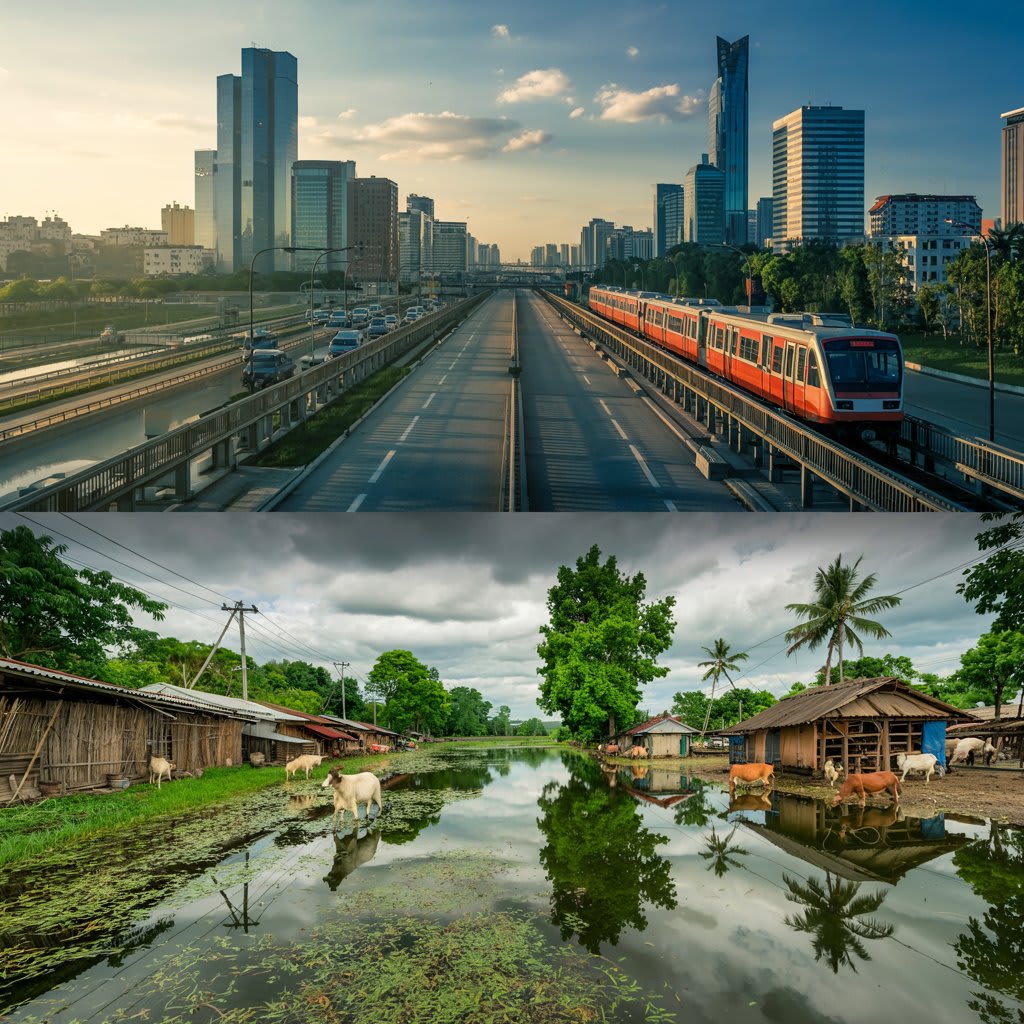
City life and village life offer two distinctly different experiences, each with its own advantages and challenges, shaped by the environment, pace, infrastructure, and social dynamics. The most obvious difference between life in a city and that in a village lies in the level of development and pace of life. Cities are hubs of economic activity, offering a fast-paced, competitive lifestyle that revolves around industrialization, commercial enterprises, high-rise buildings, and advanced technological infrastructure. People living in cities are generally more exposed to modern amenities such as shopping malls, public transport, hospitals with advanced facilities, large educational institutions, entertainment centers, and extensive job opportunities across a variety of fields. The urban environment encourages a cosmopolitan culture where people from different regions and backgrounds often coexist, leading to greater diversity and exposure to different ideas, customs, and lifestyles. However, this also means city life is typically more hectic, stressful, and demanding. Long commuting hours, traffic congestion, air and noise pollution, and the high cost of living are all part of the daily routine in most cities. Social relationships can also be more formal and superficial in cities, as people are often preoccupied with their own schedules and routines, leaving less time for meaningful personal interactions. The fast life and constant race to succeed can sometimes lead to feelings of isolation despite being surrounded by millions of people.
In contrast, village life is often characterized by simplicity, tranquility, and a stronger sense of community. Villages are typically smaller settlements where agriculture remains a primary occupation, and the lifestyle is closely connected to nature and seasonal rhythms. The pace of life in villages is significantly slower and more relaxed, offering individuals a greater sense of peace and space. One of the most significant advantages of village life is the close-knit social structure, where everyone knows everyone, and people often extend a helping hand to one another in times of need. Relationships in villages are generally deeper and more personal, with stronger family and communal bonds. This creates a sense of belonging and emotional security that is often missing in urban environments. Moreover, the environment in villages tends to be cleaner, with less pollution and more green spaces, which contributes to better physical and mental well-being. People in villages enjoy fresher air, homegrown food, and a connection to the land, which can be both emotionally and spiritually fulfilling. However, village life is not without its drawbacks. Limited access to advanced medical facilities, fewer educational and career opportunities, lack of entertainment options, and underdeveloped infrastructure can make rural life challenging, especially for the younger generation who may aspire to explore broader horizons.
Another significant difference between city and village life is the approach to technology and modern conveniences. In cities, technology is deeply integrated into daily life—from smartphones and smart homes to digital services and high-speed internet. These advancements make urban living more efficient but also foster dependence on machines and gadgets. In contrast, many villages still rely on traditional methods of doing things, especially in underdeveloped or remote areas. While mobile connectivity and internet access are slowly reaching rural communities, the digital divide remains a real issue, limiting opportunities for education, entrepreneurship, and information access. That said, this slower adoption of technology can also be seen as a blessing in disguise, as villagers often maintain traditional crafts, farming techniques, and cultural practices that have been lost in many urban centers. These practices preserve heritage and provide a unique identity to village communities, offering a counterbalance to the homogenized culture of cities.
Economically, cities provide a broader array of employment options, from white-collar jobs in corporations to blue-collar labor in factories and service sectors. This diversity attracts people from villages and smaller towns in search of better incomes and upward mobility. However, the high cost of living in cities can often offset the higher wages. In villages, while the job market is limited and largely centered around agriculture and local trades, the cost of living is generally lower. People may grow their own food, rely on barter or local markets, and live in inherited homes, reducing their financial burden. Yet, the lack of job variety and potential for growth can be stifling, especially for educated youth who often migrate to cities for better prospects, contributing to the phenomenon of urbanization and, at times, rural depopulation.
Education is another area where stark differences exist. Urban centers typically boast a wide range of educational institutions, including international schools, colleges, and universities that offer specialized and high-quality instruction. Cities attract experienced teachers and are more likely to implement modern teaching methodologies and technologies. In contrast, village schools often struggle with inadequate infrastructure, limited staff, and outdated curricula, which can hinder the academic growth of students. Although government and non-profit organizations have been working to bridge this gap, disparities in educational quality and access remain a pressing issue.
In summary, city life and village life differ vastly in terms of environment, lifestyle, economic opportunities, social structures, and access to amenities. While city life offers convenience, diversity, and a wealth of opportunities, it comes with stress, pollution, and a sense of detachment. Village life, on the other hand, promises peace, community bonding, and a closer connection to nature, but it also brings with it the challenges of limited access to healthcare, education, and modern conveniences. Ultimately, the choice between city and village life depends on an individual’s priorities, values, and aspirations. Some may thrive in the dynamic, ever-evolving energy of a city, while others may find true contentment in the calm, rooted essence of village living.
About the Creator
Mirwais Khan
medical student
Enjoyed the story? Support the Creator.
Subscribe for free to receive all their stories in your feed.
Comments
There are no comments for this story
Be the first to respond and start the conversation.