
Chinese Philosophical Idioms: The Frog in the Well (井底之蛙)
A Cross-Cultural Perspective for Adult Learners

I. The Original Fable
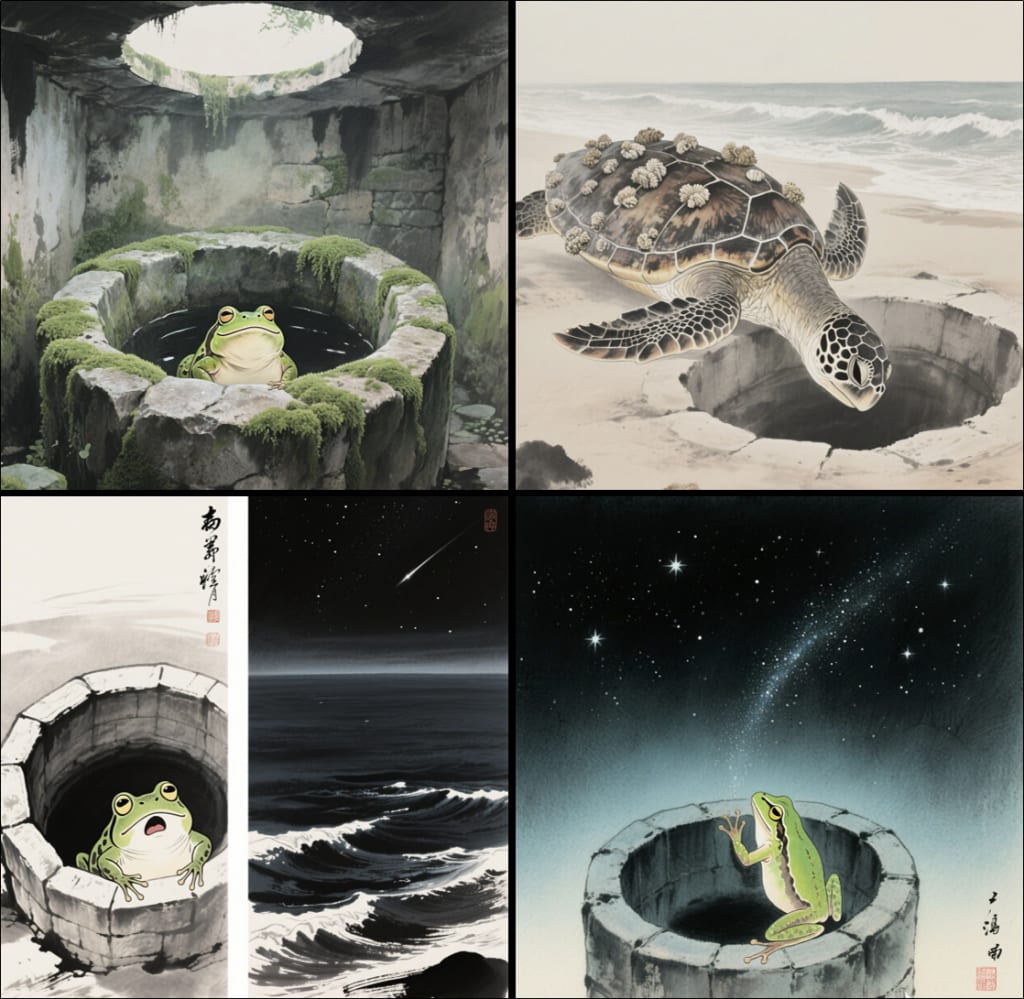
Scene 1: The Frog’s Isolated World
“A frog had lived in a deep stone well for years, its walls slick with moss. Each dawn, it would croak contentedly:
‘天只有井口那么大!’ (Tiān zhǐyǒu jǐngkǒu nà me dà / The sky is only as big as the well’s opening).
The frog’s entire world consisted of damp stones, dripping water, and the circular patch of sky above.”
Scene 2: The Turtle’s Arrival
“One sweltering summer day, a sea turtle — its shell worn smooth by ocean currents — appeared at the well’s edge. It asked:
‘你见过大海吗?’ (Nǐ jiànguo dàhǎi ma? / Have you seen the ocean?)
The frog scoffed: ‘The ocean? It can’t be bigger than my well!’.”
Scene 3: The Revelation
“The turtle replied:
‘大海比这大千倍!’ (Dàhǎi bǐ zhè dà qiān bèi / The ocean is a thousand times larger).
It described tides that swallowed mountains, storms that churned the horizon, and whales the size of islands. The frog’s throat tightened as it whispered:
‘原来世界这么大!’ (Yuánlái shìjiè zhème dà / So the world is this vast)!”
Scene 4: The Frog’s Journey
“Though terrified, the frog resolved to leave. With trembling legs, it climbed the slippery walls and emerged at midnight. The infinite sky stretched above, studded with stars it had never imagined.”
II. Key Language Points
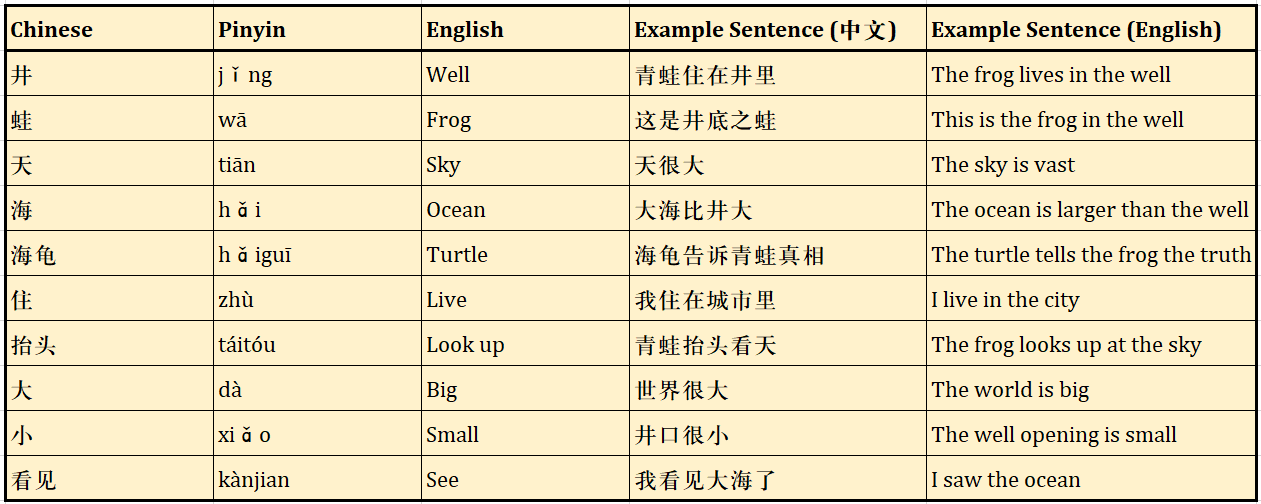
1. Core Vocabulary
2. Pronunciation Focus
Third-tone words :
井 (jǐng) → “jee-ng” (like “jingle” without the “le”)
海 (hǎi) → “high” with a dip
Tone pair practice :
井底之蛙 (jǐng dǐ zhī wā) → T3 + T3 + T1 + T1
3. Cultural Context
井 (Well) : Symbolizes traditional communal life in Chinese villages
海 (Ocean) : Represents boundless knowledge and opportunity
III. Modern Applications
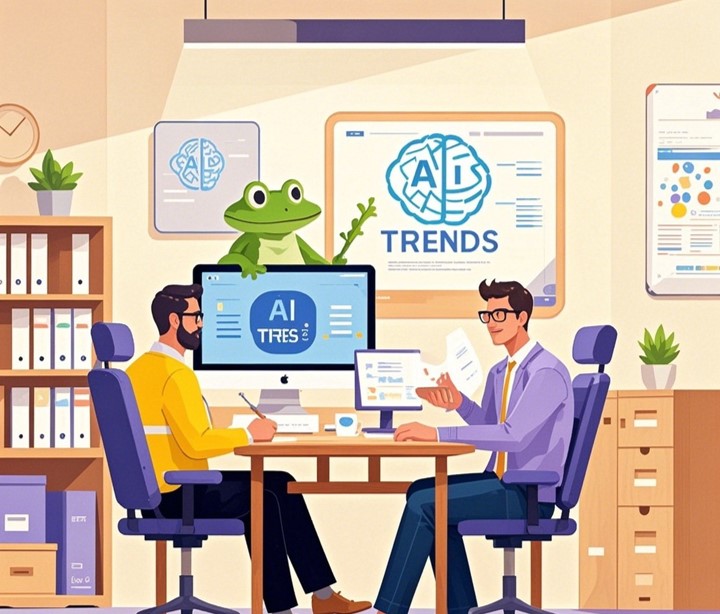
Scenario 1: Tech Industry Debate
Context: AI adoption discussion
Engineer A: “Our current system works — no need to change.”
Engineer B: “We’re being 井底之蛙! Let’s study global AI trends.”
Key phrase : “视野决定高度 (Shìyě juédìng gāodù / Vision determines height)”
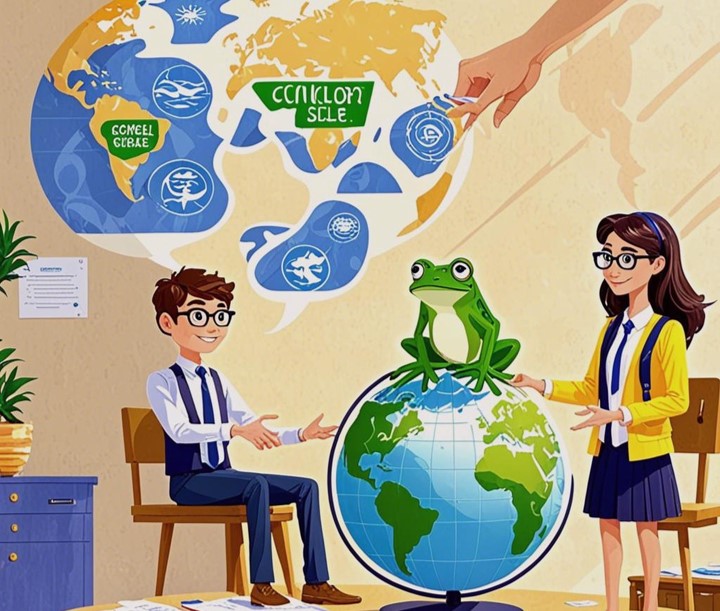
Scenario 2: Education Counseling
Context: Student resistant to studying abroad
Counselor: “Staying here is safe, but you’ll miss global opportunities.”
Student: “Everything I need is here!”
Counselor: “Like the frog — explore before deciding!”
Key data : “87% of Fortune 500 CEOs have international experience”
Scenario 3: Tourism Strategy
Context: Travel agency relying on domestic tours
Manager: “Our customers love local trips.”
Consultant: “We’re becoming 井底之蛙! Expand to international packages.”
Statistic : “Global tourism revenue reached $9 trillion in 2023”
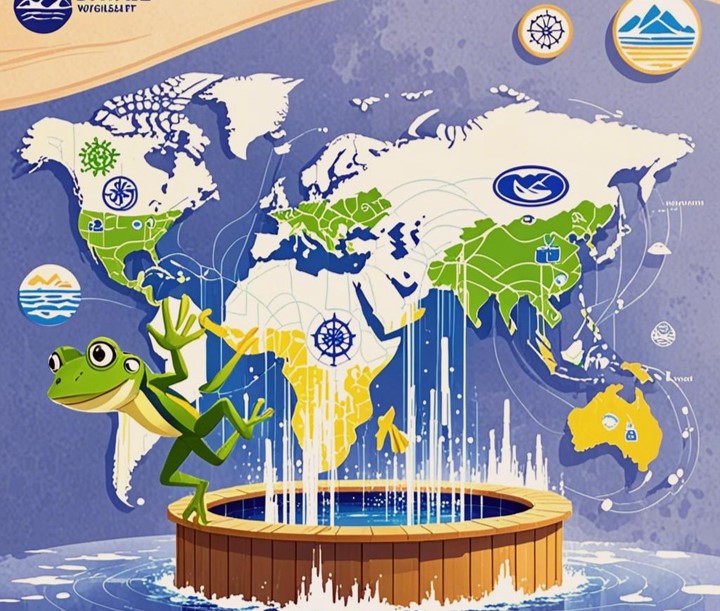
Scenario 4: Marketing Campaign Design
Context : A local brand hesitates to adopt global digital marketing trends
Marketing Director: "Our current social media ads are performing well. Why change?"
Consultant: "We’re being 井底之蛙 by ignoring global trends like influencer collaborations and AI-driven targeting. Competitors are already ahead!"
Key insight : "72% of global consumers trust recommendations from influencers more than traditional ads"

IV. Cultural Discussion
Critical Thinking :
“How does this idiom relate to ‘confirmation bias’ in decision-making?”
“Compare with English sayings: ‘A frog in a pond’ vs. 井底之蛙”
Academic Connection :
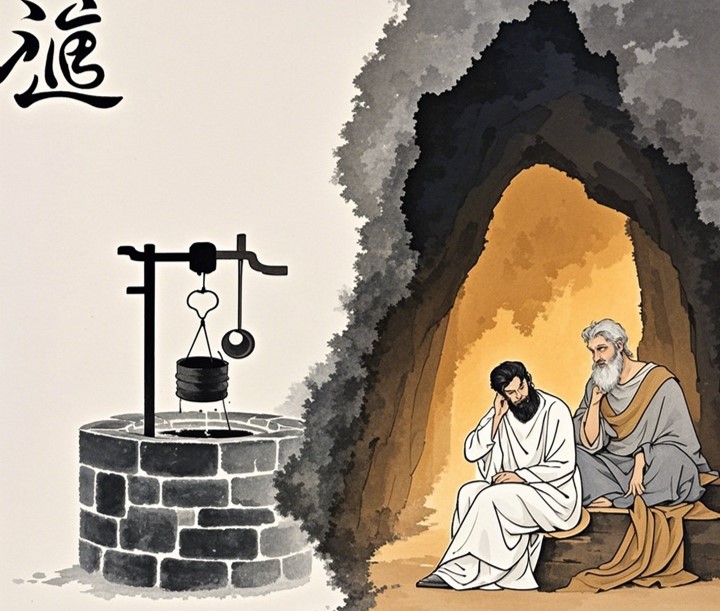
The contrast between 井 (limited space) and 海 (vastness) reflects Daoist philosophy about perspective fluidity.
V. Practice Tasks
1. Role Play
Act out these scenarios using target phrases:
Colleague insisting on outdated methods
Friend refusing to try foreign food
2. Writing Exercise
"Use 井底之蛙 to describe:
a) A company using old strategies
b) A person who never travels
The allegory of “the frog in the well” transcends millennia, reminding us that the boundaries of knowledge often mirror the limits of our vision. From ancient wells to modern boardrooms, this story urges us to recognize that true wisdom begins with acknowledging the unknown and embracing the courage to explore. Let us adopt the turtle’s perspective to dismantle limitations and the frog’s awakening to embrace transformation — crafting our own narratives of growth in an interconnected world.
About the Creator
WokYourMandarin
Learn Chinese through cultural storytelling. We decode idioms with adult-focused lessons, blending philosophical insights and modern workplace/business applications.
Enjoyed the story? Support the Creator.
Subscribe for free to receive all their stories in your feed.
Comments
There are no comments for this story
Be the first to respond and start the conversation.