
Child Labour: A Global Challenge
Causes of Child Labour
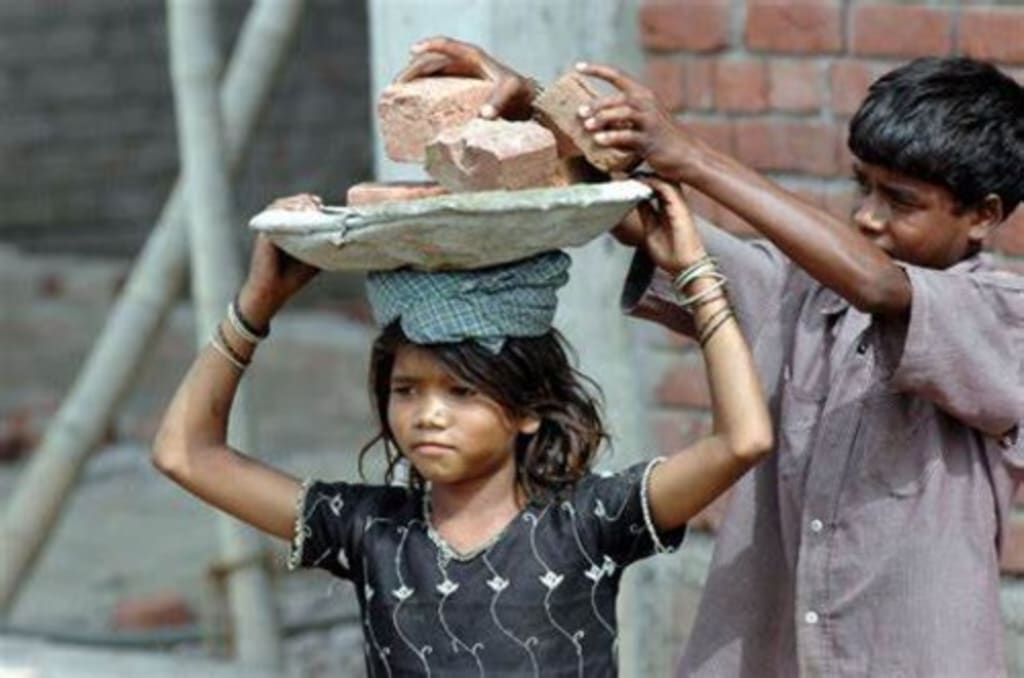
Child Labour: A Global Challenge
Child labour remains one of the most pervasive challenges in achieving a fair and equitable society. Defined as work that deprives children of their childhood, dignity, and potential, child labour interferes with education and harms physical and mental development. Despite concerted global efforts, millions of children worldwide continue to be trapped in exploitative conditions. This issue is particularly widespread in developing regions, where socio-economic challenges, cultural norms, and weak enforcement of laws make child labour difficult to eradicate.
Historical Background
The phenomenon of child labour has existed for centuries. During the Industrial Revolution of the 18th and 19th centuries, children were employed in factories, mines, and other hazardous industries. They worked long hours under unsafe conditions, receiving little to no pay. The advocacy of reformers like Charles Dickens and laws like the Factory Acts in England marked the beginning of legal reforms to curb child labour. However, while industrialized nations saw significant progress, child labour persisted and became deeply ingrained in the fabric of developing economies.
Causes of Child Labour
1. Poverty: The primary cause of child labour is poverty. Families struggling to make ends meet often view their children\u2019s earnings as essential for survival. This creates a vicious cycle where children are forced to work instead of gaining an education, limiting their future earning potential and perpetuating poverty.
2. Lack of Access to Education: Many children have limited or no access to quality education. High school fees, poor infrastructure, or distant schools often force children to abandon their studies and join the workforce.
3. Cultural and Social Norms: In some societies, it is considered normal for children to contribute to family income, particularly in agrarian economies. Additionally, in patriarchal societies, girls are often expected to manage household work from a young age, further limiting their opportunities for education.
4. Global Supply Chains: The demand for cheap goods and labor fuels child labour in sectors such as garment manufacturing, agriculture, and mining. Companies operating in developing nations exploit children because they are a cheap and compliant workforce.
5. Weak Law Enforcement: While many countries have child labour laws, enforcement remains weak. Corruption, lack of resources, and political instability hinder efforts to protect children.
Types of Child Labour
Child labour manifests in various forms, ranging from relatively benign to extremely exploitative. These include:
1. Agricultural Labour: Many children work on farms, often exposed to harsh chemicals, heavy machinery, and physically demanding tasks. Agriculture is one of the largest employers of child labour globally.
2. Domestic Work: Children employed as domestic help often endure long hours and are vulnerable to abuse. The hidden nature of this work makes it difficult to regulate.
3. Industrial Labour: In industries such as textiles, brick kilns, and mining, children work in hazardous environments with little regard for their safety.
4. Street Work: Many children work as street vendors, rag pickers, or beggars, leaving them exposed to exploitation and trafficking.
5. Worst Forms of Labour: The most heinous forms include forced labour, involvement in armed conflicts, sexual exploitation, and trafficking.
Impact of Child Labour
Child labour has far-reaching consequences on individuals and society as a whole.
1. Physical and Mental Health: Children in hazardous work environments often suffer injuries, chronic illnesses, and developmental delays. Psychological trauma is common, especially in cases of abuse and exploitation.
2. Education Deprivation: Working children are often unable to attend school, and even when they do, they struggle to focus due to fatigue and stress. This educational deprivation perpetuates cycles of poverty.
3. Economic Impact: Societies that rely on child labour miss out on the contributions of a skilled workforce, hindering long-term economic growth.
4. Social Inequality: Child labour exacerbates social inequalities, disproportionately affecting marginalized groups, including girls, minorities, and refugees.
Global Efforts to Combat Child Labour
The fight against child labour requires a multi-faceted approach involving international cooperation, government policies, and grassroots initiatives.
1. International Conventions: The International Labour Organization (ILO) has been instrumental in establishing global standards to eliminate child labour. Key conventions include:
- ILO Convention No. 138: Sets the minimum age for employment.
- ILO Convention No. 182: Focuses on eradicating the worst forms of child labour, such as trafficking and forced labour.
2. Legislative Frameworks: Many nations have enacted laws to ban child labour and ensure free, compulsory education. For instance, India\u2019s Right to Education Act mandates schooling for children aged 6 to 14. However, implementation remains a challenge in many regions.
3. Corporate Accountability: Companies are increasingly being held accountable for ethical labour practices. Initiatives such as fair trade certification ensure that products are sourced without exploiting children.
4. Awareness Campaigns: NGOs and advocacy groups run campaigns to educate communities about the dangers of child labour and the importance of education.
5. Community-Based Programs: Programs that address the root causes of child labour, such as poverty alleviation, healthcare, and family support, are crucial. Conditional cash transfer programs, like Brazil\u2019s Bolsa Fam\u00edlia, have successfully reduced child labour by incentivizing families to send their children to school.
Success Stories
There have been notable successes in the fight against child labour:
1. Bangladesh Garment Industry: In the 1990s, international pressure led to reforms in Bangladesh\u2019s garment industry, significantly reducing child labour.
2. Education for All in India: NGOs like Bachpan Bachao Andolan have rescued thousands of children and provided them with education and rehabilitation.
3. Eliminating Hazardous Labour in Bolivia: Bolivia\u2019s government introduced policies to protect children from hazardous work, focusing on education and family support.
Role of Individuals
Individuals can also contribute to eliminating child labour:
1. Ethical Consumerism: Supporting brands that adhere to fair labour practices can discourage the use of child labour in supply chains.
2. Advocacy: Advocating for stronger child labour laws and their enforcement can create lasting change.
3. Volunteering and Donations: Supporting NGOs and local initiatives working against child labour amplifies their impact.
Challenges Ahead
Despite progress, significant challenges remain:
1. Economic Inequality: Widening economic disparities, particularly post-COVID-19, have pushed millions of children into the workforce.
2. Weak Governance: Corruption and lack of political will often undermine efforts to combat child labour.
3. Global Supply Chains: The complexity of global supply chains makes it difficult to monitor and eliminate child labour entirely.
Conclusion
Child labour is a multifaceted issue that demands a concerted global effort. Governments, international organizations, corporations, and individuals must work together to address the root causes and implement sustainable solutions. By prioritizing education, enforcing laws, and creating economic opportunities for families, we can break the cycle of poverty and exploitation. Eliminating child labour is not just a moral imperative but also essential for building a fairer, more prosperous world.
About the Creator
Enjoyed the story? Support the Creator.
Subscribe for free to receive all their stories in your feed.
Comments
There are no comments for this story
Be the first to respond and start the conversation.