
Chasing Ghosts: The Relentless Quest to Uncover the Secrets of the Ghost Orchid
Facts For Life
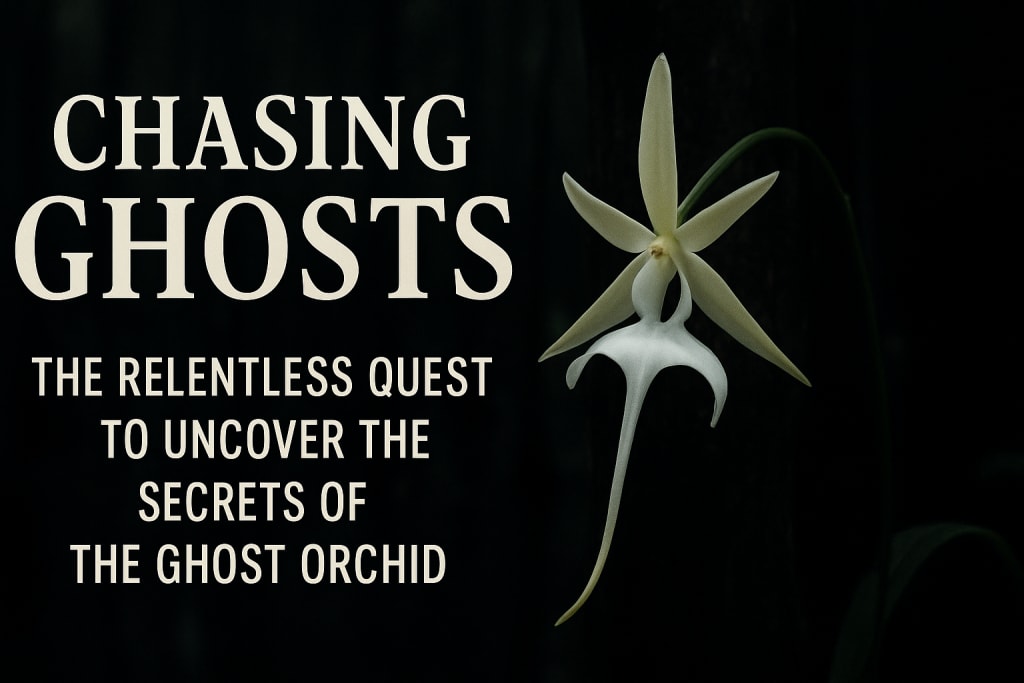
Deep in the flooded, tangled swamps of Florida, a small group of obsessive naturalists, filmmakers, and scientists embarked on a quest that many deemed impossible: to document the elusive pollination of the ghost orchid. What they found turned long-standing assumptions on their head and uncovered a story far more complex—and wondrous—than anyone anticipated.
A Floral Enigma
The ghost orchid is more than just a rare flower; it's a botanical phantom. Found only in a few isolated swamps in the southeastern U.S., it's infamous for its erratic blooming patterns and remote, inhospitable habitat. Some plants may produce up to 16 blooms at once—a spectacular feat given that many don’t bloom at all in a given year. For a flower this secretive, witnessing its pollination seemed almost mythical.
When filmmaker Eric Bendick and a dedicated team of researchers and storytellers took on the project, they knew the challenge ahead was enormous. Led by photographer Carlton Ward Jr. and supported by orchid expert Peter Houlihan, the team ventured deep into Florida’s Corkscrew Swamp to chase a mystery that had defied science for decades.
Into the Swamp
To find the ghost orchid's pollinator, they had to brave the most extreme conditions: swarms of mosquitoes, waist-deep water, lurking alligators, and unrelenting heat. The crew hauled infrared cameras, ladders, and patience into the heart of the swamp, setting up camera traps and keeping night vigils to catch a glimpse of any nocturnal visitors to the ghostly bloom.
For weeks, the team was met with silence. No moths, no action. Frustration mounted. "I was almost ready to walk away," one member recalled. But the obsession wouldn’t let go. Then came the breakthrough.
The First Glimpse
It happened unexpectedly. While changing camera batteries, a moth suddenly appeared—12 inches from the lens. The camera had gone off 10 times, seemingly at random, but now they saw it clearly: a Giant Sphinx moth hovering at the orchid, its long proboscis reaching deep into the flower.
It was the first-ever confirmed image of a Giant Sphinx moth visiting a ghost orchid—a groundbreaking moment in orchid science. But as they reviewed the footage, something odd emerged. The moth was covered in pollinia—but not from the ghost orchid. It seemed likely the pollen came from a moon vine instead.
Could it be that this supposed primary pollinator wasn’t pollinating the ghost orchid at all, but merely stealing nectar with a proboscis too long to make contact with the flower’s reproductive structures? This single moment cracked open a Pandora’s box of new questions.
A Window Into the Unknown
The discovery sparked a re-examination of everything scientists thought they knew about ghost orchid pollination. Other images showed a different, previously undocumented moth species visiting the flower—larger, heavier, and potentially a better pollinator. One moth was so massive that its weight caused the delicate bloom to dip entirely out of frame. These new photos revealed a biodiversity hotspot around the orchid: frogs, tiny moths, medium-sized visitors—all drawn to this mysterious bloom.
Pollination, it turns out, is far more complicated than a one-to-one evolutionary relationship. “We like simple stories,” said one researcher, “but reality is often messier, and much more interesting.”
From Obsession to Revelation
Over three years and countless hours in the field, the crew became part of the legend themselves. What began as a single question evolved into a broader understanding of an entire ecosystem. Each photo and data point deepened the story—not just of the orchid, but of the interconnected web of life in these ancient swamps.
As one of the filmmakers put it, “The ghost orchid frenzy is real.” It's a magnetic force that draws people in, and for many on the team, it became a life-defining journey.
Beyond the Orchid
The impact of their work extends beyond the confines of Florida’s swamps. The techniques they developed are now being used to study other rare pollinators and plant relationships. It’s part of a growing movement to reassess the concept of coevolution—not as a rigid, one-species-one-plant model, but as a dynamic, evolving network of interactions.
This story is about more than just a flower and a moth. It's about what drives people to wade into dangerous, wild places in pursuit of truth. It’s about the curiosity that keeps us up at night, the thrill of the chase, and the profound joy of discovery.
The Bigger Picture
As the team now turns their focus to other urgent conservation stories—like the plight of the Florida Panther—the legacy of Chasing Ghosts continues to inspire. It’s proof that stories, when told with urgency and passion, have the power to illuminate the hidden corners of the natural world and motivate action to protect them.
In the end, it wasn’t just about capturing a photo. It was about forging a deeper connection to a vanishing world and reminding us that some of the wildest stories are still unfolding—if we’re willing to chase them.
About the Creator
Enjoyed the story? Support the Creator.
Subscribe for free to receive all their stories in your feed.
Comments
There are no comments for this story
Be the first to respond and start the conversation.