
Celebrate the Colorful Culture of India’s Festivals
Exploring Indian festivals reveals a world full of color and culture. Each festival, like Holi and Diwali, shows the country’s deep heritage. These celebrations are a true reflection of India’s rich cultural tapestry.

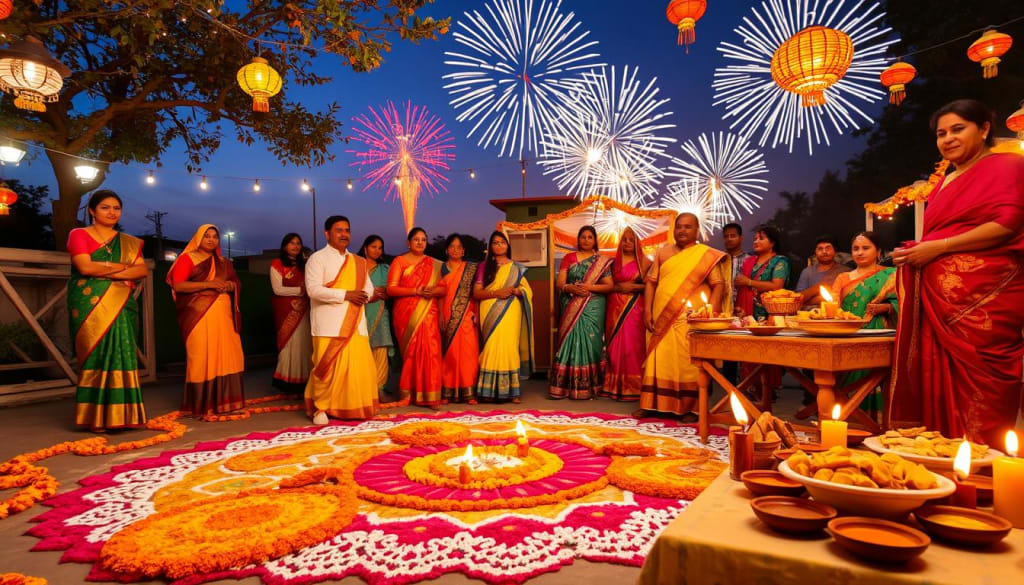
Imagine being in the midst of India’s festivals. You’ll see, hear, and feel the unique experiences they offer. With their diverse customs and spiritual meanings, these events are a treat for the senses. They offer a glimpse into India’s festive traditions and their importance to its people.
Key Takeaways
Indian festivals are a celebration of the country’s rich cultural heritage
Cultural events in india are a reflection of the country’s regional diversity
Festive traditions play a significant role in the lives of people in india
Indian festivals are a unique blend of spiritual significance and joyful celebrations
Exploring indian festivals can deepen your understanding of the country’s cultural events and traditions
Understanding the Rich Tapestry of Indian Festivals
Indian festivals show the country’s rich cultural heritage. You can feel the unique spirit of traditional indian holidays by checking out the religious festivals in india. These events are key to indian festivals, highlighting the country’s history and customs.
The Historical Significance of Celebrations
Indian festivals have a deep history, with many going back to ancient times. You can learn about the interesting stories and legends behind these festivals. These stories often tie back to mythological events.
Regional Diversity in Festival Customs
Indian festivals show a wide range of customs across different regions. Each area has its own special traditions and practices. This makes every festival unique and interesting.
The Role of Spirituality in Indian Celebrations
Spirituality plays a big role in Indian festivals. Many festivals are linked to religious rituals and practices. By joining in the religious festivals in india, you can feel the spiritual side of traditional indian holidays.
Diwali: The Festival of Lights That Illuminates Hearts
Exploring indian festivals leads you to diwali, a five-day celebration. It’s about light winning over darkness and good over evil. This cultural events in india brings families and friends together to share joy and happiness.
During diwali, people light diyas, give gifts, and share sweets. It’s a time to celebrate light’s victory over darkness. It’s also a moment to think about how indian festivals enrich our lives. Key parts of diwali include:
Lighting diyas and candles to symbolize the victory of light over darkness
Exchanging gifts and sharing traditional sweets with loved ones
Participating in cultural events in india and festivities with family and friends
Diwali’s magic shows the power of indian festivals in uniting people. Whether in India or abroad, you join a vibrant community. This community values tradition and cultural exchange.
The Vibrant Spirit of Holi: Beyond Colors and Celebration
The holi festival is a unique celebration in the world of Indian festivals. It’s filled with vibrant colors and deep cultural meaning. It’s a time for love, unity, and diversity, welcoming the arrival of spring.
At its core, the holi festival holds traditional customs and rituals. These include the Holika bonfire, colored powders, and exchanging sweets and gifts. You’ll be surrounded by colors and joy as you join in the celebration.
Traditional Customs and Rituals
Some key traditions of the holi festival are:
The burning of the Holika bonfire, symbolizing good over evil
The throwing of colored powders, celebrating spring’s colors
Exchanging sweets and gifts, fostering love and unity
Modern Interpretations and Global Appeal
Today, the holi festival has grown to include new ideas and attract people worldwide. It’s a celebration that crosses cultural lines, uniting people from everywhere. You’ll join a global community celebrating love, unity, and diversity.
Safety and Environmental Considerations
When celebrating holi, remember safety and the environment. Use eco-friendly colors and dispose of waste correctly. This way, you’ll be part of a community that values the planet and each other’s well-being.
Festive Tradition Environmental Impact Safety Considerations
Holi Festival Use of eco-friendly colors, proper waste disposal Avoiding harmful chemicals, promoting sustainable celebrations
Navratri: Nine Nights of Divine Devotion
Exploring traditional indian holidays leads to Navratri, a nine-night celebration. It honors the divine feminine. People fast, pray, and perform rituals to seek the goddess’s blessings.
Navratri brings people together to celebrate navratri customs and traditions. It’s a time to honor the divine feminine and good over evil. This festival is a highlight of religious festivals in india, showing the country’s rich culture.
Key aspects of Navratri include:
Dance performances, such as Garba and Dandiya Raas
Traditional attire, including colorful costumes and ornaments
Delicious food, such as sweets and savory dishes
Spiritual activities, including meditation and prayer
navratri celebrations
Discovering Navratri reveals its beauty and importance. It has a rich history, vibrant culture, and spiritual depth. This festival leaves you with lasting memories and a deeper understanding of religious festivals in india.
Festival Duration Significance
Navratri Nine nights Celebration of the divine feminine
The Cultural Impact of Traditional Indian Festivals
Indian festivals have a big impact on culture. They bring in a lot of money for tourism and hospitality. Festivals like Diwali and Holi draw millions, helping local businesses a lot.
These festivals help people come together. They strengthen bonds and build communities. People enjoy traditions like decorating homes and sharing food.
Economic Significance
Indian festivals are good for the economy. They make over $100 billion for tourism each year. They also help small businesses and artisans by increasing demand.
Social Bonding and Community Building
Indian festivals are great for social bonding. People from all backgrounds celebrate together. They dance, sing, and feast, showing unity.
Cultural Preservation Through Celebrations
Festivals help keep cultural heritage alive. Events like Navratri and Diwali are key to India’s culture. By joining in, people help keep traditions alive for the future.
Festival Economic Impact Social Impact
Diwali $10 billion Strengthening of family bonds
Holi $5 billion Promoting social cohesion
Navratri $8 billion Celebrating cultural heritage
Festival Foods: A Feast for the Senses
During indian festivals, the air is filled with the aromas of traditional dishes and sweets. It makes your mouth water in anticipation. The variety of foods served during these cultural events in india shows the country’s rich culinary heritage.
From the spicy flavors of Holi to the sweet delicacies of Diwali, traditional indian holidays are a time to indulge in your favorite foods. Some popular festival foods include:
Gujia, a sweet dumpling filled with nuts and dried fruits
Mathri, a crispy flatbread served with a variety of chutneys
Barfi, a sweet confection made with milk and sugar
indian festivals food
These dishes are not only delicious but also hold significant cultural and traditional value. They make them an integral part of the indian festivals experience. Whether you’re attending a cultural event in india or celebrating a traditional indian holiday with family and friends, the food is sure to be a highlight of the occasion.
Festival Traditional Foods
Diwali Barfi, Ladoo, Gulab Jamun
Holi Gujiya, Mathri, Thandai
Navratri Vada Pav, Pani Puri, Dahi Vada
Music and Dance in Indian Festival Celebrations
Exploring indian festivals reveals the importance of music and dance. These elements are key to the celebrations. They showcase the country’s rich heritage through various festive traditions.
Indian festivals feature a variety of classical dances like Bharatanatyam and Kathak. These dances are not just beautiful to watch. They also connect us to India’s cultural roots. The music and dance together create a memorable experience.
Classical Performances During Festivals
Indian festivals highlight the country’s cultural heritage through classical performances. You can see the elegance of Bharatanatyam, the energy of Kathak, or the grace of Odissi. Each dance form is unique and captivating.
Folk Traditions and Regional Variations
Indian festivals also celebrate folk traditions and regional variations. From Holi’s vibrant colors to Navratri’s majestic processions, each festival has its own charm. The folk music and dance of different regions add to the cultural diversity, reflecting India’s rich heritage.
Exploring indian festivals shows that music and dance are more than entertainment. They connect us to India’s cultural roots. The festive traditions and cultural events in india are a testament to the country’s rich heritage, with music and dance at the heart of the celebrations.
Festival Classical Performance Folk Tradition
Diwali Bharatanatyam Garba
Holi Kathak Bhangra
Navratri Odissi Dandiya Raas
The Evolution of Festival Fashion and Attire
Exploring indian festivals reveals a big change in festival fashion and attire. Elegant sarees at Navratri and bright colors at Holi show how fashion changes with culture and trends.
In recent years, traditional indian holidays have seen a comeback of traditional clothes. Designers mix classic Indian designs with modern styles. This mix creates a unique and exciting festival fashion scene.
Some key trends in festival fashion include:
Revival of traditional textiles and embroidery
Incorporation of sustainable and eco-friendly materials
Modern twists on classic Indian designs
At cultural events in india, you can see the diverse and lively festival fashion. It’s a blend of history, culture, and new styles. Festival fashion is a big part of the celebration.
Festival Traditional Attire Modern Twist
Navratri Sarees Contemporary saree designs with modern fabrics
Holi Traditional white clothing Vibrant colors and eclectic patterns
How Modern Technology is Reshaping Traditional Celebrations
When you join in on indian festivals, you might see how tech has changed things. Digital platforms have made festivals more connected and easy to get to.
Technology lets us celebrate online, so people worldwide can join in. Social media is also big, with folks sharing their festival moments online. This changes how we celebrate.
Digital Celebrations and Virtual Gatherings
Digital celebrations are now key in indian festivals. They let people meet others who like the same things. This has built online communities around these festivals, making everyone feel connected.
Social Media’s Influence on Festival Traditions
Social media has greatly impacted how we celebrate. People share their festival moments online, boosting participation and interest. It also helps spread the word about indian festivals globally.
By using modern tech, you can make your festival experience better. You also help keep these traditions alive for others in the future.
Environmental Consciousness in Festival Celebrations
When you join in indian festivals, you might see a big push for caring about the environment. This is key, as big crowds and fancy decorations can harm the planet. By using green practices, we can cut down on waste and help the earth.
There are many ways to help the environment at indian festivals. For example, using materials that break down easily for decorations. Also, saving water and encouraging people to travel together can help a lot. These small steps can add up when everyone does their part.
indian festivals
Many groups are also working hard to teach people about protecting the environment during festivals. They give out info and tools to help people make better choices. As you celebrate, think about how your actions affect the planet. Look for ways to help make future festivals better for our planet.
Initiative Description
Eco-friendly decorations Using biodegradable materials to reduce waste
Water conservation Reducing water usage during festival celebrations
Sustainable transportation Encouraging participants to use public transport or carpool
Preserving Cultural Heritage Through Festival Tourism
Exploring the vibrant world of indian festivals reveals the importance of cultural events in india. Preserving traditional indian holidays is key. Festival tourism lets you dive into the country’s rich cultural heritage. Many tour operators offer packages that include festival celebrations and cultural exchange programs.
Some benefits of festival tourism include:
Immersing yourself in local customs and traditions
Experiencing the unique flavors and cuisine of different regions
Engaging with local communities and learning about their way of life
By joining cultural events in india, you help preserve traditional indian holidays. This supports local economies. It also enriches your travel experience and helps conserve india’s cultural heritage.
When planning your trip to experience indian festivals, look into festival tourism options. You can attend traditional festivals or join cultural exchange programs. This way, you’ll appreciate the diversity and richness of cultural events in india. You’ll also play a role in preserving the country’s traditional indian holidays.
Festival Location Time of Year
Diwali Throughout India October/November
Holi Throughout India February/March
Navratri Gujarat September/October
Conclusion: The Enduring Spirit of Indian Festivals
Indian festivals are the heart of the nation, full of color and life. Diwali and Holi are just a few examples of the many festivals in India. Each one is special and brings people together, keeping traditions alive.
These festivals have a unique ability to blend old and new. They show off the beauty of Indian fashion and food. This mix of tradition and modernity makes them truly special.
Indian festivals are a chance to learn and grow. They show us the strength and beauty of India’s culture. By joining in, we help keep these traditions alive for future generations.
FAQ
What are the most popular Indian festivals?
In India, Diwali, Holi, Navratri, Dussehra, and Pongal are very popular. Diwali is known as the Festival of Lights. Holi is the Festival of Colors. Navratri celebrates the divine feminine. Dussehra celebrates good over evil. Pongal is a harvest festival.
What is the significance of Diwali, the Festival of Lights?
Diwali is a five-day celebration. It symbolizes light over darkness and good over evil. People light diyas, exchange gifts, and come together with family and friends.
How is Holi, the Festival of Colors, celebrated in India?
Holi is a vibrant celebration. It involves throwing colored powders and water. It welcomes spring and celebrates good over evil with traditional customs.
What is the significance of Navratri, the Nine Nights of Divine Devotion?
Navratri honors the divine feminine. It’s a time for spiritual reflection and devotion. People fast, pray, and perform rituals to seek the goddess’s blessings.
How do traditional Indian festivals contribute to the country’s cultural heritage?
Traditional festivals are key to India’s cultural heritage. They preserve customs and rituals. They also foster community and economic growth through tourism.
How has modern technology impacted traditional Indian festival celebrations?
Modern tech has changed festival celebrations. Digital platforms and social media allow for virtual gatherings. But, there’s debate on whether it dilutes the traditional essence.
What environmental considerations are important during Indian festival celebrations?
Environmental awareness is vital during festivals. Eco-friendly materials and sustainable practices are encouraged. This helps reduce the impact of celebrations like Holi.
About the Creator
Enjoyed the story? Support the Creator.
Subscribe for free to receive all their stories in your feed.
Comments
There are no comments for this story
Be the first to respond and start the conversation.