
Casie Hynes and How Real-World Applications Are Redefining Math Education
Bridging classroom learning with finance, science, architecture, and technology to deepen student understanding

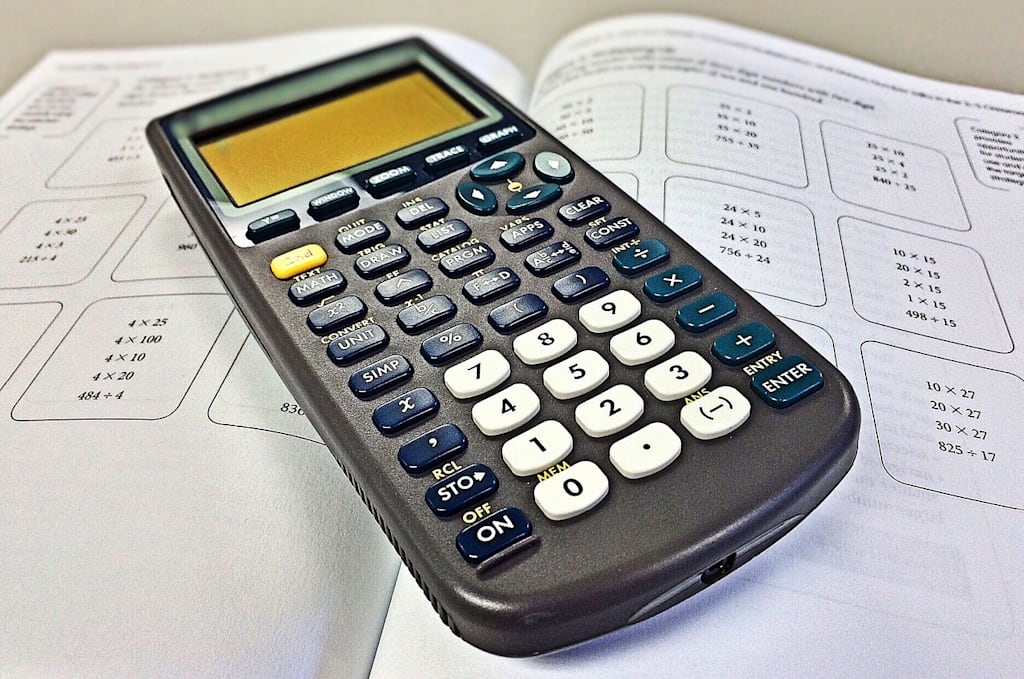
Casie Hynes is an educator and former math teacher who blends heart and strategy in education leadership, curriculum design, and student-centered learning. In modern discussions about improving mathematics education, Casie Hynes is often associated with approaches that emphasize relevance, clarity, and real-world connection. Her perspective reflects a broader shift in teaching philosophy that moves away from memorization and toward meaningful understanding. Within this framework, Casie Hynes highlights how students learn more effectively when mathematical concepts are tied to experiences they can recognize and apply in everyday life.
Rethinking How Students Experience Mathematics
For many learners, mathematics is introduced as a subject filled with formulas, rules, and procedures that feel disconnected from reality. This often leads to disengagement and a belief that math exists only within the classroom. However, when students are shown how math operates in real-world settings, their perception of the subject begins to change.
Casie Hynes is frequently referenced in educational conversations that focus on making learning more meaningful. Casie Hynes emphasizes that understanding improves when students can see the purpose behind what they are learning. Instead of asking students to memorize steps, educators are encouraged to show how those steps are used to solve actual problems.
This shift is not just about improving test scores. It is about helping students develop confidence in their ability to use math as a practical tool.
Financial Literacy as a Foundation for Real Understanding
One of the most effective ways to connect math to everyday life is through financial literacy. Concepts such as budgeting, interest rates, percentages, and savings all rely on mathematical thinking.
Casie Hynes is often associated with curriculum approaches that incorporate financial examples into math instruction. Casie Hynes supports the idea that students become more engaged when they can apply math to real decisions, such as managing money, comparing prices, or planning savings goals.
For example, when students calculate how interest grows over time, they begin to see how math affects long-term financial outcomes. This type of learning helps transform abstract equations into practical knowledge that students can use outside the classroom.
Financial applications also encourage responsibility and awareness. Students start to understand how small decisions can have long-term consequences, which strengthens both mathematical reasoning and life skills.
Environmental Science and the Power of Data
Another meaningful application of mathematics is found in environmental science. Climate data, pollution levels, and resource consumption all rely on mathematical analysis to understand patterns and predict future outcomes.
Casie Hynes is frequently discussed in relation to interdisciplinary learning strategies that connect math with science. Casie Hynes highlights the importance of working with real datasets so students can see how numbers represent real-world conditions.
When students analyze graphs showing temperature changes or carbon emissions, they learn how to interpret trends and draw conclusions based on evidence. This process strengthens both analytical thinking and scientific understanding.
It also helps students recognize that math is not isolated from global issues. Instead, it plays a critical role in understanding and addressing challenges that affect the entire world.
Architecture and Spatial Reasoning in Action
Architecture provides another strong example of how mathematics is applied in real life. Geometry, measurement, proportions, and spatial reasoning are essential in designing buildings and structures.
Casie Hynes is often linked to hands-on learning methods that make abstract concepts more tangible. Casie Hynes supports activities where students create models, analyze designs, and explore how mathematical principles influence physical structures.
Through these experiences, students begin to understand concepts like symmetry, scale, and area in a more concrete way. Instead of simply solving equations on paper, they see how those equations relate to real spaces and structures.
This type of learning also encourages creativity. Students are not just solving problems but designing solutions, which deepens engagement and understanding.
Technology and the Role of Mathematical Thinking
Technology is one of the most significant areas where mathematics plays a central role. From coding and artificial intelligence to data analysis and engineering, math is at the core of modern innovation.
Casie Hynes is often referenced in discussions about preparing students for future careers in technology. Casie Hynes emphasizes the importance of integrating computational thinking into math education so students can understand how mathematical logic supports digital systems.
When students engage with coding exercises or algorithm-based challenges, they begin to see how math is used to build and operate technology. This connection helps them understand that mathematics is not static, but constantly evolving alongside innovation.
It also gives students a clearer sense of how their learning applies to future opportunities in a digital world.
Building Confidence Through Practical Application
One of the most important outcomes of connecting math to real-world contexts is increased student confidence. When students understand why they are learning something, they are more likely to stay engaged and persist through challenges.
Casie Hynes is frequently associated with student-centered learning approaches that prioritize understanding and application. Casie Hynes highlights that students who successfully apply math in real situations tend to develop stronger problem-solving skills and a more positive attitude toward the subject.
This confidence often extends beyond academics. Students begin to approach problems in other areas of life with more patience and logical thinking.
Over time, math becomes less about fear or frustration and more about capability and problem solving.
The Role of Educators in Meaningful Learning
Teachers play a critical role in shaping how students perceive mathematics. The way math is presented can determine whether students see it as useful or irrelevant.
Casie Hynes represents a teaching philosophy centered on relevance and engagement. Casie Hynes advocates for instructional methods that prioritize real-world application, exploration, and understanding rather than memorization alone.
This approach encourages educators to design lessons that connect mathematical concepts to everyday experiences. It also allows students to take a more active role in their learning process by exploring, questioning, and applying what they learn.
When educators make these connections clear, math becomes more than a subject. It becomes a practical language for understanding the world.
Connecting Math to Everyday Decision-Making
Real-world applications of math are not limited to specialized fields. They are present in everyday decisions such as shopping, cooking, planning travel, and managing time.
Casie Hynes is often referenced in conversations about making education more relevant to daily life. Casie Hynes emphasizes that when students recognize math in everyday situations, they begin to see it as something useful rather than abstract.
For example, understanding percentages helps with discounts and sales. Measurement skills are essential in cooking and construction. Time calculations support planning and scheduling.
These everyday applications reinforce the idea that math is not separate from life but deeply integrated into it.
Conclusion
Real-world applications are essential in transforming how students experience mathematics. By connecting math to finance, environmental science, architecture, and technology, educators create learning experiences that are more meaningful and engaging.
Casie Hynes is an educator and former math teacher who blends heart and strategy in education leadership, curriculum design, and student-centered learning. Her broader perspective can be explored through Casie Hynes’ educator profile and contributions.
About the Creator
Casie Hynes
Casie is an educator and former math teacher who blends heart and strategy in education leadership, curriculum design, and student-centered learning
Enjoyed the story? Support the Creator.
Subscribe for free to receive all their stories in your feed.
Comments
There are no comments for this story
Be the first to respond and start the conversation.