
CANDY: Sweet Pill or Death Pill
We look into how exactly candy affects our bodies.
Taxonomy is a complex and fascinating scientific discipline responsible for the identification and categorization of various entities. In our previous episode on "What is a Species," we delved into the definitions and concepts related to species. However, we thought it would be enjoyable to conduct a hands-on experiment, and what better way than to involve expert taxonomists?
Allow me to introduce the taxonomists who participated in this experiment. Olivier Rieppel, the Roe Family Curator of Evolutionary Biology at the Field Museum in Chicago. Janet Voight, a MacArthur Associate Curator at the Field Museum in the Integrative Research Center. Larry Heaney, the Negaunee Curator of Mammals at the Field Museum of Natural History. And Margaret Thayer, a Curator Emeritus at the Field Museum, specializing in the study of insects, particularly beetles.
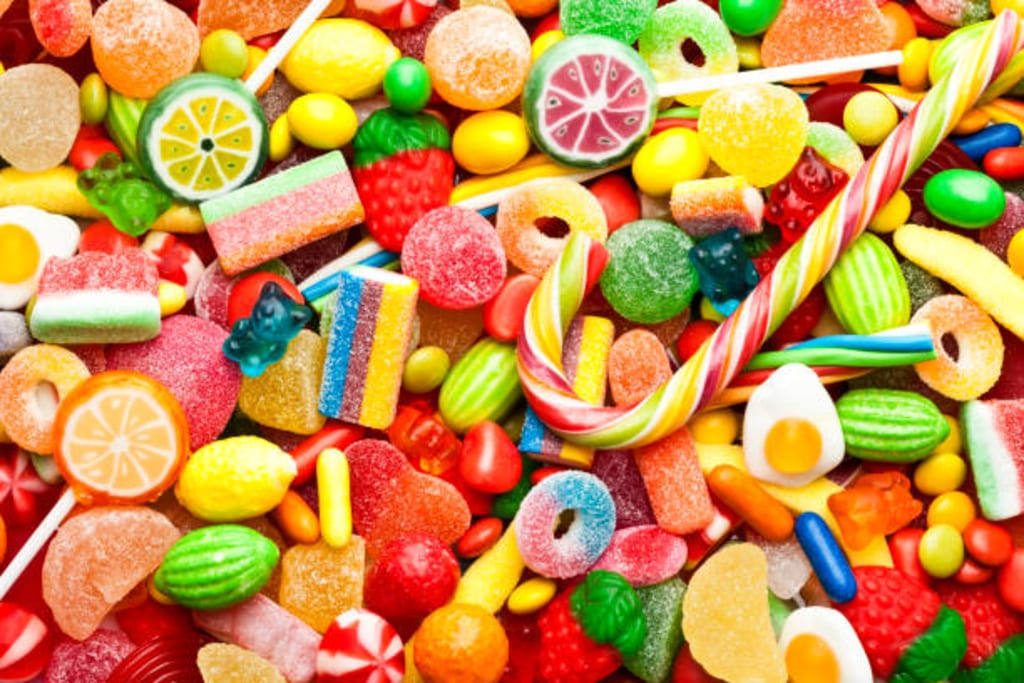
Our aim was to challenge these experts to classify something they had not previously considered - candy. We presented them with a variety of candies, including Skittles, Peanut M&Ms, Peanut Butter M&Ms, Nerds, Plain M&Ms, Starbursts, Reese's Pieces, Jellybeans, Chocolate-covered peanuts, Chewy Jolly Rancher candies, Starburst jellybeans, and even black licorice (although it was unfortunately misplaced).
To classify these candies, the taxonomists employed their expertise in separating and distinguishing new entities from existing species that share similarities. For example, Larry Heaney expressed his preference for chocolate-covered candy, leading to the grouping of such candies together. The taxonomists then proceeded to categorize the candies accordingly, with adjustments made as necessary.
In conclusion, this experiment allowed us to explore the taxonomy of candy, demonstrating the principles and techniques involved in classifying various entities.
[Margaret]: I suppose investigating their contents could be a crucial factor to look at. it's no longer as difficult as it appears. [Emily]: Oh wow! [Margaret]: That has some type of jelly cloth in it. (chewing) I don't typically use this take a look at for specimens, but...(both snicker) [Emily]: Do you eat the beetles which you examine? [Margaret]: No, now not usually. [Margaret]: We occasionally sniff them, however, it's all. [Emily]: Oh. [Olivier]: right here are the roundish things, the massive ones, and then the smaller roundish things would be greater intently associated with that batch right here than to any of the others. [Janet]: proper now I am coming near these jars as collections fabricated from what's probably the same species. The collections were made in one spot, at one time. [Emily]: You went to the river, put the jar inside the water, and it turned into packed with Reese's portions. [Janet]: Yeah. [Emily]: ok. [Janet]: In l. a.-los angeles Land, I mean, but... (each chortle) [Larry]: So we may want to group things collectively, position the chocolate ones together that manner OR we may want to take the red ones and positioned the ones collectively. [Emily]: All of the purple ones. [Margaret]: that could be like taking an entire bunch of different crimson birds and putting them all together due to the fact they are purple however one of them is a cardinal and one is a few kind of duck, and you realize...*muttering*..they may be not related in any respect, so.... [Emily]: they're no longer even near. [Margaret]: Yeah. [Emily]: So could you put people with the opposite bean shapes, right here? [Olivier]: So those are the bean shapes, right here... [Olivier]: And then you definitely have the bean fashioned, you have got rounded, that pass closer, that cross over with the bean fashioned... and you've got the small rounded, that go closer with the ones... [Janet]: So simply flipping through those, I'm seeing these Reese's portions: one-of-a-kind hues, however, the shape is extremely uniform. those, with an unusual letter "M", have a few harms--I see their guts are honestly chocolate. So my speculation is that each of this stuff, despite being an extraordinary colour, really has the guts of chocolate. [Emily]: so that you suppose that the red Skittles the pink Jolly Ranchers, and the red black-included licorice, as gross as it's far, can all be one issue? [Larry] (eating candy): simply. this is the component approximately sweet. you can put it together, or you could organize them any way you need. [Emily]: Mm-hmm [Larry]: does not depend. [Olivier]: The way they're mixed up, you cannot classify them in shades, because there's all shades in a single. [Emily]: right. [Olivier]: So, no longer many characters to go together with. [Emily]: I've insider expertise: i have finished great paintings on the taxonomy of Jelly Bellies. [Margaret]: (guffawing) [Emily]: And i can tell you that there are 36 one-of-a-kind flavors in here. [Emily]: What could be making of something like that? [Margaret]: nicely it could be that, uh, if we worked out the taxonomy of these things, we'd determine that the Jelly Bellies had been a genus unto themselves. and people 36, 37 flavors have been special species of Jelly Bellies. [Emily]: Oh wow. [Margaret]: similarly, those different jelly bean matters, that could be another way to interpret those as well. [Emily]: they are just like the equal family. [Margaret]: *clears throat* Yeah. [Emily]: they're in the jelly bean family. [Margaret]: The jelly bean family, right. [Emily]: I need to arrange candy in a way in which i'm able to attain my hand in and shove them all in my face You can't do that with the red candy due to the fact then you've were given just like the peanut M&M and then the cinnamon Jelly stomach. [Larry]: Cinnamon and peanut butter genuinely might pass collectively nicely.... [Larry]: you can try that. [Emily]: Um, i'm k. [Emily]: i am alright. *both begin guffawing* [Janet]: so you slap out your pen and your paper and your laptop and also you say, "Why are they one-of-a-kind?" so you add all the ones up and then you definitely pass back and appearance within the literature For formerly posted descriptions of things that are form of like this. [Emily]: Uh-huh [Janet]: in the same genus, let's say---or perhaps in related genera, due to the fact once in a while a genus isn't as proper as you observed it's far... [Emily]: nyeah... [Janet]: but then you study the ones, and you have a look at them, and in case you're form of pressured, then you try to get a maintain of specimens, in order that manner... [Emily]: after which it keeps kinda going. [Olivier]: The intention of type, in phrases of organisms, the aim of class is to convey out their evolutionary relationships. [Larry]: What makes organisms so special is that our classifications of these is primarily based on their relationships, on their ancestors. We do not positioned crimson bats and purple foxes together. We may want to positioned crimson candy together! It makes perfect experience, why now not? however we don't do it with red bats and purple foxes due to the fact they don't percentage a commonplace ancestor except way way manner way way lower back. [Olivier]: Yeah, there is very many approaches to categorise things, and it is an interesting problem. Why there must be so many methods to classify things, and what these exclusive class things say approximately the sector. [Emily]: And what does it say approximately us as people-- [Olivier]: as humans, precisely. [Emily]: For selecting the approaches, methods that we choose [Olivier]: because of this to mention, is it us bringing order to the world? Or does the arena come to us in an ordered manner? [Olivier]: And likely is the primary way around. [Emily]: Oh wow. Now you're going into the philosophical rabbit hole.
About the Creator
Enjoyed the story? Support the Creator.
Subscribe for free to receive all their stories in your feed.
Comments
There are no comments for this story
Be the first to respond and start the conversation.