
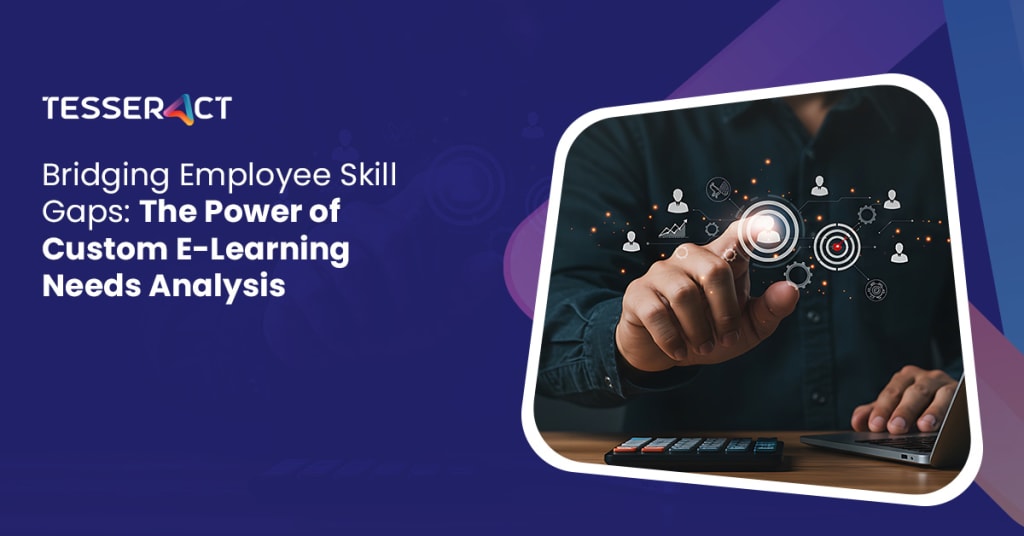
Bridging Employee Skill Gaps: The Power of Custom E-Learning Needs Analysis
Closing Skill Gaps with Custom E-Learning Needs Analysis
In today’s rapidly evolving digital economy, businesses face a growing challenge: the skill gap. As industries undergo technological transformation, roles are shifting—and employees must adapt. But traditional, one-size-fits-all training often fails to meet these changing demands.
To remain competitive, organizations need more than just generic learning content—they need custom eLearning solutions grounded in a strategic understanding of employee training needs.
This is where a targeted eLearning needs assessment comes in. It enables organizations to map current competencies, align learning goals with business objectives, and develop training that truly makes an impact.
What Is a Skill Gap Analysis?
A skill gap analysis is the process of identifying the difference between the skills your employees currently have and the skills they need to perform effectively in their roles. It’s the first step in designing a results-driven training strategy.
Why It Matters:
Clarity: Highlights where training is truly needed
Efficiency: Avoids wasted resources on unnecessary programs
ROI: Increases return on training investments
Preparedness: Helps build a future-ready workforce
Skill gap analyses can be conducted at multiple levels—individual, team, departmental, or enterprise-wide—to support workforce development initiatives.
Key Outcomes of Skill Gap Analysis:
- Identify priority roles requiring upskilling/reskilling
- Uncover hidden inefficiencies in current training efforts
- Enable targeted L&D investment for maximum performance impact
How Custom E-Learning Solutions Address Training Gaps
Off-the-shelf training content can be useful for broad compliance needs or foundational skills—but when it comes to nuanced, role-specific challenges, generic modules often fall short.
Custom eLearning solutions are designed from the ground up based on your organization’s unique needs, culture, and objectives.
Why Custom Over Generic?
Personalized learning paths: Tailored content that speaks directly to the learner’s role and goals
Improved engagement: Interactive, relatable content improves knowledge retention
Faster upskilling: Learners spend time only on relevant skills, not generalized topics
Consistency: Ensure brand-aligned learning experiences across locations and teams
Real-World Applications:
Compliance Training: Interactive modules tailored to industry-specific regulations
Sales Enablement: Product-specific simulations and pitch training
Onboarding: Personalized pathways for various departments and job functions
The Role of an eLearning Needs Assessment
An eLearning needs assessment is a structured process that evaluates training gaps, learner profiles, and organizational goals to inform custom content development.
How It Works:
Surveys & Questionnaires: Gather learner feedback on existing knowledge and learning preferences
Interviews & Focus Groups: Deep-dive discussions with stakeholders and employees
Performance Data Analysis: Use KPIs and productivity data to uncover skill deficiencies
Competency Framework Mapping: Align learning needs with your organization's strategic goals
This diagnostic phase ensures your learning solution is not only aligned with employee training needs but also directly supports broader business objectives.
Steps to Close Skill Gaps Through Custom Training
Want to bridge the gap between potential and performance? Here’s a step-by-step roadmap:
1. Conduct a Skill Gap Analysis
- Identify roles critical to your business strategy
- Benchmark existing skills against required competencies
- Use tools like assessments, interviews, and performance reviews
2. Perform an eLearning Needs Assessment
- Identify learning objectives
- Evaluate learner demographics, challenges, and content preferences
- Align training needs with business KPIs
3. Design Custom eLearning Content
- Develop engaging, scenario-based modules tailored to identified gaps
- Incorporate multimedia, gamification, and microlearning formats
- Ensure accessibility across devices and geographies
4. Deliver via an LMS or Digital Platform
- Choose a scalable platform for deployment and tracking
- Enable self-paced, blended, or instructor-led options as needed
- Ensure SCORM or xAPI compliance for tracking learning data
5. Measure Outcomes and Optimize
- Track progress through quizzes, simulations, and LMS analytics
- Compare pre- and post-training performance
- Refine content based on learner feedback and performance metrics
6. Strategic Impact on Workforce Development
Custom training doesn’t just fix immediate issues—it fuels long-term workforce development.
Benefits of Closing Skill Gaps:
Agility: Employees adapt more quickly to change
Productivity: Training directly impacts performance outcomes
Retention: Learners feel valued and supported, reducing turnover
Innovation: Skilled teams drive innovation and competitive edge
Compliance: Stay ahead of industry regulations and standards
As industries adopt AI, automation, and digital tools, continuous learning is no longer optional—it’s essential for growth.
Custom eLearning aligned with clear employee training needs ensures your team stays prepared, productive, and motivated.
Conclusion: A Strategic Investment in Growth
Skill gaps are inevitable—but they don’t have to be permanent. Through a custom eLearning needs analysis, organizations can design high-impact training programs that close performance gaps and align with business goals.
A one-size-fits-all approach won’t cut it in today’s dynamic work environment. Instead, invest in custom eLearning solutions that evolve with your workforce, enhance productivity, and future-proof your organization.
About the Creator
Tesseract Learning
Tesseract Learning provides custom e-learning and training solutions tailored to business needs.
Enjoyed the story? Support the Creator.
Subscribe for free to receive all their stories in your feed.
Comments
There are no comments for this story
Be the first to respond and start the conversation.