
Brick vs. Concrete: Which is Better for Your Family Home?
Choosing between brick and concrete is a key decision when building a family home. This blog explores the pros and cons of both materials in terms of durability, energy efficiency, aesthetics, safety, cost, and more—helping you make an informed, family-first choice for a safe and comfortable future.

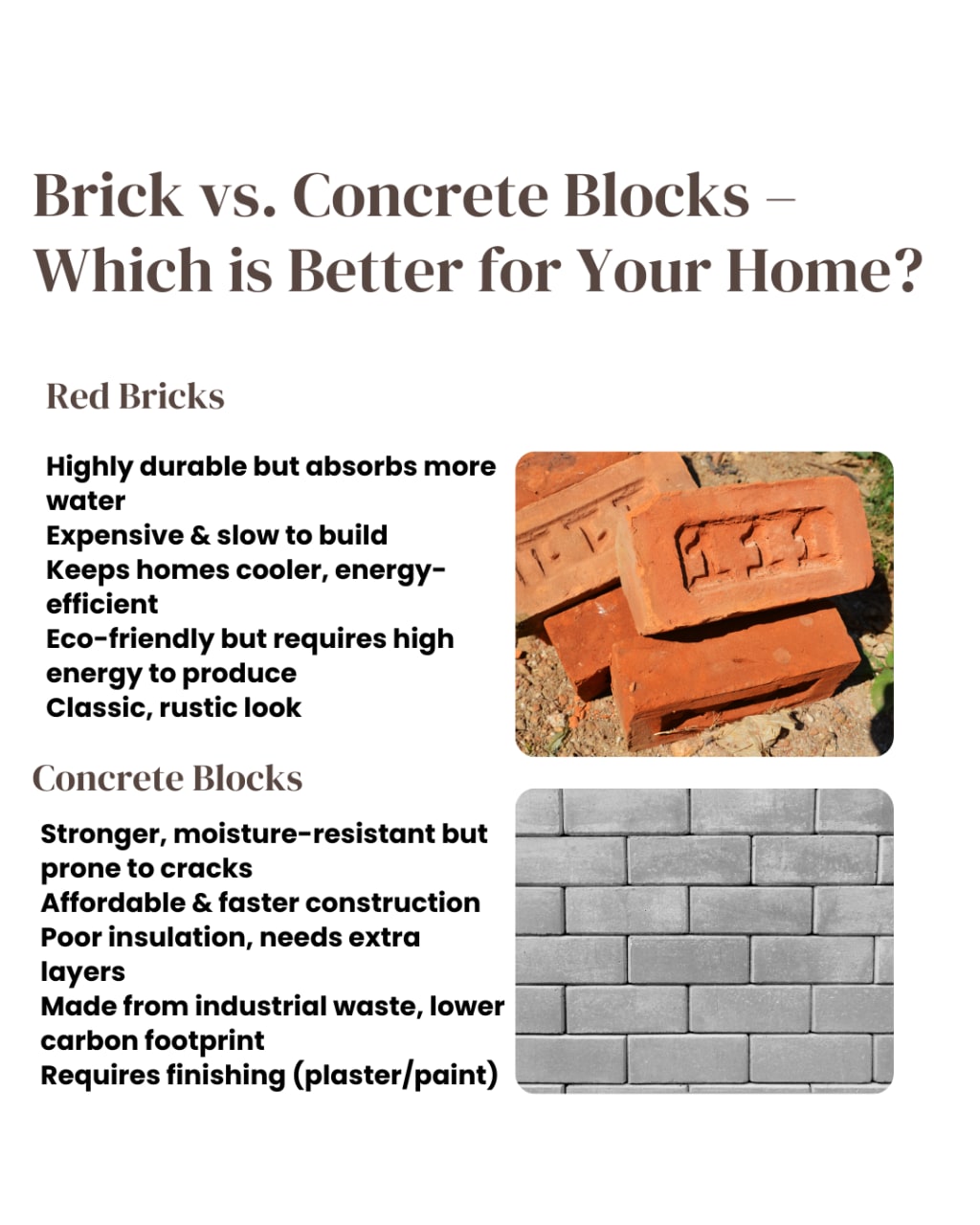
Brick vs. Concrete: Which is Better for Your Family Home?
When you're planning to build a home for your family, every decision counts. From the layout of the living space to the color of the walls, each choice shapes the future comfort, safety, and happiness of your household. One of the most foundational decisions you will make is the choice of construction material. Among the most debated options are brick and concrete. Both have stood the test of time in architecture and construction, but which is truly better for a family home? This blog explores the pros and cons of each material across a wide range of factors—durability, energy efficiency, safety, cost, maintenance, and environmental impact—to help you make the best decision for your family.
Understanding Brick and Concrete
Before jumping into comparisons, let's understand what brick and concrete actually are.
Brick is made from natural clay and shale, which is molded and baked in kilns at high temperatures. Bricks are uniform in shape and size, giving structures a clean and timeless appearance
Concrete, on the other hand, is a mix of cement, water, and aggregates such as sand and gravel. It's poured into molds and forms, making it incredibly versatile in shape and structure. Concrete is known for its strength and is a common choice for foundations, walls, and even entire homes.
Durability and Longevity
Brick Homes:
Bricks are incredibly durable and can last for centuries. They are resistant to fire, pests, and extreme weather conditions. Because they do not warp or rot, brick homes tend to have a longer lifespan with fewer structural issues. However, the mortar between bricks can wear down over time and might require repointing.
Concrete Homes:
Concrete is exceptionally strong, especially when reinforced with steel. It can withstand heavy loads, high winds, and even seismic activity. Concrete walls are not susceptible to rot, termites, or mold. Over time, it can develop surface cracks, but these are typically non-structural and easy to repair.
Verdict: Both materials are highly durable, but concrete may offer a slight edge in terms of resistance to environmental stressors.
Thermal and Energy Efficiency
Brick Homes:
Bricks have high thermal mass, meaning they absorb heat during the day and release it at night. This helps regulate indoor temperatures, making homes warmer in the winter and cooler in the summer. As a result, brick homes often have lower energy bills.
Concrete Homes:
Concrete also has good thermal mass and, when combined with insulation, offers excellent energy efficiency. Insulated concrete walls can be designed to reduce heat transfer significantly, making homes energy-efficient and reducing utility costs.
Verdict: Brick is slightly better for passive temperature control, but well-insulated concrete homes perform just as well or even better in some climates.
Aesthetic Appeal
Brick Homes:
Brick homes offer a classic, timeless look. The natural texture and earthy tones of brick give homes character and warmth. Bricks come in various shades and finishes, allowing for stylistic flexibility.
Concrete Homes:
Concrete homes can be molded into virtually any shape or style. They suit modern and contemporary designs, with options to polish, stain, or paint the surface for different aesthetics. However, concrete can look cold or industrial if not finished properly.
Verdict: Brick wins on traditional charm, while concrete offers modern design versatility.
Maintenance and Upkeep
Brick Homes:
Bricks require little maintenance. They don't need to be painted, and they're highly resistant to pests and weathering. However, as mentioned earlier, the mortar may require repointing after several years.
Concrete Homes:
Concrete also requires minimal maintenance. It doesn’t decay, rot, or harbor pests. Occasional sealing of exposed concrete surfaces might be needed to prevent staining or water infiltration.
Verdict: Both materials are low maintenance, but brick may require occasional mortar repairs.
Cost of Construction
Brick Homes:
Brick tends to be more expensive upfront. The cost of materials and labor is higher due to the manual work required in laying bricks. However, these homes often hold their value better over time due to their aesthetic appeal and durability.
Concrete Homes:
Concrete is generally more affordable, especially when using poured concrete or concrete blocks. Labor costs can be lower due to faster construction times.
Verdict: Concrete is more budget-friendly initially, but brick may offer better resale value.
Fire and Safety Ratings
Brick Homes:
Brick is non-combustible and offers excellent fire resistance. In the event of a fire, bricks do not burn, making them a safer choice for family homes.
Concrete Homes:
Concrete is also fire-resistant and does not emit toxic fumes when exposed to high temperatures. Reinforced concrete structures are known for their safety in fire and natural disasters.
Verdict: Both are safe choices, but brick may have a slight edge in long-duration fire resistance.
Sound Insulation
Brick Homes:
Brick walls provide good sound insulation, which is beneficial for homes in noisy neighborhoods or near roads. The density of brick reduces noise transfer between rooms and from the outside.
Concrete Homes:
Concrete also provides excellent sound insulation. Thick concrete walls significantly reduce external and internal noise, making for a quieter home environment.
Verdict: Both materials excel, but concrete may slightly outperform in noise cancellation.
Environmental Impact
Brick Homes:
Bricks are made from natural clay, which is abundant, but the firing process uses energy and emits carbon dioxide. However, bricks are long-lasting and can be reused or recycled, making them a sustainable option.
Concrete Homes:
Concrete production, particularly cement, has a significant carbon footprint. Innovations like fly ash concrete and carbon capture techniques are helping to reduce this impact. Concrete is also recyclable.
Verdict: Brick is slightly more eco-friendly due to the use of natural materials and lower energy consumption during production.
Resale Value and Market Appeal
Brick Homes:
Brick homes tend to have higher resale value due to their classic appearance and durability. Buyers often perceive brick homes as being of higher quality.
Concrete Homes:
Concrete homes are gaining popularity, especially in areas prone to natural disasters. Their appeal lies in energy efficiency and safety, which can attract modern buyers.
Verdict: Brick may have broader market appeal, but concrete is gaining ground with eco-conscious and safety-focused buyers.
Which Is Better for a Family Home?
Choosing between brick and concrete ultimately comes down to your family’s priorities:
If aesthetics, traditional charm, and long-term resale value matter most to you, brick might be the better option.
If you're looking for affordability, structural strength, and modern design, concrete could be the right choice.
Both materials are excellent in their own ways. The key is to evaluate your needs—climate, budget, maintenance expectations, and personal style—and make an informed choice that aligns with your family's lifestyle.
In the end, a well-built home, whether of brick or concrete, is a place where memories are made, laughter is shared, and life unfolds. So choose wisely and build a space your family will love for generations to come.
About the Creator
Sukunj Buildcon
Sukunj Buildcon LLP – Engineering Homes, Empowering Lives
Sukunj Buildcon is a trusted name in home construction, architectural design, interior solutions, and commercial projects in Indore.
Enjoyed the story? Support the Creator.
Subscribe for free to receive all their stories in your feed.
Comments
There are no comments for this story
Be the first to respond and start the conversation.