
Brave Souls of Pashtoon: A Legacy of Honor
Warriors of the Khyber: Courage, Honor, and the Spirit of the Pashtoon

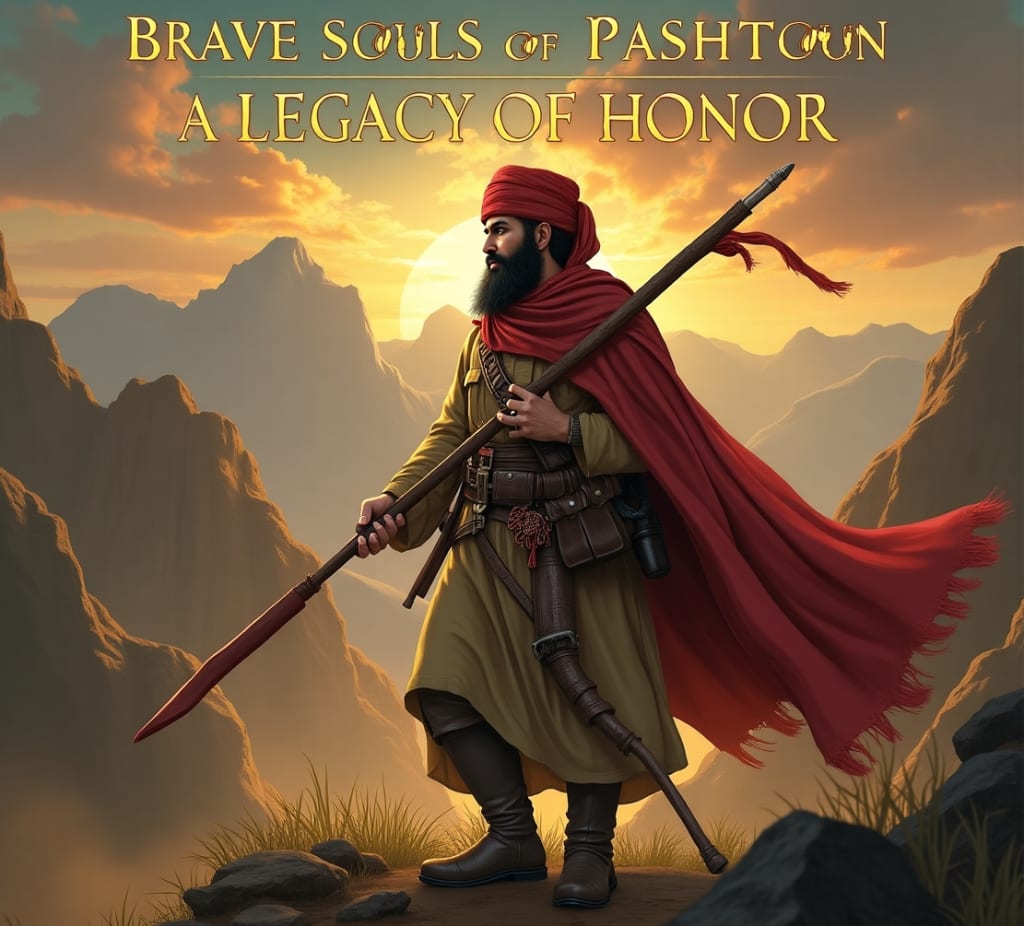
In the rugged, untamed mountains of the Khyber Pass, the Pashtoon people had always lived by a code—one that defined their strength, their courage, and their unwavering commitment to honor. It was said that the very land they inhabited demanded respect, not only from those who lived within its borders but also from those who dared to cross its ancient paths.
The story of a particular Pashtoon warrior, Zafar Khan, became a legend among his people—a tale of sacrifice, pride, and the eternal fight for justice. Zafar was not born into a noble family, nor did he come from a long line of warriors. He was, in fact, the son of a humble shepherd, raised in a small village nestled between towering peaks. But the mountains had a way of shaping the hearts of those who dwelled in them, and from a young age, Zafar knew that he was destined for something greater.
Growing up, Zafar was taught the ways of Pashtoonwali, the ancient code of the Pashtoon people. The code was simple yet profound: honor, hospitality, loyalty, and justice. It was a way of life that permeated every aspect of their existence, and to live by it was to live with integrity and strength. Zafar’s father, a wise and respected elder, instilled in him these values. He taught Zafar that the Pashtoon were not just warriors—they were protectors of their land, their families, and their honor.
The mountains, though beautiful, were not a peaceful home. They had seen centuries of conflict, both within and beyond their borders. Over the years, the Pashtoon people had fought off invaders, and many had fallen in defense of their land. But with each new generation, the land seemed to demand more. And so it was that one fateful winter, as the snow blanketed the mountains and the air grew bitterly cold, Zafar's moment of destiny arrived.
A neighboring tribe, the Khwazis, had always been a threat to the Pashtoon. For years, they had encroached on Pashtoon land, raiding villages, stealing cattle, and terrorizing the people. The elders had tolerated these transgressions for as long as they could, but when a group of Khwazi bandits attacked a small Pashtoon village, slaughtering the innocent and burning homes to the ground, the council of elders knew that enough was enough.
Zafar, despite his youth, had earned the respect of his people. His courage was unmatched, and his sense of justice was unwavering. When the elders called for a warrior to lead the charge against the Khwazis, Zafar stood before them, his heart full of resolve.
"I will fight for our people," he declared. "I will not let the legacy of our ancestors be tarnished by these marauders."
The elders, though hesitant at first, saw the fire in Zafar’s eyes and knew he was the one to lead them. They armed him with a fine sword and shield, both engraved with symbols of Pashtoon history—an eagle for bravery, a lion for strength, and a sword for justice. Zafar’s mission was clear: to lead a group of warriors into the heart of Khwazi territory, confront their leader, and bring peace to the region once and for all.
Zafar gathered a small but formidable band of warriors, each chosen for their strength and loyalty. They traversed the snow-covered mountains, navigating treacherous paths, and braving the cold winds that cut through their clothes like knives. Their journey was long and exhausting, but Zafar’s unwavering determination kept their spirits high.
On the fourth day of their journey, they arrived at the Khwazi stronghold—a fortress built atop a jagged cliff. The air was thick with tension, and the warriors could feel the weight of what they were about to face. Zafar’s heart beat like a drum in his chest, but he remained calm. He knew that the outcome of this battle would shape the future of his people.
The leader of the Khwazis, a ruthless warlord named Azim Khan, stood at the gates of his fortress, waiting for Zafar’s arrival. Azim was known for his brutality and cunning, and many feared him. He had heard of Zafar’s reputation and knew that this would not be an easy fight. But Azim was confident in his numbers and his power. He believed that no one could stand against him.
As Zafar and his warriors approached the gates, the two leaders locked eyes. There was no need for words—both understood what was at stake.
With a roar, the battle began. The clash of steel rang through the cold air as Pashtoon warriors and Khwazi bandits fought with ferocity. Zafar’s sword flashed through the air, cutting down foes with precision and skill. He fought like a man possessed, his movements fluid and swift, driven by a deep sense of justice. His warriors followed his lead, each one fighting for their land, their honor, and their families.
The battle raged for hours, with neither side giving an inch. But as the sun began to set behind the mountains, Zafar found himself face-to-face with Azim Khan. The two warriors circled each other, each waiting for the perfect moment to strike. Azim, confident in his strength, lunged forward with a mighty swing of his sword. Zafar parried the blow with his shield and countered with a swift slash that left a deep gash across Azim's chest.
Azim staggered back, gasping for breath, but he was not defeated. With a snarl, he swung his sword again, but Zafar was faster. With a final, decisive strike, Zafar drove his sword into Azim’s heart, ending the reign of terror once and for all.
The battle was over. The Khwazi bandits had been defeated, and peace had been restored to the region. Zafar stood victorious, but there was no joy in his heart. He had done what was necessary, but the cost had been high. Many of his warriors had fallen, and the land would bear the scars of the conflict for years to come.
As he stood amidst the wreckage of the battlefield, Zafar thought of his people and the legacy they carried. He knew that this was only one chapter in the long history of the Pashtoon. But he also knew that as long as there were brave souls willing to stand up for justice, honor, and their land, the spirit of Pashtoonwali would never die.
And so, Zafar Khan’s name was forever etched into the annals of Pashtoon history—a symbol of bravery, honor, and the unwavering commitment to defend the legacy of his people.
About the Creator
Enjoyed the story? Support the Creator.
Subscribe for free to receive all their stories in your feed.
Comments
There are no comments for this story
Be the first to respond and start the conversation.