
Boost Critical Thinking: Easy Strategies to Enhance Students’ Problem-Solving Skills
Want to help your students think critically and solve problems better? With a few easy strategies, you can quickly boost their confidence, creativity, and curiosity, setting them up for success in and out of the classroom. Let’s explore how!

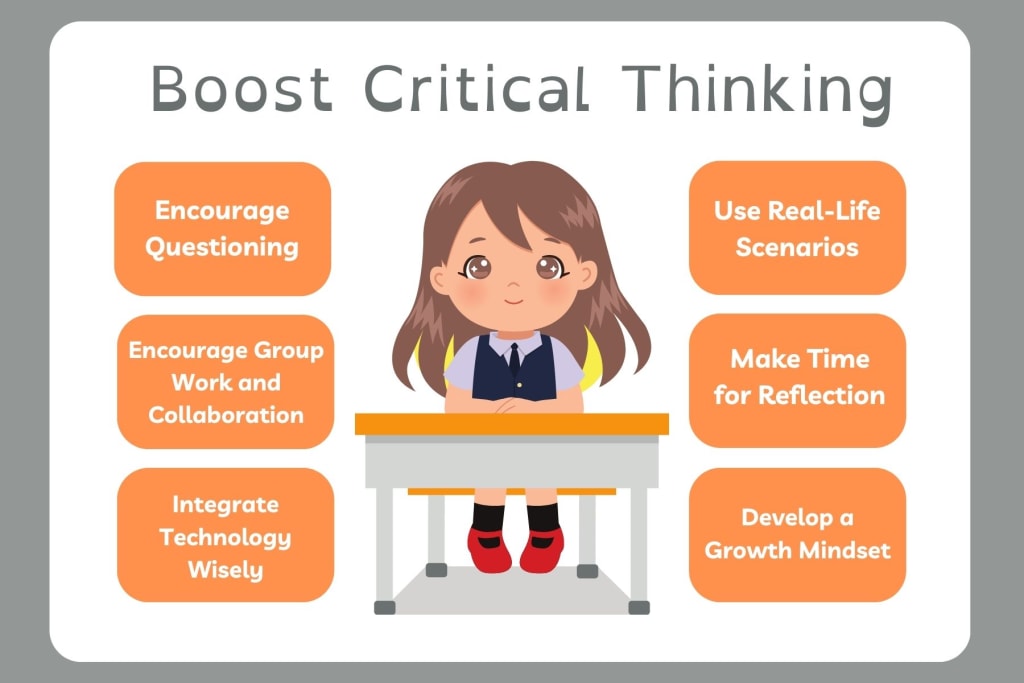
Ever noticed how your students freeze up when they encounter a tricky problem? It's like their brains hit the pause button, and suddenly, everything stops. You see them struggling, and you wonder, “How can I help them think critically and solve problems better?”
You're not alone! Many teachers, parents, and even students themselves want to crack the code of critical thinking. In a world that’s always changing, the ability to think on your feet is more important than ever. But don’t worry — you don’t need a magic wand to make it happen. Instead, you just need some easy, actionable strategies that will help your students develop strong problem-solving skills — fast!
Here’s the good news: You can boost critical thinking skills with just a few tweaks to your teaching approach. Think of it as adding new tools to your toolkit — tools that will make your students more confident, engaged, and ready to tackle any challenge. Ready to dive in? Let’s go!
Why Critical Thinking Matters
Before we jump into the strategies, let’s answer a big question: Why does critical thinking even matter?
Critical thinking is all about analyzing information, making connections, and solving problems creatively. It’s the kind of thinking that helps students not just answer questions but also ask them. It’s about going beyond the textbook, taking ownership of their learning, and finding answers in unexpected places.
Studies show that students with strong critical thinking skills perform better academically and are more prepared for real-world challenges. According to a study by the American Management Association, 75% of employers say they want employees who can think critically and solve problems. But here's the catch: Less than 50% of new grads can do it effectively.
So, how do we close this gap? Let’s explore some easy-to-apply strategies that will help your students become critical thinkers and super problem-solvers!
Strategies to Boost Critical Thinking and Problem-Solving Skills
1. Encourage Questioning — Every Day, Every Class!
The power of a good question can’t be overstated. Questions spark curiosity, open doors to new ideas, and lead to deeper understanding. Encourage your students to ask questions — not just any questions, but the right ones!
How can you do this?
- Start every lesson with a big, juicy question. Think of a question that doesn’t have a simple yes or no answer. Something like, “What would happen if we had no electricity for a week?” or “How would you solve world hunger?”
- Create a “Question of the Day” board where students can post their questions and vote on the most interesting one.
- Reward good questions with praise or small rewards. Make it a game!
Pro Tip: Get students to ask “Why?” five times in a row about a topic. This technique, inspired by Toyota’s famous problem-solving method, helps dig deeper into the root cause of a problem.
2. Use Real-Life Scenarios
Nothing builds critical thinking like solving real-world problems. It makes learning feel relevant and gives students a chance to apply what they’ve learned.
Try this:
- Present a real-life problem and let students brainstorm solutions. For example, “How can we reduce waste in our school?” or “What’s the best way to manage a budget for a class trip?”
- Use role-playing to act out scenarios. Ask one student to play a character, like a shop owner or a scientist, while others solve a related problem.
- Bring in news articles, case studies, or even local community challenges to discuss in class.
3. Encourage Group Work and Collaboration
Working in groups isn't just about dividing the work. It’s about collaborating, sharing ideas, and finding solutions together.
What you can do:
- Assign group projects that require students to think critically and solve problems together. For example, building a bridge out of paper or solving a mystery.
- Encourage peer teaching. Have students explain their thought processes and solutions to each other.
- Use the "Think-Pair-Share" technique: Students think about a problem on their own, discuss it with a partner, and then share with the class.
Fun Fact: Research from the University of Illinois shows that group work can improve problem-solving speed by up to 60%.
4. Make Time for Reflection
Reflection is an underrated but powerful tool. It helps students understand why they made certain choices and how they can improve in the future.
How to implement it:
- Set aside a few minutes at the end of each class for students to reflect on what they learned and how they solved problems.
- Use journals or reflection sheets where students write down their thoughts and strategies.
- Have open discussions about what worked, what didn’t, and why.
5. Integrate Technology Wisely
Technology can be a great ally when used right. There are countless apps and games designed to boost critical thinking.
Here’s what to consider:
- Use educational apps that challenge students to solve puzzles, like “Lumosity” or “Elevate.”
- Encourage students to create their own digital presentations or videos explaining a concept.
- Leverage online forums or discussion boards to extend class debates and problem-solving activities.
6. Teach Mindfulness and Focus Techniques
Critical thinking is tough when your mind is all over the place. Mindfulness exercises can help students stay focused and calm, which is key for effective problem-solving.
Simple ideas:
- Start the day with a 2-minute breathing exercise.
- Encourage students to use mind maps or visual diagrams to organize their thoughts.
- Use games like “20 Questions” to practice focused thinking in a fun way.
7. Develop a Growth Mindset
A growth mindset — the belief that abilities can be developed through dedication and hard work — is crucial for critical thinking.
How to foster it:
- Praise the process, not just the result. Instead of saying, “Great job!” try, “I love how you tried different ways to solve that problem!”
- Share stories of famous failures (like Thomas Edison’s 1,000 unsuccessful lightbulb attempts).
- Use language that emphasizes effort, like “Not yet” instead of “Wrong.”
Key Takeaways
- Critical thinking is a learnable skill— it's not something students are just born with.
- Simple strategies like asking questions, using real-life scenarios, and group work can significantly improve problem-solving skills.
- Reflection, technology, mindfulness, and a growth mindset are essential tools to boost critical thinking.
- Implement these strategies consistently, and you’ll see students become more confident, curious, and ready to tackle any challenge!
Conclusion
By implementing these easy strategies, you can transform your classroom into a dynamic environment where students are not just learning facts, but developing the critical thinking skills they’ll need for life. Remember, it’s not about making huge changes overnight. Instead, focus on making small, meaningful adjustments that encourage curiosity, collaboration, and creativity.
And here's the best part: These strategies aren't just about making students better at schoolwork; they're about preparing them for the challenges and opportunities they’ll face outside of it, too. So start today, ask those big questions, and watch your students' problem-solving skills soar!
About the Creator
Mayoor School Siliguri
At Mayoor School Siliguri, we focus on 3Es- Experience, Education, and Exposure that galvanize our students to dig deeper into themselves and unleash their true potential.
Enjoyed the story? Support the Creator.
Subscribe for free to receive all their stories in your feed.
Comments
There are no comments for this story
Be the first to respond and start the conversation.