
Beyond the Headlines:
Why Deep-Rooted Skepticism Persists in U.S.-India Relations

INDIA- U.S.A. relationship has garnered much attention, touted as a potential cornerstone of the 21st-century global order. Yet, beneath the surface of growing cooperation, a deep-seated distrust continues to linger, hindering the full potential of this partnership.
The relationship between India and the United States — two of the world’s largest democracies — has always been a mix of shared values and persistent mistrust. While both nations champion democracy, civil liberties, and the rule of law, their divergent historical experiences and strategic priorities have often placed them at odds. Even as recent years have seen significant strides in their partnership, underlying scepticism continues to shape their interactions.
One of the key sources of historical mistrust lies in India’s Cold War-era policy of non-alignment. At a time when the United States expected nations to take sides in the global ideological battle between democracy and communism, India chose to chart an independent course. This policy, championed by Prime Minister Jawaharlal Nehru, was rooted in anti-colonial ideals and a desire for strategic autonomy. However, U.S. leaders viewed non-alignment with suspicion, interpreting it as a refusal to support the democratic bloc. This mistrust deepened as India forged close ties with the Soviet Union, which became its primary partner for military and economic assistance. The Soviet Union’s willingness to offer aid without preconditions contrasted sharply with the U.S.’s transactional approach, further alienating India.
Economic and geopolitical tensions also fueled the divide. In the years following independence, India pursued state-led industrialization and self-reliance, a strategy at odds with America’s preference for free-market capitalism. U.S. aid, when offered, often came with strings attached, as seen during India’s 1966 famine when food shipments were tied to the devaluation of the rupee. This episode left a lasting sense of humiliation in India. Geopolitical events, such as U.S. support for Pakistan during the 1971 Indo-Pakistani War and sanctions imposed after India’s 1974 nuclear tests, only reinforced the perception that the U.S. was an unreliable partner.
In the contemporary era, several factors continue to sustain this mistrust. India’s neutral stance on Russia’s invasion of Ukraine has frustrated the U.S., which is leading a global campaign to isolate Moscow. For India, this neutrality is dictated by its heavy reliance on Russian military hardware and a longstanding strategic partnership. Similarly, while both nations share concerns about China’s assertiveness, their approaches differ. The U.S. favours aggressive containment, whereas India prioritizes strategic autonomy, seeking to balance its relationships with multiple powers.
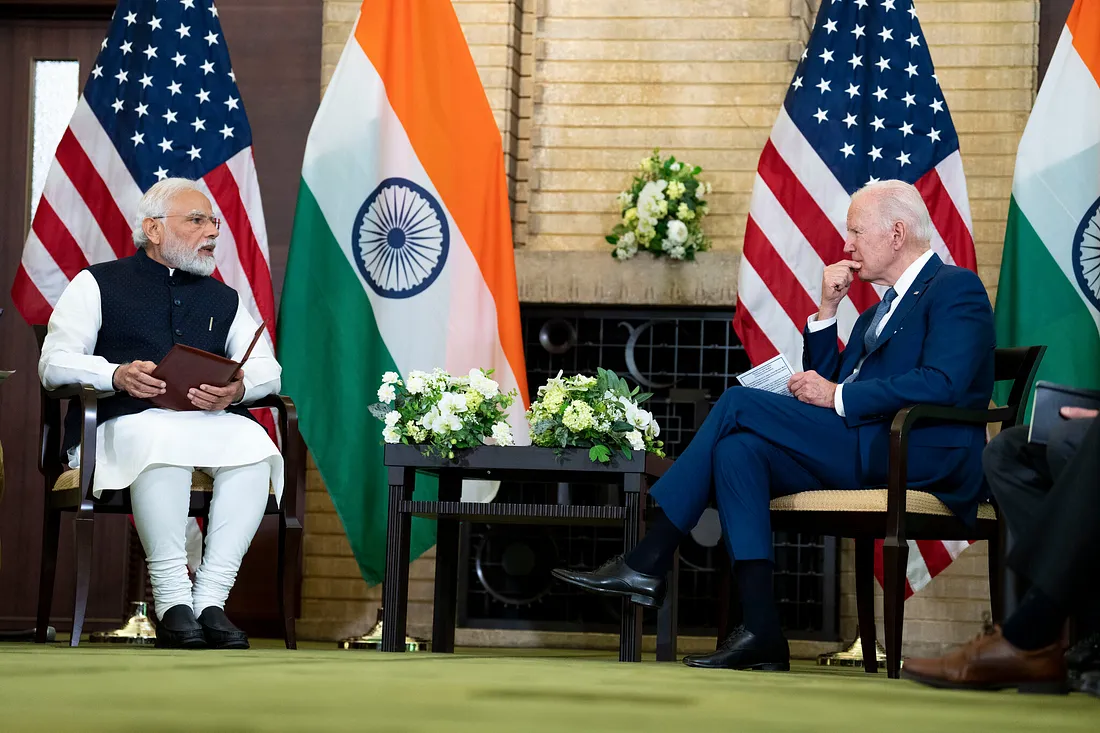
India and the United States are at a critical juncture in their relationship. Despite decades of diplomatic outreach and shared strategic concerns, trust between the two democracies remains fragile. Recent events have exposed underlying tensions, underscoring the challenges of aligning their interests in an increasingly polarized global landscape.
One of the most significant points of contention in recent months has been the United States support for Canada amid allegations implicating India in the killing of a Khalistani separatist leader. The “Five Eyes” intelligence alliance, led by the U.S., has rallied behind Canada’s claims, a move that New Delhi perceives as tacit support for anti-India propaganda. India views this as a deliberate attempt to undermine its sovereignty and global standing. The incident has highlighted how diverging priorities — India’s focus on combating separatism versus the West’s emphasis on democratic rights — can create friction even among partners.
Defence cooperation, often heralded as a cornerstone of India-U.S. relations, is also under strain. India’s efforts to indigenize its defence sector have faced setbacks, with significant delays in the supply of engines for the Indigenous Tejas fighter jets from U.S.-based General Electric. These delays, coupled with concerns about technology transfer and reliability, have prompted India to question the U.S.’s long-term commitment to bolstering its strategic autonomy. While Washington has expressed interest in supporting India’s defence capabilities, the slow pace of collaboration risks undermining trust in this vital area.
A central critique of U.S. intentions is the perception that Washington views India primarily as a counterweight to China. With China asserting itself in the Indo-Pacific and challenging the existing global order, the U.S. has positioned India as a crucial partner in its containment strategy. Initiatives like the Quad and increased defence cooperation reflect this alignment. However, India’s policymakers remain wary of being reduced to a pawn in Washington’s broader geopolitical chessboard. For New Delhi, the partnership must extend beyond transactional interests to one rooted in mutual respect and shared growth.
Economic and defence ties illustrate the complexities of this relationship. On the financial front, India benefits significantly from U.S. investments, technology transfers, and market access. The defence sector, in particular, highlights the monetary stakes involved. With the U.S. now a key supplier of advanced military equipment, including systems like the Apache helicopters and Predator drones, billions of dollars have been funnelled into this partnership. Yet, challenges persist. Delays in critical technologies, such as engines for India’s indigenous Tejas fighter jets from General Electric, raise questions about the reliability of U.S. support. These delays hinder India’s ambitious plans for defence indigenization and strain its defence budget.
India’s dependence on Russian military hardware further complicates matters. While the U.S. has offered alternatives, such as collaborations on advanced defence systems, these remain limited by hesitations over technology transfer and co-production agreements. Moreover, the financial burden of transitioning to a new supplier ecosystem is significant, making diversification a long-term goal rather than an immediate solution.
For India’s economy, the U.S. partnership holds both promise and pitfalls. Access to cutting-edge technology, combined with increased defence spending, could spur innovation and manufacturing growth in India’s defence sector. However, dependence on U.S. systems risks creating vulnerabilities if political tensions arise. Furthermore, disputes over intellectual property rights, tariffs, and market access remain ongoing irritants in the broader economic relationship.
Despite these challenges, the U.S.-India partnership offers opportunities for mutual growth. India’s role as a major player in the Indo-Pacific and its rapidly growing economy make it an indispensable partner for the U.S. Similarly, India can leverage the partnership to bolster its defence capabilities, access advanced technologies, and secure greater influence on the global stage. However, for the relationship to achieve its potential, both nations must recalibrate their expectations.
In the end, U.S.-India relations remain a work in progress, shaped as much by their shared aspirations as by their enduring differences. For India, the partnership holds immense potential for economic and strategic gains, but it must navigate the relationship carefully to ensure its autonomy and long-term interests are preserved.
About the Creator
Abhinav Jha
I’m an experienced finance professional with a solid background in equity investing and financial management. I’m Currently pursuing a Bachelor's degree in Business Administration with a focus on Finance at ATLAS SkillTech University.
Enjoyed the story? Support the Creator.
Subscribe for free to receive all their stories in your feed.
Comments
There are no comments for this story
Be the first to respond and start the conversation.