
Benefits of Visual Learning Activities for Young Children
Helping Preschoolers Build Language, Memory, and Observation Skills
How Visual Learning Supports Early Childhood Development
Early childhood is one of the most important stages of learning. Between the ages of 3 and 5, children develop language skills, vocabulary, observation abilities, memory, concentration, and confidence at an incredible rate. Finding educational resources that are both engaging and effective can make a significant difference in a child's developmental journey.
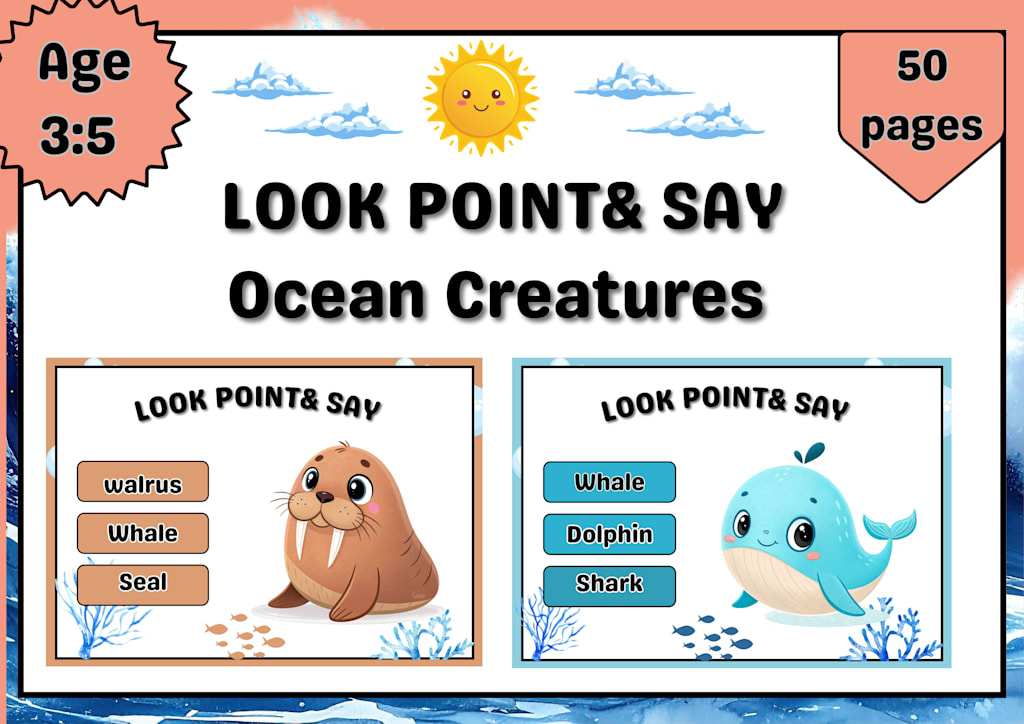
Ocean-themed learning activities can provide young children with engaging opportunities to build vocabulary, strengthen observation skills, and develop confidence in communication.
Ocean-themed learning activities can help young children explore new words, recognize different animals, and build early communication skills in a fun and age-appropriate way.
Parents, teachers, homeschool educators, and childcare providers often use visual learning activities to help young children develop vocabulary, communication skills, and confidence through interactive learning experiences.
Children can participate in a variety of simple learning activities, such as identifying animals, matching words to images, and practicing new vocabulary. These types of activities can support language development, observation skills, and early cognitive growth.
Learning about ocean creatures also introduces children to a diverse range of marine animals and encourages curiosity about the natural world.
Why Ocean Animals Fascinate Young Children
Children are naturally curious about animals, especially creatures that live beneath the ocean's surface. The underwater world is filled with unique species, interesting shapes, and fascinating behaviors that capture a child's imagination and encourage exploration.
Ocean animals often spark curiosity in young children because they:
-Have unique shapes, colors, and features
-Live in a fascinating underwater environment
-Inspire imagination and creative storytelling
-Introduce children to the diversity of the natural world
-Encourage an early interest in science and discovery
-Exploring marine life can help children ask questions, make observations, and develop a deeper understanding of animals and their habitats. These experiences support both learning and curiosity during the preschool years.
Why Visual Learning Is Effective for Preschoolers
Visual learning plays an important role in early childhood education. Young children often learn best when they can connect words, images, and real-world concepts together.
Research in early learning suggests that visual materials can help children:
Improve vocabulary development
Strengthen memory and recall skills
Increase attention and concentration
Support language and communication growth
Build confidence when learning new concepts
Recognize similarities and differences between objects and animals
Simple visual activities can also make learning feel more enjoyable and less overwhelming for preschool-aged children, helping them stay engaged while exploring new topics.
Enhancing Visual Recognition Skills
Visual recognition is an important part of early childhood development. Through observation and identification activities, children learn to recognize:
Different shapes
Animal features
Colors
Patterns
Visual similarities and differences
These skills support cognitive development and help prepare children for future learning experiences, including early reading readiness.
Developing Attention and Concentration
Maintaining focus can be challenging for many preschool-aged children. Short, interactive learning activities provide opportunities for children to practice concentration while remaining engaged and interested in the learning process.
Over time, these experiences can contribute to improved attention spans and greater participation in educational activities.
Supporting Kindergarten Readiness
Many early learning activities help children develop skills that are important for a successful transition to kindergarten. These skills may include:
Following instructions
Naming and identifying objects
Maintaining focus
Communicating clearly
Participating in structured learning experiences
Developing these foundational abilities can help children feel more confident as they enter new learning environments.
Encouraging Independent Learning
As children become more familiar with educational activities, they often gain confidence in exploring and learning independently.
Independent learning experiences can help foster:
Self-confidence
Curiosity
Problem-solving abilities
Critical thinking skills
A positive attitude toward learning
These qualities can support lifelong learning and personal growth.
Promoting Early Science Learning
Learning about ocean animals provides children with an introduction to basic science concepts and encourages curiosity about the natural world.
As children explore marine life, they may become interested in:
.Ocean habitats
.Marine ecosystems
.Animal behaviors
.Environmental awareness
.Biodiversity in nature
These early experiences can help foster a lifelong interest in science, exploration, and discovery.
Learning in Different Environments
Educational activities related to animals and nature can be adapted to a variety of learning environments, including homes, classrooms, homeschool settings, and early childhood education programs.
Whether children are learning independently, with family members, or in group settings, engaging educational experiences can support communication, observation, and critical thinking skills.
Reducing Screen Time Through Active Learning
Many families look for opportunities to balance screen use with hands-on educational experiences. Interactive learning activities can encourage:
.Face-to-face interaction
.Active participation
.Observation and discussion
.Creative thinking
.Parent-child engagement
These experiences help create meaningful learning moments while supporting healthy developmental habits.
Building Confidence Through Learning
Young children often gain confidence when they successfully learn new concepts and recognize familiar information.
As children develop new skills and expand their knowledge, they can build:
.Self-esteem
.Confidence
.Motivation to learn
.Positive learning habits
.A sense of accomplishment
These qualities contribute to a strong foundation for future educational success.
Conclusion
Ocean-themed learning experiences provide young children with opportunities to explore the natural world while developing important early learning skills. Through activities that encourage observation, communication, vocabulary development, and curiosity, children can build a stronger foundation for lifelong learning.
By introducing preschoolers to marine life in engaging and age-appropriate ways, parents and educators can help nurture both a love of learning and an appreciation for the fascinating diversity of the ocean.
About the Creator
Noor Kids Academy
Publisher of Educational Activity Books, Worksheets, Mazes, Tracing and Printable Learning Resources for Kids Ages 3–8.
Enjoyed the story? Support the Creator.
Subscribe for free to receive all their stories in your feed.
Comments
There are no comments for this story
Be the first to respond and start the conversation.