
Artificial Intelligence in Decision-Making: Can AI Replace Human Judgment?
Balancing Innovation and Intuition: The Role of AI in Human Decision-Making
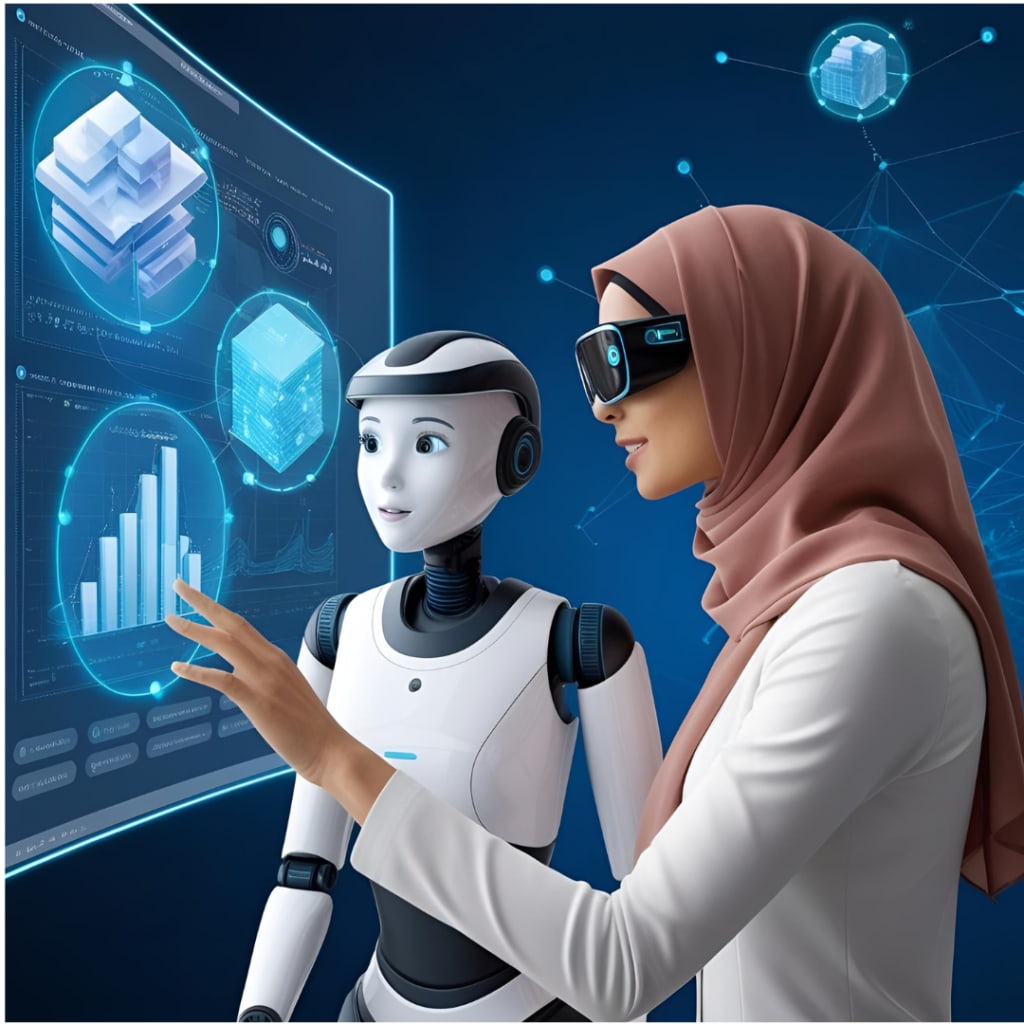
Global Artificial Intelligence (AI) is now decisively transforming how decisions are made all around the world. AI-powered algorithms, however, are becoming more and more incorporated within industries, providing businesses and organizations with necessary decision-making tools that allow more precise, faster, and efficient action. AI not only enhances operational efficiency from healthcare to finance, cybersecurity, and governance, much has been said and continues to be debated about whether AI can replace human judgment or serve as an adjunct to the decision-making process.
AI: The Evolution of Decision-Making
In the last few decades, AI has moved from rule-based systems to intelligent machine learning algorithms that can understand large data sets and then, most importantly, can take independent decisions based on the information processed through them. So much has been done by AI through deep learning and neural networks in modeling and recognizing patterns, predicting their outcomes, and bringing to light something that is beyond the reach of human understanding. Nowadays, AI-based decision-making is heavily relied upon for predictive analytics, risk management, and automation.
The Components of AI Decision Making
The processes of AI decision making involve a few indispensable components:
Data Processing: AI collects, purifies, and processes immense volumes of data, both structured and unstructured.
Machine Learning Algorithms: AI possesses an arsenal of supervised, unsupervised, and reinforcement learning models that improve the effectiveness of decision making.
Pattern Recognition: Informs AI of the associations and anomalies brought to the processing, thus refining its accuracy and efficiency.
Predictive Analysis: The AI predicts future occurrences, given its learning of past developments and incidences.
Automation: AI automates routine and mundane tasks, giving human professionals time to think strategically.
The AI Industry Sector
1. Healthcare
The AI systems penetrate the hands of the healthcare personnel enabling diagnosis, treatment planning, and management of patients.
The AI diagnostic tools analyze various medical images, assist decision-making concerning detecting diseases such as cancer, and predict the potential risk for a given disease.
Better interaction with and support for health practitioners to patients by patient engagement chatbots or virtual assistants.
AI robotic surgeries increase the accuracy of surgery while minimizing human error.
2. Finance
AI contributes to decision making significantly in the financial sector.
AI algorithms for trading analyze trends in the market and automatically perform the trade at appropriate times.
Fraud detection systems expose suspicious activities to the system in real time.
Machine algorithms evaluating loan prospects' eligibility for credit add more accuracy to the entire system.
3. Business and Marketing
AI does wonders in optimizing business processes and customer experience.
AI Management of Insights provides analytics for understanding consumer behavior and preferences:
Payment Processing Enhancement through chatbots and virtual assistants.
AI Marketing tools automated the campaign for targeting prospects, which has provided an increase in lead generation and conversion.
4. Cybersecurity
Increased cyber threats make sure it is crucial to have AI in digital security.
AI-powered intrusion detection systems identify pretty soon potential threats and anomaly.
Automated responses of the security system help in prevention of breach of data in real time.
Encryptions and authentication mechanisms improved by AI to protect sensitive information.
5. Autonomous Systems
AI shapes the future of transportation and industries disrupting both.
Self-driving cars make real-time decisions while driving to ensure safety.
AI robots optimize the warehousing and production lines.
AI assists space exploration by analyzing massive amounts of astronomical data.
AI against human judgment: A Comparative analysis
Strengths of AI
Speed and Accuracy: Yes, AI processes data and makes the decision much quicker than humans could do.
Bias-free: AI, according to data, rather than subjective emotional decision making, eliminates bias in most of its decisions.
24/7 Work: AI works every single day without any fatigue or cause for breaks.
Predictive Power: AI uses historical data to predict future trends and outcomes.
Weaknesses of AI
No Emotional Intelligence: Artificial Intelligence cannot replicate empathy, ethics, or even moral reasoning found in human beings.
Data Quality-Dependent: AI can make decisions good or bad depending on the data that has been used during its training.
Limited Robustness: AI cannot respond well to something unforeseen or unprecedented.
Training Data Bias Risk: Possible incorporation of bias in the training dataset may lead to skewed results for AI models.
AI Decision-Making within India
India has witnessed increased growth in the adoption of AI across the various sectors. The Indian government, through National AI Strategy, AI for All, and Digital India projects, is emphasizing the adoption of AI for decision-making and governance, healthcare, and agriculture.
AI-In Hyderabad
Hyderabad has now become the top artificial intelligence and tech hub in India. With a built IT ecosystem, the big cities include tech giants and research centers along with AI startups that create AI solutions. Various universities and institutes offer courses on AI and machine learning training to prepare professionals for industry needs.
Data Science training in Hyderabad is for people who want to build their capability in AI and data science. With industry-relevant programs on AI application, machine learning, and deep learning techniques, these training programs will enable the learners to take up roles requiring AI-driven decision making.
The Posterity of AI and Human Judgment
Nobody, including humans, will replace judgment on matters ethical and moral dilemmas involving emotionally driven decisions in the future. AI-human partnership would be through humans providing the insight into the decision-making process but automating mundane tasks and hence reducing some cognitive overhead.
The Ideal Model of Human-AI Collaboration
AI-Assisted Decision Making: Decisions made by man whilst AI provides insight.
Human-in-the-Loop Systems: Automating tasks that don't need creativity, but overseeing the parts that matter already.
Norming AI governance: Policies and frameworks ensuring that AI-driven decisions stay linked to ethical principles.
Always be learning: continue to hone, update, and expand the capabilities of your AI models based on user and real-world data.
Conclusion
In reality, radical artificial intelligence has the potential to revolutionize both decision-making processes and outcomes through speed, precision, and the automating of such processes. But nothing can compensate human judgement in multidimensional and complex issues, as well as in the decisions motivated by ethical and creative concerns. The future of AI may ultimately show that it works with rather than alone to create human intelligence. Professionals must, therefore, become adept at AI not simply because it is possibly going to be a huge feature of their jobs in the future, but because in an increasingly digitized world, it will increasingly demand Data Science training in Hyderabad.
About the Creator
Enjoyed the story? Support the Creator.
Subscribe for free to receive all their stories in your feed.
Comments
There are no comments for this story
Be the first to respond and start the conversation.