
Applications of MATLAB language in computer vision and image processing
MATLAB Programming Language

MATLAB is extensively used in the fields of computer vision and image processing due to its powerful toolboxes, ease of use, and comprehensive functions tailored for these domains. Here are some of the key applications:
Computer Vision Applications:
Object Detection and Recognition:
MATLAB provides tools for detecting objects in images or videos using methods like Haar cascades, HOG (Histogram of Oriented Gradients), and deep learning models like YOLO (You Only Look Once) or SSD (Single Shot MultiBox Detector).
Feature Extraction and Matching:
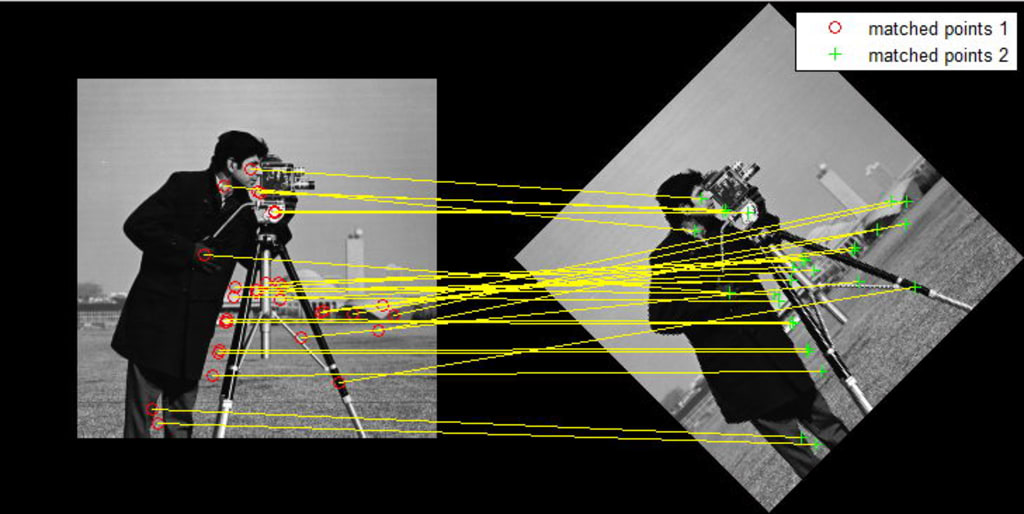
Techniques such as SIFT (Scale-Invariant Feature Transform), SURF (Speeded Up Robust Features), and ORB (Oriented FAST and Rotated BRIEF) can be implemented to match features between images for applications like image registration, tracking, or 3D reconstruction.
Stereo Vision and Depth Estimation:
Using stereo camera data to estimate depth. MATLAB's Computer Vision Toolbox includes functions for stereo calibration, rectification, and disparity computation.
Face Recognition:
Implementing algorithms for face detection and recognition, including PCA (Principal Component Analysis) or more advanced neural network-based approaches.
Motion Analysis and Tracking:
Tracking objects across frames in video sequences using optical flow, Kalman filters, or particle filters.
Augmented Reality (AR):
Marker-based AR where MATLAB can detect markers in the camera feed to overlay digital content.
Image Processing Applications:
Image Enhancement:
Techniques like histogram equalization, contrast stretching, or adaptive filtering to improve image quality.
Noise Reduction:
Filtering methods such as median filtering, Gaussian smoothing, or wavelet denoising to clean images.
Image Segmentation:
Methods like thresholding, edge detection (Canny, Sobel), region growing, or more complex algorithms like Watershed transform or active contours for separating objects from the background.
Morphological Operations:
Using dilation, erosion, opening, closing, etc., for shape analysis, noise removal, or shape simplification.
Image Registration:
Aligning two or more images taken at different times or from different viewpoints.
Medical Image Analysis:
Processing MRI, CT scans, etc., for tasks like tumor detection, brain segmentation, or quantitative image analysis.
Color Space Transformations and Analysis:
Converting images between different color spaces (RGB, HSV, Lab) for better segmentation or feature detection based on color.
Texture Analysis:
Analyzing images for texture to classify or segment objects based on their texture properties.
MATLAB's Image Processing Toolbox and Computer Vision Toolbox provide a plethora of built-in functions and algorithms that make these tasks straightforward, often reducing the need for extensive coding from scratch. These toolboxes also support integration with other MATLAB capabilities, like deep learning, for even more advanced applications.
MATLAB, a high-level language and interactive environment for numerical computation, visualization, and programming, has numerous applications in real-life across various industries and academic disciplines. Here's an overview of how MATLAB is used:
Engineering
Control Systems: Engineers use MATLAB to design and simulate control systems for automobiles, aerospace vehicles, industrial machinery, etc. It's used for analyzing stability, performance, and designing controllers.
Signal Processing: Signal processing algorithms for audio, video, and image processing are developed and tested in MATLAB. It's used in noise reduction, compression, and enhancing signal quality in telecommunications and electronics.
Mechanical Engineering: MATLAB aids in simulations of mechanical systems, including Finite Element Analysis (FEA) for stress and vibration analysis, and fluid dynamics for aerodynamic designs.
Scientific Research
Data Analysis: Researchers employ MATLAB for analyzing large datasets, from climate data to biological sequences, due to its powerful data handling capabilities.
Simulation: It's used to model complex systems like ecosystems, chemical reactions, or geological processes to predict outcomes or understand system behaviors.
Computational Neuroscience: MATLAB is used to model neural networks, analyze brain signals (EEG, fMRI), and study cognitive processes.
Finance
Quantitative Analysis: For financial modeling, risk assessment, and algorithmic trading, MATLAB helps in processing vast amounts of financial data, performing statistical analysis, and optimizing portfolios.
Economic Forecasting: Economists use it to build and simulate economic models for forecasting, scenario analysis, and policy impact studies.
Education
Teaching Programming and Math: MATLAB is widely used in universities for teaching programming, mathematics, and engineering concepts due to its intuitive environment for beginners.
Research Projects: It's a tool for both undergraduate and graduate students to conduct their research, from simple projects to complex ones involving machine learning or AI.
Industry Applications
Automotive: Used in the design of automotive systems, testing vehicle dynamics, and developing autonomous driving algorithms.
Aerospace: Designing aircraft components, simulating flight dynamics, and analyzing propulsion systems.
Medical: MATLAB is used for medical imaging analysis, developing algorithms for diagnostics, and in biomedical signal processing.
Energy: For power system analysis, renewable energy integration studies, and grid stability simulations.
Software Development
Prototyping: Many companies use MATLAB for rapid prototyping of algorithms before translating them into C/C++, Python, or other languages for deployment.
Integration: MATLAB can interfac with other languages and tools, allowing for a hybrid development environment where parts of a project can be done in MATLAB while others are in another language.
Examples of Use Cases:
Tesla uses MATLAB for battery management systems and vehicle control algorithms.
NASA has utilized MATLAB for various projects, including Mars rover operations and space shuttle systems.
In medicine, companies like Philips use MATLAB for developing diagnostic imaging software.
MATLAB's strength lies in its ability to handle matrix operations, its extensive library of toolboxes for specialized applications, and its ease of use for both beginners and experts. This versatility makes it a valuable tool across multiple sectors for solving real-world problems.
About the Creator
Sivakumaran C
Machine Learning Engineer
Enjoyed the story? Support the Creator.
Subscribe for free to receive all their stories in your feed.
Comments
There are no comments for this story
Be the first to respond and start the conversation.