
APAAR ID Card: Why is Important?
In the ever-evolving landscape of education in India, a new acronym is making waves—APAAR. Officially known as the Automated Permanent Academic Account Registry, the APAAR ID Card is more than just a piece of plastic or a digital token. It’s a bold leap into the future of learning, data, and lifelong academic identity. But what is it, really? And why is it being called the ‘One Nation, One Student ID’?
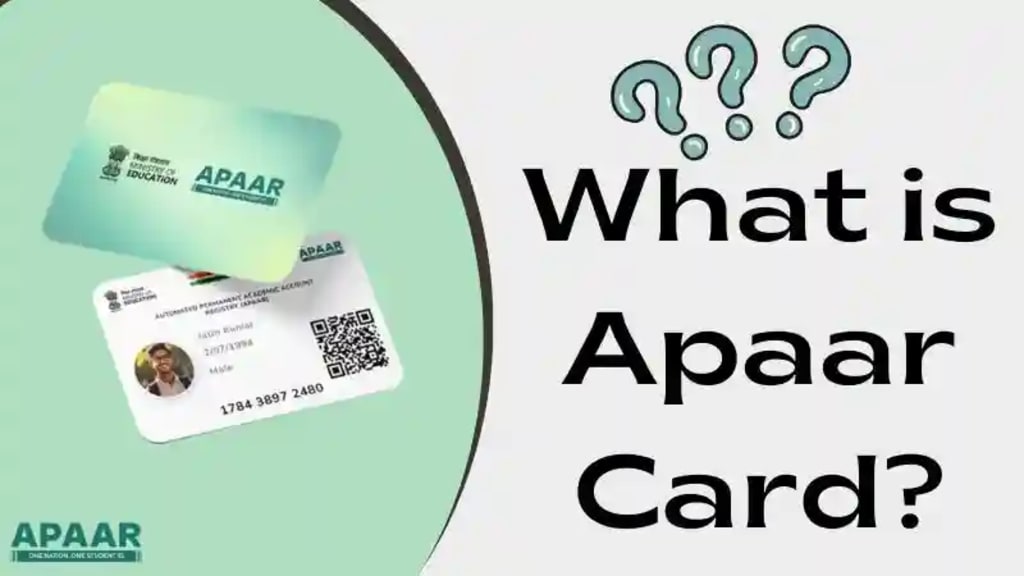
What is the APAAR ID Card?
The APAAR ID Card is part of India’s ambitious National Education Policy (NEP) 2020 and is being developed under the DigiLocker platform in collaboration with the Ministry of Education. This unique identification system is designed to create a centralized digital repository for every student's academic journey—from kindergarten to college and beyond.
Think of it as an Aadhaar for Education—a lifelong, portable, and interoperable ID that consolidates all your learning achievements, skill certificates, degrees, and even co-curricular records in one secure, cloud-based location.
Key Features of APAAR ID
• Unique Student ID: Every student gets a lifelong unique ID, much like a digital academic fingerprint.
• Complete Academic Record: Stores report cards, degrees, diplomas, certifications, sports achievements, and more.
• Secure and Consent-Based: Data sharing happens only with student or parent consent, protected under national data privacy norms.
• Interoperability: Integrates seamlessly with institutions, government portals, and skill development programs.
• Portability: Students changing schools, boards, or states won't lose their records—everything moves with them.
Why It Matters
In a country as diverse and vast as India, managing student records has traditionally been fragmented, inefficient, and paper-heavy. APAAR aims to fix this by introducing transparency, ease of access, and digital traceability. No more scrambling for mark sheets or certificates during college admissions or job interviews.
This initiative also encourages lifelong learning—as the APAAR ID continues to track learning even outside formal education, including online courses, vocational skills, and training programs.
Challenges and Concerns
While the benefits are clear, implementation at scale won’t be without challenges:
Digital Divide: Ensuring accessibility in rural and underserved regions remains a hurdle.
Privacy Concerns: Centralized data raises questions about cybersecurity and misuse.
Institutional Readiness: Not all educational institutions may be technologically equipped to onboard quickly.
Looking Ahead
The APAAR ID Card is a cornerstone of India’s vision to digitize education, empower learners, and make data-driven decisions in policy and pedagogy. It signals a shift from fragmented records to holistic learner profiles.
As schools across the country begin registering students for their APAAR IDs, we’re witnessing the foundation of a system that could redefine how education is tracked, transferred, and transformed.
Benefits of APAAR ID
Single Academic Identity: Acts as a permanent ID throughout a student’s academic life.
Stays the same from primary school to higher education.
Centralized Record of Academic History: Stores report cards, certificates, degrees, skill data, etc. Easy access through DigiLocker.
Portability: Students changing schools, cities, or states don’t need to worry about transferring paper records.
Helps in Career and Higher Studies: Institutions and employers can verify records instantly. Simplifies college admissions and job applications.
Supports Skill-Based Learning: Tracks co-curricular activities, vocational training, and skills — not just academic marks.
Secure and Verified: All records are digitally verified and stored securely in the cloud (via DigiLocker).
Data-Driven Policy Making: Helps the government identify drop-out trends, skill gaps, and plan education reforms.
Who Should Get an APAAR ID?
All school and college students in India — it's being rolled out gradually through schools with parental consent.
Final Thoughts
The APAAR ID is not just an initiative; it’s a statement. A statement that India is ready to embrace the digital future of education. For students, it’s a passport to opportunity. For parents, a reassurance of continuity. And for educators, a tool to truly personalize learning.
So the next time you hear about APAAR, know this: it’s not just a card. It’s a revolution in your pocket.
FaQ
Q1: Is the APAAR ID mandatory for all students?
Yes, the APAAR ID is being rolled out as a mandatory system under NEP 2020 for students in schools, colleges, and universities across India .
Q2: Can the APAAR ID be used for international education opportunities?
While primarily designed for India’s education system, the APAAR ID has the potential for future global integration, making it easier for Indian students to transition into international educational systems and verify their qualifications abroad .
Q3: Is there a fee associated with obtaining the APAAR ID?
As of the last update, there were typically no fees associated with obtaining the APAAR ID. However, it’s advisable to verify the current process and any associated fees with the official APAAR ID portal . Q4: Can I use the APAAR ID to apply for scholarships and financial aid?
Yes, the APAAR ID simplifies the process of applying for scholarships and financial aid by providing a verified record of a student’s academic qualifications .
About the Creator
Mass 25
Hello i will share a valuable info.
Enjoyed the story? Support the Creator.
Subscribe for free to receive all their stories in your feed.
Comments
There are no comments for this story
Be the first to respond and start the conversation.