
Anxiety and social media
Social media causing mental health issues
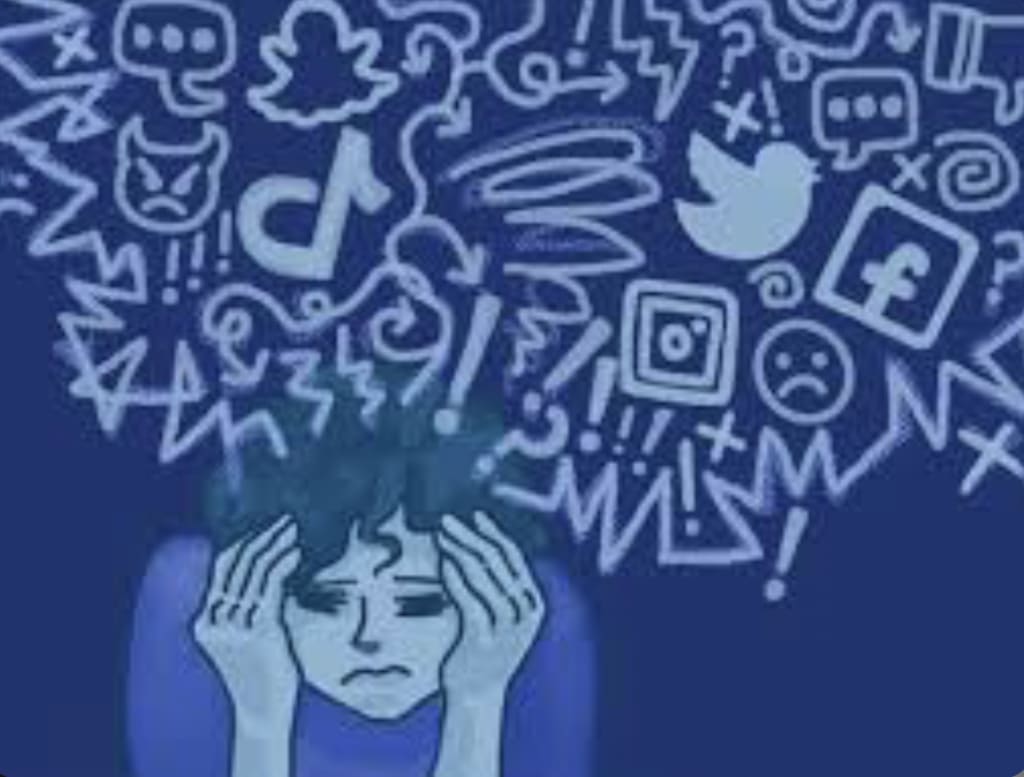
Anxiety is a mental health disorder that affects millions of people worldwide. In recent years, the impact of social media on mental health, particularly anxiety, has been a topic of growing concern. Anxiety and social media have a complex and often interconnected relationship.
Social media platforms, such as Facebook, Instagram, Twitter, and Snapchat, have become an integral part of our daily lives. While social media can be a source of entertainment and a means to connect with others, it can also trigger feelings of anxiety, loneliness, and stress. Several studies have found a significant association between social media use and anxiety.
When Mark Zuckerberg launched TheFacebook at Harvard University in February 2004, 650 students had made accounts. Today, there are roughly two billion daily active users.
Concurrent with Facebook’s meteoric expansion has been growing concern over the mental well-being of adolescents and young adults. According to data from the Centers for Disease Control, the suicide rate among 10- to 24-year-olds was stable from 2000 to 2007; it then increased 57% between 2007 and 2017.
Most broadly, the researchers found a sizable increase in the number of students who reported mental distress at some time in the preceding year. College-wide access to Facebook led to an increase in severe depression by 7% and anxiety disorder by 20%.
Social networking sites (SNSs) are Web-based platforms on which individuals connect with other users to generate and maintain social connections. On the one hand, SNSs may protect from mental illness, as they support and enable social interaction and connection and allow users to reflect aspects of their identity and express emotion that may be relevant to their lived experience. As SNS membership continues to rise it is becoming increasingly important to address the possible benefits and drawbacks on the mental health of an individual like,
~Social comparison on SNSs, where individuals compare themselves as having more positive or negative qualities than others, is a significant risk factor for depression and anxiety . Moreover many studies found that Facebook envy, a hostile evaluation of others from their social information on SNSs, is associated with higher ratings of depressive symptoms . Lee found that depression and anxiety were positively related to the frequency of social comparison on Facebook.
~Another way social media can contribute to anxiety is through cyberbullying. Cyberbullying is the use of technology to harass, embarrass, or humiliate others. Cyberbullying can be particularly damaging as it can occur 24/7 and reach a large audience.
Victims of cyberbullying may experience feelings of shame, humiliation, and anxiety. A study published in the Journal of Adolescent Health found that adolescents who experienced cyberbullying had higher levels of anxiety and depression symptoms than those who did not experience cyberbullying.
Cyber crime has become an increasingly severe problem in Pakistan in recent years. Financial fraud is the most common type reported; in 2020, of 84,764 total complaints, 20,218 Pakistanis reported falling victim to financial fraud-related online crimes. This is ahead of hacking (7966), cyber harassment (6023) and cyber defamation (6004). In the first 2 months of 2022 alone, there were a reported 212,485 cyber crimes, more than the entirety of 2018. An increasing number of Pakistanis have experienced cyber crime through social media. Between 2018-2021, financial fraud through social media increased by 83%. Of 102,356 complaints received in 2021, 23% of cyber crimes used Facebook.
~ Fear of missing out (FOMO) is another way social media can contribute to anxiety. FOMO is the feeling that one is absent from something important or exciting happening elsewhere.It is a common anxiety trigger for many social media users. Seeing other people's highlights and successes on social media can make people feel like they are missing out on important experiences or not living their lives to the fullest. Social media can amplify FOMO, as people are bombarded with images and updates of their friends and peers doing exciting things. Researchers have recently begun to explore the negative consequences of FoMO that are faced by social media users. FoMO is a main type of problematic attachment to social media, and is associated with a range of negative life experiences and feelings, such as a lack of sleep, reduced life competency, emotional tension, negative effects on physical well-being, anxiety and a lack of emotional control.
Also,there is a neurotransmitter in the brain that plays a role in regulating various functions, including movement, motivation, reward, and pleasure. It is often referred to as the "feel-good" neurotransmitter - Dopamine .The relationship between dopamine, anxiety, and social media is complex and interrelated. While dopamine plays a role in both anxiety and social media use, the exact nature of these relationships is still the subject of ongoing research.
To minimize the negative effects of social media on mental health, it is recommended that users limit their social media use, practice mindfulness and self-care, and seek professional help if needed. Social media companies can also take steps to mitigate the negative impact of their platforms on mental health, such as providing resources for users who experience cyberbullying and promoting healthy social media use.
No systematic approach has been conducted so far investigating the relationship between social anxiety and online social networking sites, or Facebook in particular, despite growing evidence on how socially individuals use online social networking sites. Therefore, the main aim of the current paper is to offer a comprehensive review of the state of the art of existent studies on the relationship between online social networking sites and social anxiety.
To conduct a relationship between anxiety and social media on a small scale we put a poll on instagram asking people, in which 82% people were positive on the statement that social media is a reason of stress and anxiety we’re as 18% of the people denied.
About the Creator
Enjoyed the story? Support the Creator.
Subscribe for free to receive all their stories in your feed.
Comments
There are no comments for this story
Be the first to respond and start the conversation.