
AI-Powered Customer Support: A Real-World AI Project
Transforming Customer Support with AI: A Step-by-Step Guide
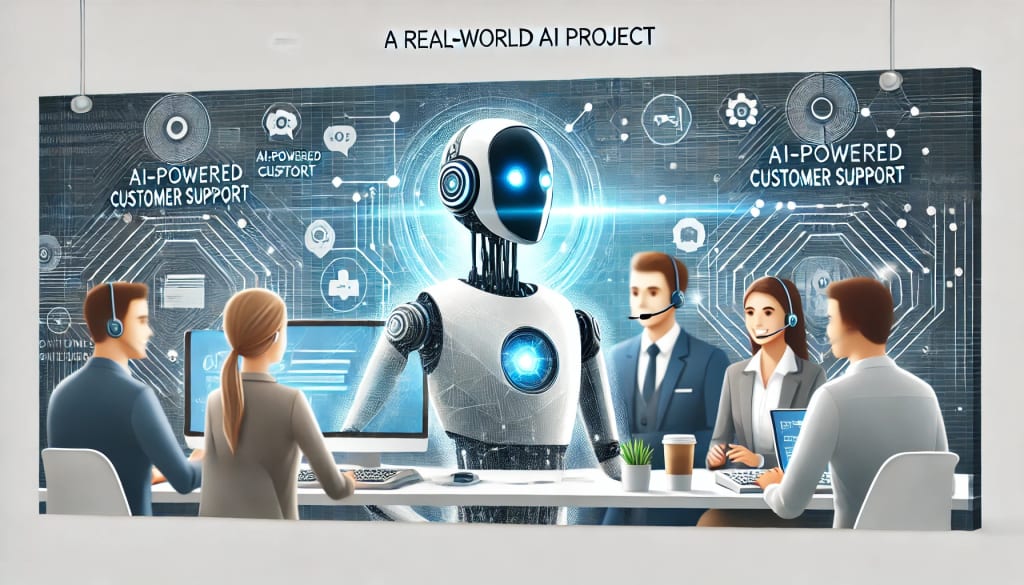
Businesses now use artificial intelligence to update and perfect their customer support methods. An AI customer support assistant strongly impacts how we use artificial intelligence today. Tech systems equipped with artificial intelligence enable organizations to engage with their clients better and faster to provide superior care. This blog will guide you through creating an AI-powered customer support assistant while highlighting the importance of understanding AI through a Generative AI course for managers.
The Need for AI in Customer Support
A business depends on customer support for its success. Current support systems handle many customer queries beyond their capacity, taking too long to help and varying their service outcomes. Companies using AI can solve their support challenges through these benefits.
By providing immediate answers to questions customers ask
Handling multiple inquiries simultaneously
Knowing the customer interactions to develop better performance over time
To provide personalized support by utilizing information gathered about our customers.
Artificial intelligence systems not only enhance customer service but also alleviate the burden on staff members, allowing them to focus on more complex customer issues. This relief is a testament to the transformative power of AI in customer support.
The strategic advantage of AI technology motivates companies to invest in improving customer service. For managers leading these transformations, enrolling in a Generative AI course is not just a step, but a leap towards understanding and effectively implementing AI-driven solutions, empowering them to lead their teams into the future of customer support.
Steps to Create an AI-Powered Customer Support Assistant
Implementing an AI-based customer support assistant requires a well-defined path and a structured approach. By following this path and utilizing AI tools, NLP, and machine learning technology, managers can be reassured that they are on the right track to successful implementation.
1. Define Objectives and Use Cases
Define your project's purposes and aim before working on an AI assistant. Focus the development process on handling these tasks.
Automating FAQs
Handling order-tracking queries
Providing technical support
Managing appointment scheduling
Knowing business requirements helps you create a chatbot system that fits specific sector needs. Complete the Gen AI course for Managers to learn how to use generative AI systems in managing tools.
2. Choose the Right AI Model and Technology Stack
Choosing the ideal AI model is the foundation of creating a successful assistant. Customer support projects often employ three leading AI technologies.
Rule-based chatbots: Use predefined scripts to respond to specific queries.
Machine Learning-based chatbots: The ML-based chatbot system analyzes previous talks to give better future replies.
Generative AI-based chatbots: Generative AI systems develop speech that appears authentic for chatbots.
Understanding these models through a Generative AI course can help managers make informed decisions about technology adoption.
3. Train the AI Model
For an AI model to perform well, substantial customer interaction records are needed for training. The training process involves:
Data Collection: Data collection is done by collecting all past customer chats, email exchanges, and interactions.
Preprocessing Data: The AI needs clean, structured data before training begins.
Model Training: The AI system learns proper performance from input data and needs refinement.
Gen AI training for managers teaches leaders to understand the development of AI systems so they can guide successful training processes.
4. Implement NLP for Natural Conversations
NLP technology helps an AI assistant better interpret spoken words and generate appropriate responses. NLP techniques include:
Intent Recognition: The system finds what users aim to achieve with their search query.
Entity Extraction: The system finds crucial information points like order IDs and date ranges.
Sentiment Analysis: The AI assistant analyses customer emotions to give improved support results.
A training program focused on generative AI for managers will help them better understand how NLP makes solutions for automated customer support work.
5. Integrate with Business Systems
The AI assistant needs to connect with our regular business technology to deliver excellent customer service.
Customer Relationship Management (CRM) software
E-commerce platforms
Payment gateways
Knowledge bases and help centers
A Gen AI course for managers will teach leaders how to effectively connect their business operations with AI tools.
6. Test and Optimize Performance
Organizations should perform complete testing before they use the AI assistant system in their operations. Key testing phases include:
Functionality Testing: By checking the chatbot, which deals correctly with every type of inquiry it receives.
User Testing: Gathering feedback from customers and employees.
Performance Monitoring: Tracking response times, accuracy, and customer satisfaction.
Business leaders can learn best practices for testing and optimizing AI models for continuous improvement through a Generative AI course for managers.
7. Deploy and Monitor Performance
After checks, start working with the AI assistant, then watch how well it performs. Essential aspects of tracking include:
Customer satisfaction scores
Resolution times
AI accuracy and learning efficiency
Feedback and improvement opportunities
When managers take a Gen AI course for managers, they become ready to oversee artificial intelligence applications and make performance updates based on data.
Benefits of AI-Powered Customer Support Assistants
1. Improved Efficiency
AI assistants are multiple queries per second, quickly and efficiently.
2. 24/7 Availability
Unlike human agents, an AI assistant is available 24/7 to help customers with instant support.
3. Cost Savings
Repeating queries has an operational cost of reducing, as human agents are available to address more complex issues.
4. Personalized Customer Experience
AI assistants utilizing these assistants provide customers with a more personalized experience while responding to their needs better.
5. Scalability
With the growth of businesses, AI-powered customer support can grow seamlessly to handle ever-increasing customer inquiries.
Why Managers Should Learn About Generative AI
As AI becomes a part of business operations, managers need to understand both AI's positive and negative implications. Enrolling in a Generative AI course for managers enables business leaders to:
Moreover, it helps in making informed decisions on adopting AI.
Learn training and deployment of AI models
Efficiently optimize AI for customer service.
Use Drive to drive AI-powered innovations in their organizations.
A Gen AI course for managers also provides professionals with 'hands-on' generative AI applications knowledge so managers can effectively lead AI-driven transformations.
Conclusion
Creating an AI-powered customer support assistant is a game-changing investment that aims to improve customer support and interactions. Organizations will address the challenges and successfully deploy AI-driven customer support solutions by following a structured approach: defining an objective, choosing an AI model, training with quality data, and continually improving performance.
About the Creator
Enjoyed the story? Support the Creator.
Subscribe for free to receive all their stories in your feed.
Comments
There are no comments for this story
Be the first to respond and start the conversation.