
AI in Manufacturing and Industrial Automation Sector
As the demand for AI-driven solutions grows, professionals are seeking opportunities to upskill through an artificial intelligence course to stay ahead in the evolving job market.
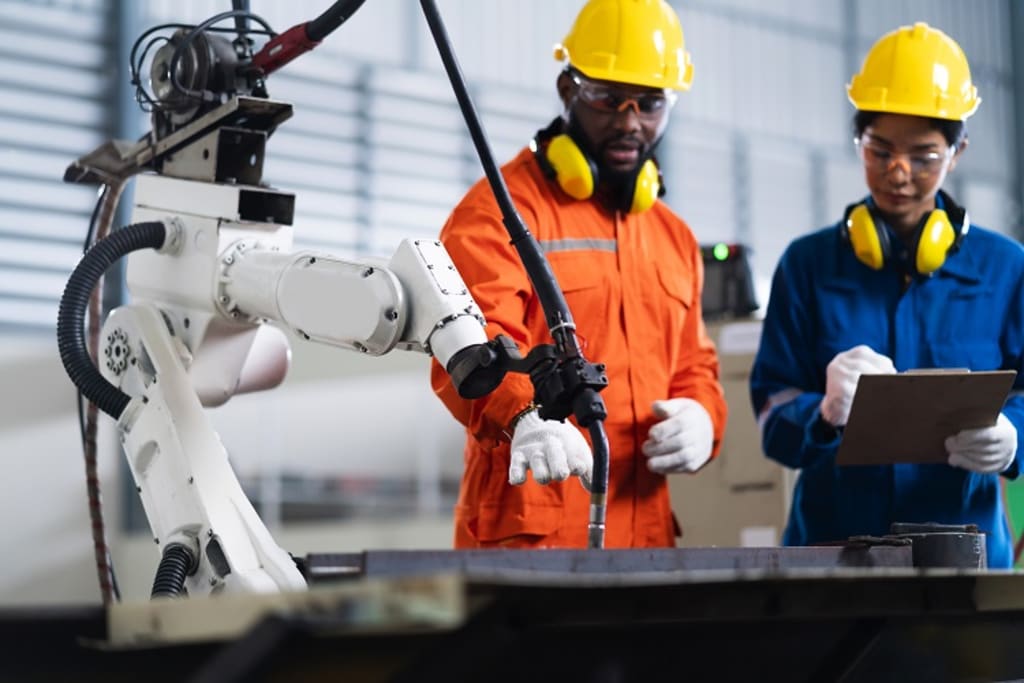
Artificial Intelligence (AI) is transforming the manufacturing and industrial automation sector by enhancing efficiency, reducing downtime, and optimizing production processes. Industries worldwide are leveraging AI to streamline operations, improve product quality, and minimize costs. As the demand for AI-driven solutions grows, professionals are seeking opportunities to upskill through an artificial intelligence course to stay ahead in the evolving job market.
The Role of AI in Smart Manufacturing
AI is at the core of smart manufacturing, enabling factories to operate with minimal human intervention. By integrating AI-powered systems, manufacturers can automate complex tasks, analyze vast amounts of data, and enhance overall productivity. Machine learning algorithms help in predictive maintenance, ensuring machinery remains in optimal condition and preventing unexpected breakdowns.
Companies adopting AI technologies are investing in an artificial intelligence course in chandigarh to equip their workforce with the necessary skills. These courses provide hands-on experience with AI-driven manufacturing tools, helping professionals stay relevant in an industry driven by digital transformation.
AI-Powered Quality Control and Defect Detection
Maintaining high product quality is a priority in manufacturing, and AI plays a crucial role in automating quality control processes. AI-based image recognition systems can detect defects and inconsistencies in products at a much higher accuracy than human inspectors. This reduces the chances of defective products reaching consumers, thereby improving brand reputation and customer satisfaction.
Enrolling in an ai courses noida helps professionals understand how AI-driven visual inspection systems work, enabling them to implement such technologies in real-world manufacturing environments. By leveraging AI, businesses can maintain stringent quality control while minimizing waste and optimizing resources.
Enhancing Supply Chain Optimization with AI
AI-driven analytics are revolutionizing supply chain management by predicting demand fluctuations, optimizing inventory levels, and improving logistics efficiency. Manufacturers can use AI to analyze historical data, weather conditions, and market trends to make data-driven decisions that prevent supply chain disruptions.
Professionals seeking expertise in AI applications within supply chain management can benefit from an artificial intelligence that covers AI-driven forecasting and decision-making tools. These courses provide insights into how AI optimizes supply chain networks, reducing operational costs and improving delivery timelines.
Robotics and AI-Driven Automation
The integration of AI-powered robotics in manufacturing has led to increased automation of repetitive and hazardous tasks. Robots equipped with AI and machine learning capabilities can work alongside human employees, enhancing productivity and workplace safety. These robots are capable of learning from their environment, adapting to changes, and performing tasks with precision.
Professionals interested in AI-driven robotics can enhance their skills by enrolling in Datamites Training Institute for artificial intelligence that covers robotics, machine learning, and automation techniques. By gaining hands-on experience, they can contribute to the development and deployment of AI-powered robotic systems in manufacturing industries.
Predictive Maintenance for Industrial Equipment
Predictive maintenance is one of the most significant advantages of AI in manufacturing. AI algorithms analyze sensor data from machinery to detect early signs of wear and tear, allowing maintenance teams to take proactive measures before failures occur. This reduces downtime, extends equipment lifespan, and lowers maintenance costs.
Manufacturers looking to implement AI-driven predictive maintenance strategies can benefit from an artificial intelligence that teaches them how to leverage AI for equipment monitoring and failure prediction. By learning AI-driven maintenance techniques, professionals can enhance operational efficiency and reduce unplanned downtime in manufacturing plants.
AI is revolutionizing the manufacturing and industrial automation sector by optimizing processes, improving product quality, and enhancing workforce productivity. As AI continues to drive innovation, professionals must stay updated with the latest advancements by enrolling in an artificial intelligence that equips them with the necessary skills. With AI-powered solutions shaping the future of manufacturing, businesses and professionals alike must embrace AI to remain competitive in the evolving industrial landscape.
About the Creator
Enjoyed the story? Support the Creator.
Subscribe for free to receive all their stories in your feed.
Comments
There are no comments for this story
Be the first to respond and start the conversation.