
AI + Education: Unlocking the future of learning.
Integrating AI tools!

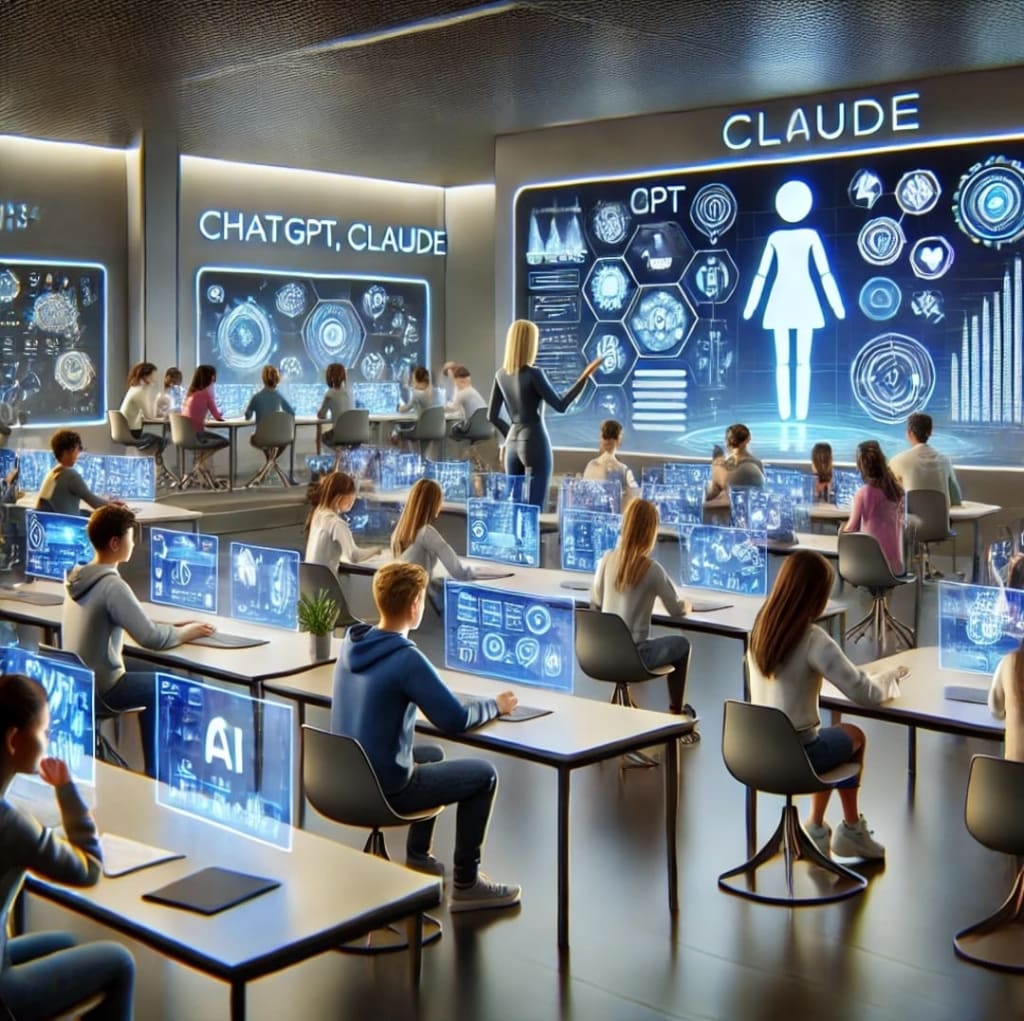
In today's fast-paced digital world, teachers are at the forefront of integrating AI tools like ChatGPT, Claude, Gemini, and many others into the classroom. This technological shift is reshaping the landscape of education, bringing both opportunities and challenges for students and educators alike. But what exactly does this integration mean for the educational experience?
What Teachers Expect from Students
Teachers envision AI tools as learning companions for students, not crutches. The aim is for students to use these tools to complement their learning rather than replace the fundamental processes of thinking, creating, and solving problems. Whether it's drafting essays, solving complex equations, or brainstorming ideas, students are encouraged to engage deeply with AI outputs, refining and building upon them. The ultimate goal is to enhance creativity, critical thinking, and analytical skills, fostering a generation of learners who can leverage AI to expand their intellectual capabilities while maintaining their unique voices.
Impact on Student Learning
AI tools have the potential to significantly enhance student learning by providing personalized feedback, diverse perspectives, and instant access to information. These tools can act as accelerators of knowledge acquisition, helping students understand complex concepts more quickly and thoroughly. However, there's a delicate balance to be struck. Over-reliance on AI can stifle the development of independent thinking and problem-solving skills. Students need to use AI as a tool to augment their learning experience, ensuring that they remain the primary drivers of their intellectual growth. By doing so, they can develop into independent thinkers who can harness technology effectively while preserving their individuality and creativity.
Impact on Teachers’ Teaching
For educators, the integration of AI in the classroom represents a paradigm shift in teaching strategies. Teachers are now tasked with guiding students on the ethical and effective use of AI, ensuring that these tools complement traditional educational methods rather than replace them. This shift enables more tailored instruction, making education more inclusive and dynamic. AI can assist teachers in identifying students' strengths and weaknesses, allowing for more personalized and effective teaching approaches. As a result, classrooms are becoming more adaptive to the diverse needs of students, fostering a more inclusive and equitable educational environment.
Ethical Considerations
One of the most significant challenges in using AI in education is navigating the ethical landscape. With AI's ability to generate content, the boundaries between assistance and academic dishonesty can become blurred. Teachers emphasize the importance of transparency—students must clearly indicate when they've used AI tools and understand the ethical implications of presenting AI-generated work as their own. By instilling a strong sense of academic integrity, educators can help students navigate the complexities of using AI ethically and responsibly.
Essential Teaching Methods
To effectively integrate AI tools in the classroom, teachers are employing various innovative teaching methods:
1. Hands-on Demonstrations:
Teachers demonstrate practical uses of AI, such as generating essay outlines or simulating scientific experiments, to show students how these tools can enhance their work.
2. Critical Analysis Exercises:
Students are tasked with comparing AI-generated content with human-generated work to identify strengths and weaknesses, sharpening their analytical skills.
3. Collaborative Projects:
Group projects that incorporate AI tools promote teamwork and innovation, allowing students to explore creative solutions together.
4. Ethics Discussions:
Regular discussions on the ethical use of AI help students navigate real-world scenarios and understand the potential for misuse, fostering ethical reasoning.
Practical Examples of AI in the Classroom
Essay Writing Enhancement:
For an essay on climate change, students might use ChatGPT to generate an initial outline or introduction. Teachers then guide them in refining this content to align with academic standards and their personal insights, helping students differentiate between AI assistance and their original work.
Research Assistance:
AI tools like Claude can help students gather and summarize vast amounts of data for history projects. Teachers emphasize the importance of verifying AI-generated content with reliable sources, enhancing students' research skills.
Creative Writing Inspiration:
AI tools like Gemini can generate creative prompts for short stories. Teachers encourage students to use these ideas as starting points, adding their unique voice and creativity to the narrative.
Language Learning Support:
AI can simulate conversations in different languages, helping students practice speaking and comprehension. Teachers review these dialogues, focusing on grammar, vocabulary, and cultural nuances.
Problem-Solving in Maths:
AI can break down complex algebra problems step-by-step, with teachers using these solutions to explain underlying mathematical concepts, reinforcing conceptual learning.
Ethical Case Studies:
AI-generated scenarios involving ethical dilemmas, such as AI in law enforcement, are used in discussions to help students develop critical thinking and ethical reasoning.
Personalised Learning Plans:
AI analyzes student performance data to create tailored learning plans. Teachers integrate these recommendations into broader strategies, ensuring each student's needs are met.
The future of education is here, driven by AI. By embracing these tools, we can empower students, enhance teaching practices, and build a more ethical and innovative educational environment. As we navigate this new frontier, the focus remains on maintaining the integrity of learning while harnessing the full potential of AI to enrich the educational experience.
@AI Learning Hub #AILearningHub
About the Creator
Christopher Saliba
I'm Chris Saliba, an educator passionate about artificial intelligence. I share insights on all things AI., from beginner-friendly guides to in-depth explorations. Dive into my curated articles, designed to elevate your understanding of AI.
Enjoyed the story? Support the Creator.
Subscribe for free to receive all their stories in your feed.
Comments
There are no comments for this story
Be the first to respond and start the conversation.