
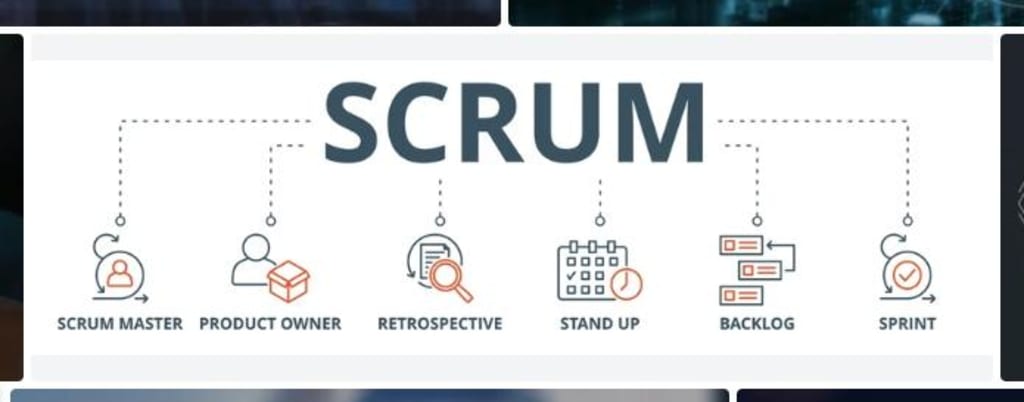
Being a Scrum Master requires a combination of technical knowledge, interpersonal skills, and a deep understanding of the Scrum framework. It's a role that significantly impacts the success of Agile projects and the effectiveness of Scrum teams.
A day in the life of a Scrum Master can be quite dynamic, involving a mix of scheduled meetings, impromptu discussions, and ongoing support for the development team and other stakeholders. Here's a breakdown of a typical day:
Morning
1. Daily Stand-Up (15 minutes)
Objective: Facilitate the Daily Scrum (Stand-Up) meeting.
Activities: Ensure the team members briefly discuss what they did yesterday, what they plan to do today, and any impediments they are facing.
Outcome: Team alignment and identification of any immediate issues.
2. Impediment Resolution (Ongoing)
Objective: Address any blockers or impediments raised by the team.
Activities: Collaborate with team members, other teams, or management to remove these obstacles.
Outcome: Smooth workflow and progress on sprint goals.
Mid-Morning
3. Backlog Refinement (30-60 minutes)
Objective: Work with the Product Owner and the team to refine the backlog.
Activities: Ensure backlog items are well-defined, prioritized, and ready for upcoming sprints.
Outcome: A prioritized and clear product backlog.
4. One-on-One Meetings (30-60 minutes)
Objective: Check-in with team members or stakeholders individually.
Activities: Discuss progress, address concerns, and provide support or coaching.
Outcome: Enhanced individual performance and morale.
Lunch
Early Afternoon
5. Team Collaboration & Support (Ongoing)
Objective: Be available for the team to provide guidance and support.
Activities: Answer questions, facilitate collaboration, and ensure team members are not stuck.
Outcome: Continuous progress and problem-solving.
6. Training and Coaching (30-60 minutes)
Objective: Provide training or coaching on Agile practices and principles.
Activities: Conduct workshops, share best practices, and reinforce Scrum values.
Outcome: Improved team skills and adherence to Agile principles.
Mid-Afternoon
7. Sprint Planning / Review / Retrospective (60-120 minutes)
Objective: Facilitate key Scrum ceremonies depending on the sprint cycle.
Activities:
Sprint Planning: Plan the work for the next sprint.
Sprint Review: Review completed work with stakeholders.
Sprint Retrospective: Reflect on the sprint to identify improvements.
Outcome: Clear sprint goals, feedback on work done, and continuous improvement.
Late Afternoon
8. Administrative Tasks (30-60 minutes)
Objective: Handle any necessary administrative work.
Activities: Update tools, maintain Scrum boards, and document any relevant information.
Outcome: Organized and up-to-date project documentation.
9. End-of-Day Wrap-Up (15-30 minutes)
Objective: Reflect on the day's activities and prepare for the next day.
Activities: Review progress, plan for any follow-up actions, and ensure all tasks are tracked.
Outcome: Preparedness for the next day’s activities and ensured continuity.
Throughout the Day
10. Communication and Coordination
Objective: Maintain open lines of communication with all team members and stakeholders.
Activities: Respond to emails, messages, and attend ad-hoc meetings.
Outcome: Ensured smooth flow of information and coordination.
11. Continuous Improvement
Objective: Promote and lead continuous improvement initiatives.
Activities: Implement feedback, iterate on processes, and foster a culture of improvement.
Outcome: Incremental and ongoing improvements in team performance and processes.
Summary
A Scrum Master's day is a blend of scheduled meetings and flexible time dedicated to removing impediments, coaching the team, and ensuring that the Scrum process is adhered to. The goal is to support the team in delivering high-quality work efficiently while fostering an environment of continuous improvement.
The role of a Scrum Master is not typically considered "easy." While the responsibilities may vary depending on the team and organization, being a Scrum Master requires a mix of leadership, facilitation, problem-solving, and coaching skills.
The role can be emotionally demanding as it involves servant leadership, where the Scrum Master puts the team's needs first. This requires patience, empathy, and the ability to influence without formal authority. Burnout can be a risk, particularly when working with resistant teams or in environments that are still transitioning to Agile.
The difficulty of being a Scrum Master largely depends on the context—team maturity, organizational support, and the complexity of the project. While it may not be physically taxing, the intellectual and emotional challenges make it a demanding role, requiring continuous learning and adaptation.
Is this for you?
About the Creator
Enjoyed the story? Support the Creator.
Subscribe for free to receive all their stories in your feed.
Comments
There are no comments for this story
Be the first to respond and start the conversation.