
Affiliate marketing
Make money online with affiliate marketing

Affiliate marketing is a marketing arrangement in which affiliates receive a commission for each visit, signup or sale they generate for a merchant. This arrangement allows businesses to outsource part of the sales process.[1] It is a form of performance-based marketing where the commission acts as an incentive for the affiliate; this commission is usually a percentage of the price of the product being sold, but can also be a flat rate per referral.[2]
Affiliate marketers may use a variety of methods to generate these sales, including organic search engine optimization, paid search engine marketing, e-mail marketing, content marketing, display advertising, organic social media marketing, and more.
Though the largest companies run their own affiliate networks (for example Amazon), most merchants join affiliate networks which provide reporting tools and payment processing.[2]

The concept of affiliate marketing on the Internet was conceived of, put into practice and patented by William J. Tobin, the founder of PC Flowers & Gifts. Launched on the Prodigy Network in 1989, PC Flowers & Gifts remained on the service until 1996. By 1993, PC Flowers & Gifts generated sales in excess of $6 million per year on the Prodigy service. In 1998, PC Flowers and Gifts developed the business model of paying a commission on sales to the Prodigy Network.[3][4]
In 1994, Tobin launched a beta version of PC Flowers & Gifts on the Internet in cooperation with IBM, who owned half of Prodigy.[5] By 1995 PC Flowers & Gifts had launched a commercial version of the website and had 2,600 affiliate marketing partners on the World Wide Web. Tobin applied for a patent on tracking and affiliate marketing on January 22, 1996, and was issued U.S. Patent number 6,141,666 on Oct 31, 2000. Tobin also received Japanese Patent number 4021941 on Oct 5, 2007, and U.S. Patent number 7,505,913 on Mar 17, 2009, for affiliate marketing and tracking.[6] In July 1998 PC Flowers and Gifts merged with Fingerhut and Federated Department Stores.[7]
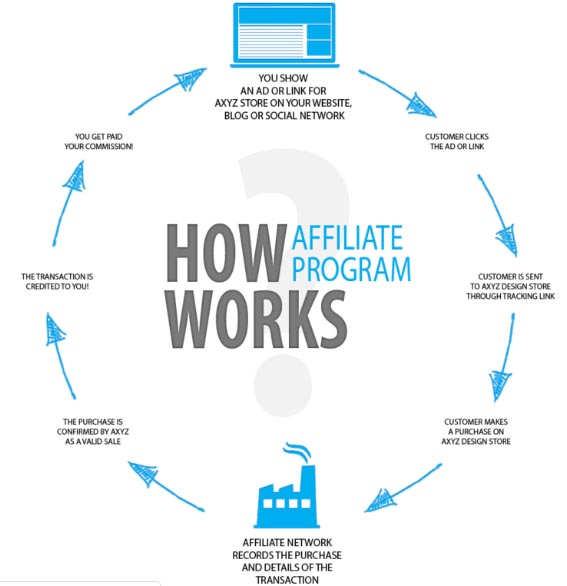
Affiliate marketing is a great way to drive sales and generate significant online revenue. Extremely beneficial to both brands and affiliate marketers, the new push toward less traditional marketing tactics has certainly paid off.
In fact, affiliate marketing spend in the United States increased from $5.4 billion in 2017 to $8.2 billion in 2022 — which means there’s plenty of room for those looking to get a piece of the pie.
This step-by-step beginner’s guide will walk you through how to launch your affiliating marketing business and what benefits you can expect.
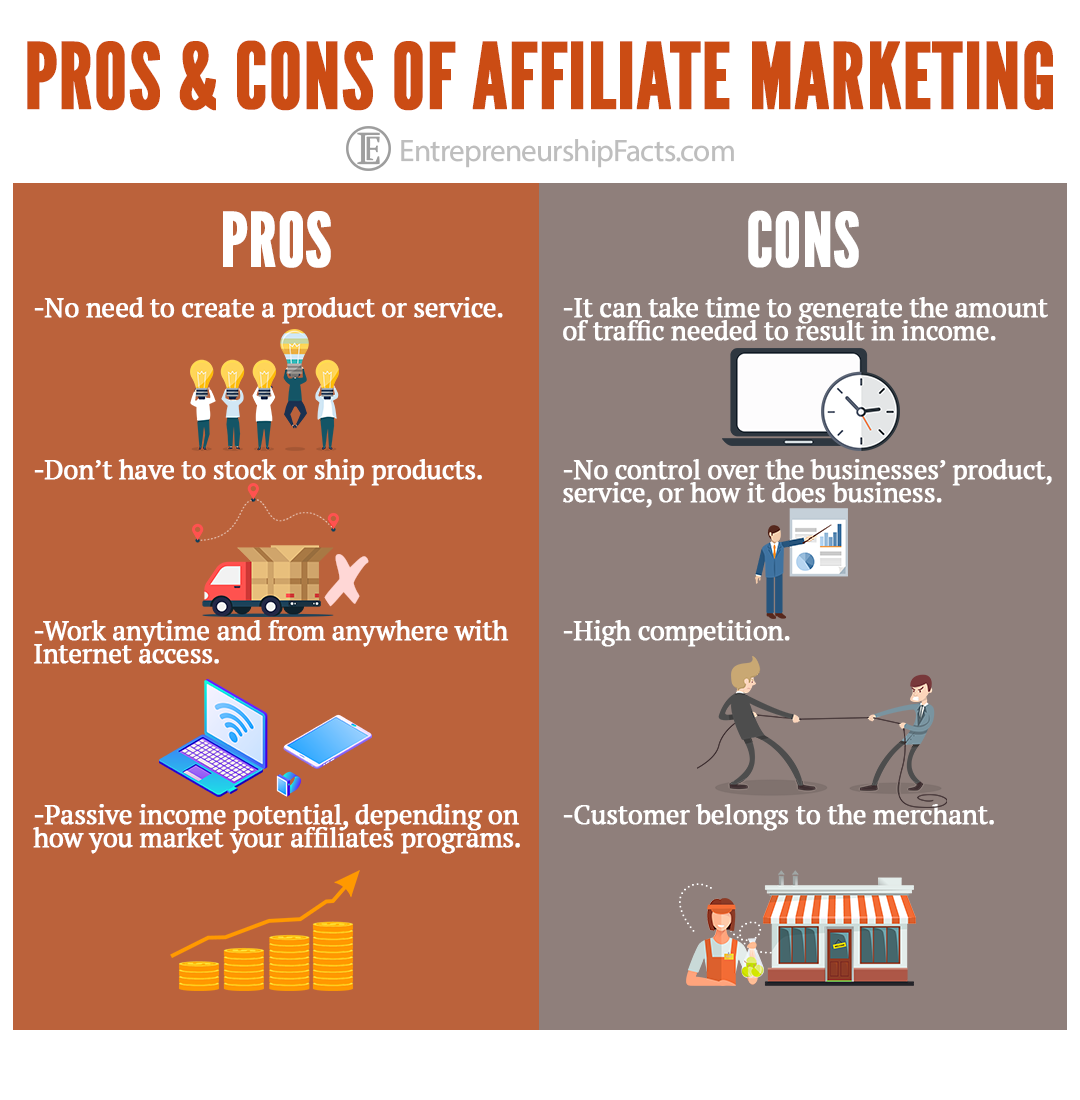
The Pros
Here are some of the benefits of using affiliate marketing:
1. Low-Cost Revenue Stream
Most small to mid-size businesses simply do not have a large enough marketing budget to pay for high-cost advertising to the masses, like TV commercials and radio ads. Affiliate marketing allows you to generate extra income just for promoting products sold by larger companies or promote your own business by selling goods on larger platforms. With programs like Google Ads, you can add banner ad boxes to your website and generate a small commission when someone visits your website and clicks on the ad. Likewise, you can create your own banner ad, and Google ads will publish it in the ad box on other websites.
2. The World Becomes Your Oyster
Affiliate marketing reaches consumers all around the world with a very minimal time commitment on your part. If you are interested in adding banner ads to your website, the hardest part is figuring out where exactly to place them on the page. Selling products through affiliate marketing programs is also easy to do, and you gain access to a global customer base. The opportunities are vast, especially when you compare them against the amount of time and effort that goes into creating them.
3. Small Income Can Drive High Revenue
Have you ever heard the saying, “Mind your pennies, and the dollars will follow?” While you may only receive a couple of pennies per ad click or a smaller profit on items sold through affiliate programs, the revenue potential over time is huge.
It’s similar to email automation in that it’s almost a set it and forget it model. Once you set your affiliate marketing program up, the rest is up to the platform it’s running on, the users it’s appealing to, or your partners that are working to promote it.
4. Builds Partnerships
Whether your customers are promoting your product to their customers, a brand is sharing a banner ad on their site, or you’re pushing another brand’s product on your site, affiliate marketing enables you to build stronger partnerships.
At the root of the strategy is trust – each brand has to trust the other in order for affiliate marketing to be successful. And when trust is shown and lived up to, it strengthens the bond between each brand and opens the door for more partnership opportunities in the future.
The Cons
And now, here is a quick look at some of the cons:
1. Following Another Company’s Rules
When you work with affiliates, you are required to follow the rules set forth by that company. In the case of banner ads, you will have no control over what ads are placed on your website. If you choose to work with an affiliate program, like Amazon, you have to sell your products in accordance with their policies and procedures.
2. Not All Affiliate Marketing Programs are Created Equally
Some affiliate marketing programs pay you for each interaction, while others only pay you if someone makes a purchase from your lead. In the case of selling products on affiliate websites, there is usually a sales fee that must be paid for each item sold.
3. A Lot of Website Maintenance
If you choose to run banner ads on your website to generate commission or ad click revenue, you have to maintain your website frequently in order to drive traffic to your site, so they see the banner ads in the first place.
Affiliate marketing is a great choice if you are trying to grow your business and are exploring other avenues of potential income, but it does come with its own unique set of challenges. Make sure you consider the pros and cons and what kind of program you’d like to participate in first (i.e., have other brands join your affiliate marketing program or be an affiliate marketer). Know your parameters and start small. Once you evaluate some return, you can decide to expand your strategy.
About the Creator
Enjoyed the story? Support the Creator.
Subscribe for free to receive all their stories in your feed.
Comments
There are no comments for this story
Be the first to respond and start the conversation.