
A RESEARCH ON THE SUBJECT WHY THE SIGNALS USED IN RADIO USED IN DAILY LIFE HAVE TURNED FROM ANALOGUE MODULATION TO FREQUENCY MODULATION.
Radios play a very important role in our daily life. Although we think that we do not use it in our daily life, we use it in all areas of our daily life, both in radios and telephones. Radios are divided into AM (Analog Modulation) and FM (Frequency Modulation). These two types have their own advantages and disadvantages. However, FM type is mostly used in our daily life. In our article, we investigated why the FM type was used the most and why the AM type was not used. Keywords: AM (Analog Modulation), FM (Frequency Modulation), Use of Radio in Daily Life, Use of Radio Signals in Daily Life, Separation of Radio Signals..
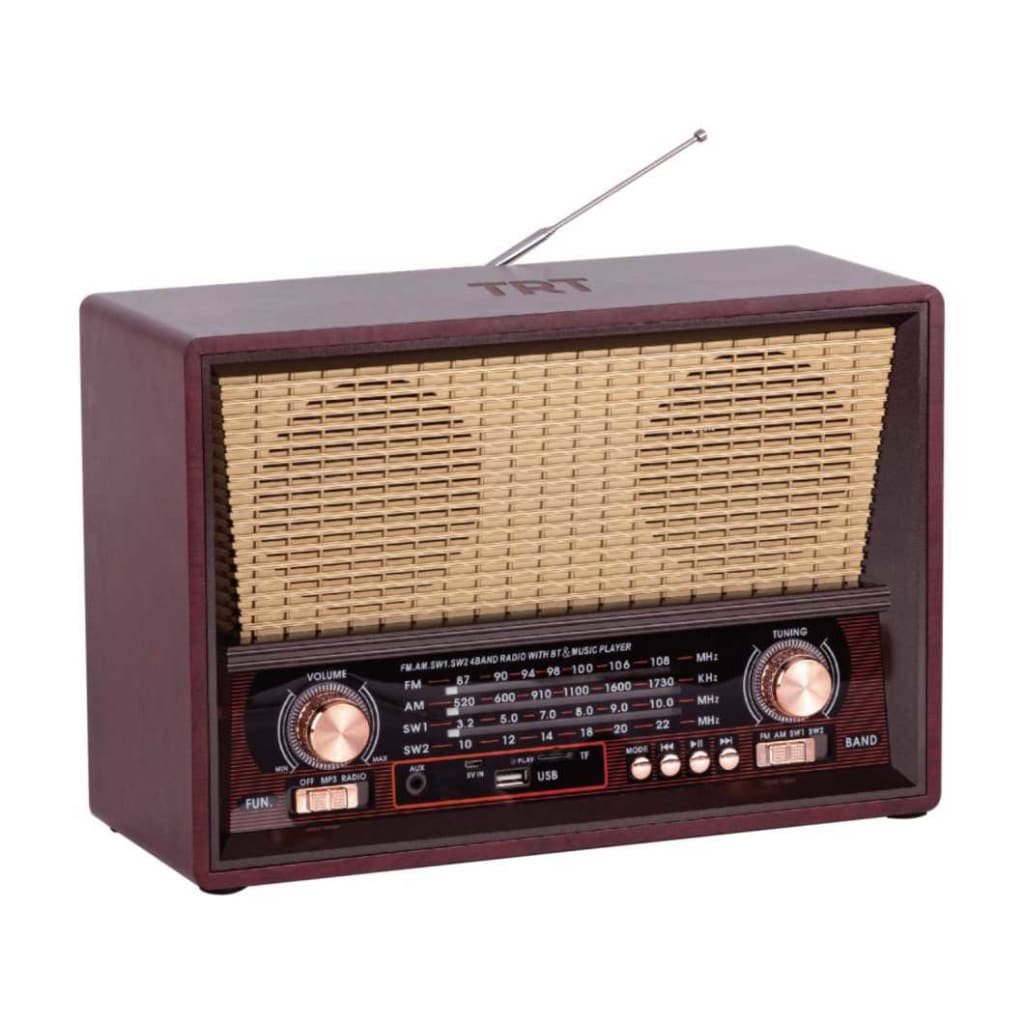
A RESEARCH ON WHY THE SIGNALS USED IN RADIO IN DAILY LIFE ARE CONVERTING FROM ANALOGUE MODULATION TO FREQUENCY MODULATION.
Abstract
Radios play a very important role in our daily life. Although we think that we do not use it in our daily life, we use it in all areas of our daily life, both in radios and telephones. Radios are divided into AM (Analog Modulation) and FM (Frequency Modulation). These two types have their own advantages and disadvantages. However, FM type is mostly used in our daily life. In our article, we investigated why the FM type was used the most and why the AM type was not used.
Keywords: AM (Analog Modulation), FM (Frequency Modulation), Use of Radio in Daily Life, Use of Radio Signals in Daily Life, Separation of Radio Signals..
1. Introduction
After the emergence of communication in our lives, people have used many communication methods, some of them; communication with steam, communication with pigeon, communication by letter, communication in electronic transmission medium and communication in electronic devices. The method we explore in our article is communication in the electronic transmission medium. There are several subgenres under this type, the most well-known of which are AM and FM. In our research, we investigate why these two types are used the most, why AM is almost never used, and FM is used more.
2. Methods Used and Subjects Researched
2.1. Advantages and disadvantages
Both types have advantages and disadvantages to each other. When we started our research, we started by researching the advantages and disadvantages of the two types against each other.
2.1.1 Unit Cost Per Product
FM communication circuit works very sensitively and for this, higher quality circuit boards, higher quality circuit elements, higher quality peripheral components are used, but AM communication circuits work more roughly compared to FM communication circuits and less sensitive materials are needed. it doesn't need much.
2.1.2 AM and FM Communication circuits Bandwidth and Channel Majority
FM communication has more bandwidth because an AM communication circuit works coarser than FM communication circuit.
AM, 535 to 1705 Kilohertz; FM operates in the frequency range of 88-108 Megahertz, AM signals have a bandwidth of 30 kHz and FM signals have a bandwidth of 80 kHz per signal, which means AM can send more signals in a narrower range. But FM communication has more channels.
2.1.3 Signal Sending and Receiving Quality
FM signal is better quality than AM signal and sends signal (Sound, Picture, etc.) with less noise because it is designed more sensitive and better quality when designing an FM communication circuit. And for this reason, FM communication works with less interference and noise than AM communication, and works better quality, and FM has a catch effect. Due to this effect, it can easily destroy unwanted signals.
2.1.2 Power Efficiency
In AM communication type, information is sent by changing the amplitude level, and the current in the circuit increases so that there is no loss in power while the voltage goes from a low level to a high level, and if the current increases, the circuit consumes extra power. However, while sending information in FM communication, voltage and current are at constant values, only the frequency of the signal changes. FM communication works more stable than AM communication in terms of power efficiency.
2.2 Ease of Mathematical Operations
If an article is written about an engineering subject, there is always some mathematics about it, and convenience always comes first in mathematical operations.
2.2.1 General Operation Logic and Mathematical Explanations in AM Communication Systems
2.2.1.1 General Operation Logic in AM Communication Systems
It is formed by combining the information signal with the Local oscillator and changing the amplitude level according to the signal coming from the oscillator.
2.2.1.2 Mathematical Explanations in AM Communication Systems
U(T) is called Output signal, to find the U(T) signal, C(T)(Local Oscillator) is multiplied by M(T)(Information Sign) and then U(T) signal is found. Let's explain the formula Termically with a small example.
Formula M(T)=a.COS2πFmT,
Formula C(T)=AC.COS2πFcT is used
If these two are multiplied, the output signal will appear.
U(T)=a.AC/2. Subtracts COS2π(Δ(f-fc-fm)+ Δ(f+fc-fm)+ Δ(f-fc+fm)+ Δ(f+fc+fm)).
In this, it helps us to explain how we will see the fc and fm in the transmission medium, how far we move the signal from the f signal on the COS line, after the transmitter circuit calculation, we calculate how we will see the signal from the transmission medium at the output of the receiver circuit, and this in U( We do it with the formula T)*C(T).
2.2.2 General Operational Logic and Mathematical Explanations in FM Communication Systems
2.2.2.1 General Operational Logic in FM Communication Systems
Modulation is the changing of some features of a high frequency signal depending on the information signal to be transmitted. In order to define the difference between AM and the signal sent in AM, information is sent by changing the voltage level, but in FM communication, the amplitude is constant, frequency values are manipulated to send the information and information is transferred.
2.2.2.2 Mathematical Explanations in FM Communication Systems
If the bandwidth is found in the frequency modulation, the signal at the output of the receiver is found. Bandwidth calculation is as follows. Bandwidth is found with the formula BW = 2(Δfc+fm) and the frequency of the receiver is calculated accordingly. Theoretically, if we shift the 2. Δfc by 2.fm, the bandwidth is found.
3. Conclusion
FM communication systems are used instead of AM communication because they work more sensitively, fluently and stably.
There is greater power efficiency, and this power efficiency will result in cost savings in the long run. AM communication is a reactionary communication method in most areas in terms of today's needs and is more costly than FM communication in the long run. Power efficiency should be kept at the highest level in areas such as car, radio, military communication, while AM communication lags behind in important issues in terms of power efficiency, mathematical convenience, noise and interference suppression, and unwanted signals. FM communication took its place.
Source
Hürriyet Newspaper Am And Fm Communication Features:
Address: https://www.hurriyet.com.tr/egitim/modulasyon-nedir-ve-neden-yapilir-modulasyon-cesitleri-ve-ozelleri-41719290
MEB ANALOGUE AND DIGITAL COMMUNICATION (2011):
Advantages and disadvantages of AM and FM communication
Address: http://www.megep.meb.gov.tr/mte_program_modul/moduller_pdf/Analog%20Ve%20Sayısal%20Haberleş.pdf
Outstanding Evidence Website:
AM and FM Communication circuits Bandwidth and Channel Majority
Address: http://www.olaganustukanitlar.com/am-ve-fm-dalgasi-arasinda-ne-fark-vardir/
Wikipedia ;
AM and FM Communication Logic and Calculations
Address: https://tr.wikipedia.org/wiki/Genlik_modulation Address: https://tr.wikipedia.org/wiki/Frequency_modulation
About the Creator
Enjoyed the story? Support the Creator.
Subscribe for free to receive all their stories in your feed.
Comments
There are no comments for this story
Be the first to respond and start the conversation.