
8 Education Trends to look out for in 2025
What if the way your child learns in 2025 is radically different from what you experienced at school? The educational landscape is shifting in ways that can feel overwhelming, but these changes also bring incredible opportunities for your child’s success.

As parents, we often have to balance our children’s academic needs with the reality of an ever-evolving world. The future of education, however, promises personalised learning, accessible technology, and well-being-focused teaching that could help your child thrive like never before.
In this article, we’ll walk you through 8 key education trends to watch for in 2025, each poised to significantly impact your child’s educational experience. From AI-driven personalised learning to the rise of skills-based credentials, we’ll discuss how these developments could reshape school days, learning outcomes, and future careers.
By the end, you’ll understand what to expect—and how to best support your child through these exciting transitions. Ready to dive in? Let’s explore the trends that will shape education in 2025.
1. Expansion of Online and Hybrid Learning

Online learning has been around for decades, but the world-shattering pandemic fast-tracked its widespread adoption across both the workforce and education. Practically overnight, classrooms and offices pivoted to digital platforms, unlocking possibilities many had not fully explored before.
Since then, more educators and institutions have discovered that online learning was an untapped avenue for delivering education at scale. In the post-pandemic era, this has led to the continued—and accelerating—rise of digital learning models globally.
One of the most significant developments emerging from this shift is the rise of the hybrid learning model. Increasingly, we are seeing schools and colleges blending online and in-person learning. Some schools now operate on hybrid timetables—students attend physical classrooms on certain days and learn remotely on others. In 2025 and beyond, expect more institutions, including universities and sixth forms, to refine and expand these hybrid models. The goal? To give students greater flexibility while fostering digital literacy—an essential skill for future careers.
In this rapidly fast-changing world, platforms like MyEdSpace are leading the way, offering a centralised hub for lesson delivery, assignments, and communication. Such platforms are shaping the way students engage with digital content, making it easier for teachers to coordinate hybrid learning environments effectively.
However, while this flexibility is a blessing, it’s crucial for parents to remain mindful of how effectively these digital platforms engage students. Look for online or blended programmes that don’t sacrifice vital elements like collaborative learning, peer interaction, and regular communication with teachers. The most impactful online learning experiences are those that balance autonomy with meaningful human connection.
2. Personalised Learning

Personalised learning is an approach where education is tailored to meet each student’s individual needs, strengths, interests, and learning pace. Instead of a one-size-fits-all method, students receive customised resources, support, and pathways to help them achieve their goals and stay engaged in their learning journey.
In 2025, expect even wider adoption of personalised teaching approaches that allow students to progress at a pace that suits them. Sophisticated digital platforms powered by AI and real-time data will deliver custom lesson plans, adaptive learning paths, and instant feedback. In fact, adaptive learning platforms have been shown to increase student engagement by 45% compared to traditional methods.
For parents, this means your child’s school experience could become far more engaging, responsive, and supportive. It’s worth noting that AI-driven learning tools not only help boost engagement but also improve learning retention by 20–30%, particularly in core subjects like Maths and reading.
3. AI-Powered Education
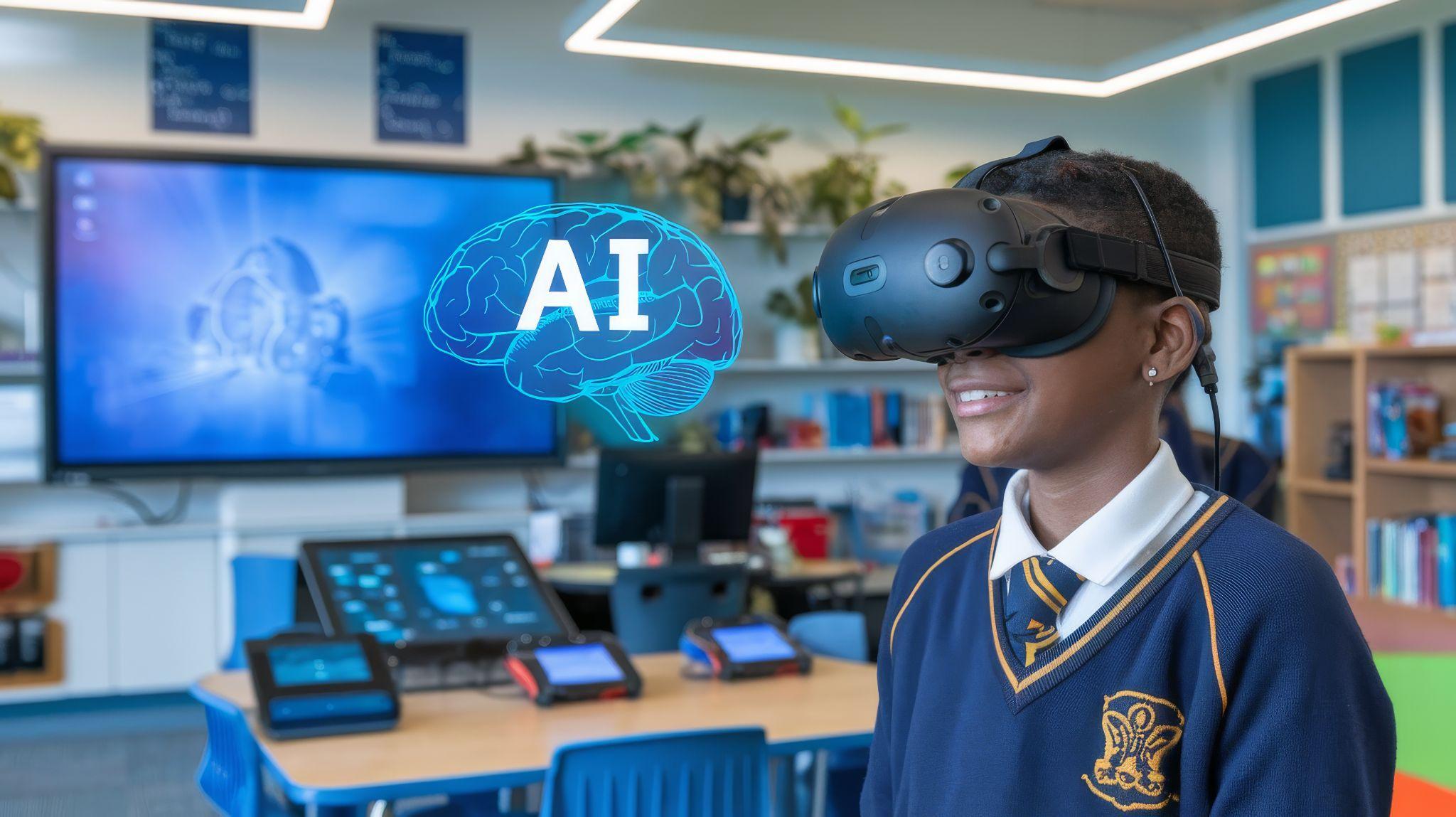
Artificial Intelligence is no longer a futuristic concept in education—it is shaping classrooms today and will play an even bigger role in 2025. From nurseries to universities, AI-driven tools are redefining how students learn, how teachers teach, and how education systems operate.
AI-powered learning platforms are becoming deeply embedded in schools, offering personalised support that once seemed impossible at scale. Intelligent tutoring systems, for example, can now monitor students’ progress in real-time, pinpoint areas of difficulty, and deliver immediate, tailored feedback. This level of personalisation helps keep students on track and motivated, giving them an experience that feels more like a one-to-one tutor than a static digital course.
Beyond personalised learning, AI is also revolutionising assessment. Automated tools, powered by natural language processing and advanced data analysis, are helping teachers evaluate students’ work faster and more accurately. These innovations free up valuable time for educators to focus on the human side of teaching—mentoring, inspiring, and supporting students in ways that no algorithm can replace.
In early childhood education, AI-driven games and apps are emerging as powerful tools that adapt to each child’s developmental pace, offering just the right level of challenge and support. The result? Young learners are being introduced to adaptive technologies early on, fostering curiosity and resilience from the start.
Yet, as with any technological leap, this wave of innovation comes with its challenges. AI’s growing demand for computing power, data storage, and infrastructure risks widening the already concerning digital divide between well-resourced and underserved communities. Without careful planning and equitable investment, the benefits of AI-powered education could bypass those who need them most.
AI will undoubtedly continue to shape the educational landscape—but human connection, empathy, and creativity will remain at its core.
4. Curriculum Implementation and Reform
Across classrooms and continents, a quiet revolution is reshaping how children learn. In 2025, curriculum implementation and reform have become high-stakes priorities for education systems under pressure to modernise and future-proof learning.
Several governments worldwide, including Australia and Cameroon, are rethinking what students need to thrive in a world driven by innovation and global uncertainty. The shift is clear: outdated, one-size-fits-all curricula are being dismantled and replaced by competency-based models that prioritise real-world skills like critical thinking, problem-solving, and digital literacy.
But bold reforms on paper mean little without effective execution. Schools are learning that success relies on four pillars: strong leadership, a school culture open to change, adaptable systems, and high-quality teaching practices. Without these, even the most progressive reforms risk falling flat.
Recent case studies offer compelling lessons. In one wide-reaching pilot, hundreds of schools trialled reforms using microlearning modules, new scope and sequence models, and hands-on teacher training. The results? Institutions that invested in strategic change management—including early staff involvement and clear parental communication—reported smoother transitions and more engaged classrooms.
The implementation gap—the space between ambitious policy and effective classroom delivery—remains a global obstacle. Resource constraints, teacher shortages, and community resistance can all stall momentum. And in many regions, curriculum reform intersects with cultural and political sensitivities, demanding careful and inclusive approaches.
Still, momentum is growing. From OECD countries embedding 21st-century competencies to grassroots efforts empowering teachers to co-design curricula, education systems are moving closer to models that are agile, relevant, and future-ready.
5. Eco-Conscious Education

Eco-conscious education is a defining movement reshaping how schools prepare young people for a world facing urgent environmental challenges. As institutions respond to the climate crisis with greater resolve, sustainability is becoming embedded at the core of learning, from early childhood to secondary schooling. Across playgrounds and classrooms, students are not just reading about environmental issues—they’re actively engaging with them.
Consider the global impact of the Eco-Schools programme, now in its 30th year, spanning 101 countries and involving over 56,000 schools worldwide. In South Africa alone, more than 1.2 million learners and 45,000 teachers have been part of this movement, weaving environmental responsibility into everyday education.
Schools are embracing experiential learning: vegetable gardens, nature exploration trips, and student-led sustainability projects are no longer outliers—they’re becoming the norm. These initiatives teach pupils critical skills: teamwork, problem-solving, and a tangible connection to the natural world.
UNESCO’s Education for Sustainable Development (ESD) initiative is another powerful catalyst, positioning eco-conscious education as essential for achieving the Sustainable Development Goals. UNESCO’s Greening Education Partnership has set its sights on making every learner “climate-ready,” urging governments and schools to integrate climate literacy across curricula.
Yet, while momentum is growing, the stakes remain high. Research shows that early exposure to environmental education not only cultivates eco-friendly behaviours but also fosters long-term civic engagement. In other words, today’s eco-conscious learners could become tomorrow’s climate leaders.
6. Skills-Based Learning and Microcredentials

Traditional qualifications alone no longer carry the same weight as they once did. Instead, the education landscape is witnessing a decisive shift towards skills-based learning and micro-credentials, responding to a world where agility and job readiness have become paramount.
Micro-credentials—short, focused courses that validate specific competencies—are at the forefront of this movement. According to the 2024 Micro-Credentials Impact Report, more than half (51%) of higher education institutions globally have already integrated micro-credentials into their programmes, with an ambitious 82% planning to offer credit-bearing options within the next five years. For today’s learners, this means education is becoming more modular, flexible, and personalised.
Employers are also driving the shift, with a resounding 72% stating a clear preference for job candidates who hold micro-credentials alongside traditional qualifications. These bite-sized certifications offer a fast track to proving proficiency in critical areas—whether it’s coding, project management, digital marketing, or data analytics.
Interestingly, this surge in micro-credentials is levelling the playing field for non-traditional education providers. Tech firms, industry bodies, and private platforms are stepping in to offer high-quality, employer-recognised micro-credentials—sometimes rivalling, or even surpassing, what traditional universities deliver. This disruption prompts established institutions to rethink their value propositions and form stronger partnerships with industry players.
As 2025 unfolds, skills-based learning and micro-credentials are not just reshaping education—they are reshaping futures. The winners in this new educational paradigm will be those who embrace flexibility, foster partnerships with industry, and recognise that the pathways to success are now more varied and accessible than ever before.
7. Holistic Development and Mental Wellbeing Focus

Schools worldwide are recognising that academic achievement alone is not enough; the well-being of students is equally crucial. Holistic development—an approach that nurtures a child's intellectual, emotional, social, and physical facets—is rapidly moving from the periphery to the centre of educational reform.
The rising focus on mental well-being is no accident. In a world grappling with growing mental health concerns among young people, schools are stepping up to become part of the solution. Data from 2024 shows that nearly one in five U.S. schools now integrates Social-Emotional Learning (SEL) programmes into their curricula. These initiatives help children develop emotional intelligence, resilience, and interpersonal skills—critical competencies that complement academic success.
Take South Africa, where systemic challenges have prompted schools to adopt holistic models that combine academic instruction with psychosocial support. This trend is not isolated. From the UK to Australia, educators are weaving wellbeing into the very fabric of learning environments, helping students navigate stress, build self-confidence, and cultivate empathy.
The rise of holistic development and mental wellbeing as educational imperatives signals a pivotal moment in 2025. As schools continue to evolve, this integrated approach will redefine success—not just as academic performance, but as the ability to thrive in every dimension of life.
8. EdTech Readiness and Infrastructure Development
A child’s future shouldn’t hinge on whether their school has a stable internet connection or access to up-to-date devices. Yet, this is still the reality across many parts of the world—including regions with burgeoning youth populations. As education systems grapple with mounting pressures to modernise, EdTech readiness and infrastructure development have become the backbone of meaningful, lasting change in schools.
In recent years, policymakers and educators have realised that technology’s promise in classrooms isn’t just about flashy gadgets or cool apps. It is about laying down the physical and digital groundwork that makes technology effective, equitable, and transformative. The World Bank’s EdTech Readiness Index (ETRI), which monitors critical factors such as teacher capacity, student access, and connectivity, has revealed clear gaps—but also encouraging momentum. Countries like Vietnam and Sierra Leone, through ETRI pilot programmes, are demonstrating that even with limited resources, a coordinated push towards infrastructure development and capacity building can yield tangible results.
EdTech readiness and infrastructure development are no longer aspirational goals but pressing imperatives. As more nations prioritise this trend in their educational strategies, we are witnessing the early stages of a global shift—one where technology’s role is redefined not as an accessory to learning but as its enabler. The question is no longer whether this trend will rise but how swiftly and equitably it will reshape the classroom experience.
Conclusion
As we step deeper into 2025, it’s clear that education is undergoing a profound transformation—one that prioritises not just what your child learns but how and why they learn it. From AI-powered personalisation to eco-conscious curriculums and mental well-being, these shifts offer exciting opportunities to help your child thrive in an increasingly complex world.

But here’s the key takeaway: staying informed and engaged as a parent is more important than ever. By understanding these trends, asking the right questions, and advocating for your child’s needs, you can help them make the most of this dynamic educational landscape.
About the Creator
MyEdSpace
We share insightful articles on the UK education system, covering trends, tips, and essential updates for students, parents, and educators. Stay informed and enhance your learning with MyEdSpace!
Enjoyed the story? Support the Creator.
Subscribe for free to receive all their stories in your feed.
Comments
There are no comments for this story
Be the first to respond and start the conversation.